 Dorry Archiles
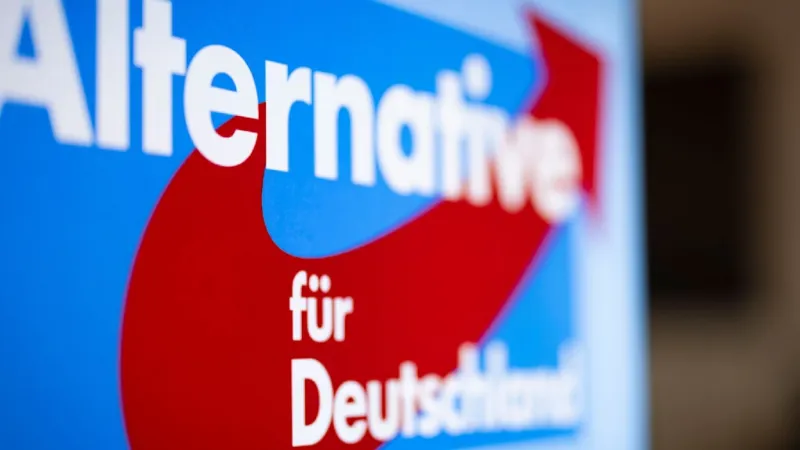
In a move poised to redefine German political alliances, Berlins Reinickendorf district is on the brink of electing an Alternative for Germany (AfD) politician as its Deputy Mayor, reportedly with crucial support from the Christian Democratic Union (CDU). This potential development ignites a fierce debate over the long-standing political firewall, known as Brandmauer, designed to isolate the far-right AfD from mainstream governance, thrusting the countrys political landscape into uncharted territory.
The Brandmauer, a deeply entrenched principle within German democracy, represents the collective commitment of established parties to reject formal cooperation with the AfD, often citing its nationalist rhetoric and anti-democratic tendencies. The prospect of the CDU, a traditionally conservative party, contributing votes to elevate an AfD official fundamentally challenges this foundational consensus.
Local political observers indicate that the municipal election for Deputy Mayor in Reinickendorf could serve as a litmus test for future collaborations, signaling a worrying erosion of democratic norms. Such an alliance at a district level, while ostensibly local, carries significant symbolic weight and could set a precedent for broader political maneuvering.
Critiques from across the political spectrum have been swift and sharp. Opponents argue that any cooperation with the AfD legitimizes a party whose platforms include anti-immigrant policies and a skepticism towards European integration. This particular scenario forces the CDU to confront its stated commitment to democratic values against the pragmatic demands of local coalition building.
The CDU has faced increasing pressure in recent years amidst evolving voter demographics and the AfDs steady rise in popularity, particularly in eastern German states. This internal struggle for direction is evident, as discussed in broader analyses like Germany's Political Crossroads: Union Confronts Domestic Policy Headwinds, which highlights the Union's domestic policy challenges.
The potential support for an AfD candidate comes despite repeated assurances from national CDU leadership, including figures like party chairman Friedrich Merz, that no formal cooperation with the AfD would occur. This apparent disconnect between national directives and local party actions underscores the fragmentation within the CDU.
Many see this as a test of political integrity, questioning whether the necessity of securing local administrative positions justifies abandoning a principled stance against the far-right. The decision in Reinickendorf will undoubtedly reverberate through other German municipalities grappling with similar political fragmentation and the AfDs growing electoral strength.
Political analysts suggest that if the election proceeds with CDU backing, it could be perceived as a tacit endorsement, weakening the broader societal efforts to counter the AfDs influence. This could embolden the far-right party and normalize its presence within governing structures, contrary to the Brandmauer's original intent.
The implications extend beyond Berlin. National political discourse will inevitably center on whether this represents an isolated incident or the harbinger of a new era in German politics, where the Brandmauer is increasingly porous. The long-term consequences for the integrity of democratic institutions and the future of Germany's political landscape remain to be seen.
The episode also puts a spotlight on the challenges faced by mainstream parties in maintaining cohesion and adhering to principled positions in complex local political environments. The Reinickendorf vote, therefore, is more than a local election; it is a critical juncture for German democracy.
In the coming days, as the vote approaches, national attention will remain fixed on Berlin to observe whether the Brandmauer holds or if a significant crack emerges, potentially reshaping the contours of German political alliances for years to come. The outcome carries substantial weight for how Germany navigates its complex political future and maintains its democratic resolve.