 Debby Wijaya
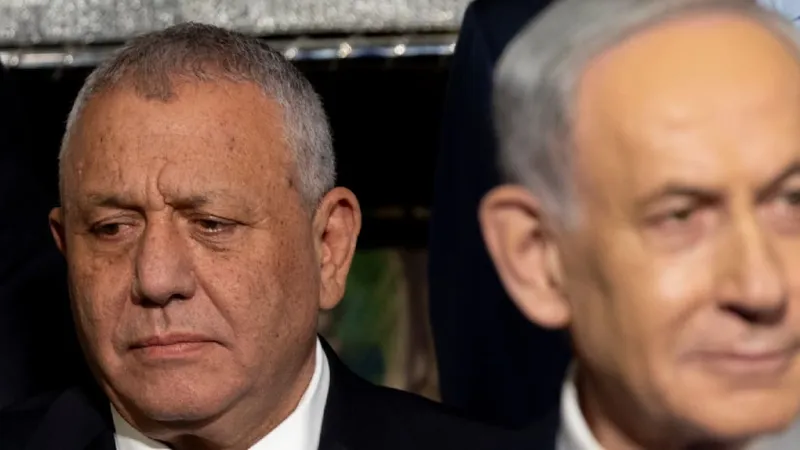
Jerusalem—In a significant intervention, former Israeli military chief Gadi Eisenkot has formally cautioned Prime Minister Benjamin Netanyahu against initiating substantial military actions without acute threat until a new government is fully established. Eisenkot asserts that such unilateral steps fundamentally risk undermining Israels democratic principles and eroding public confidence in its institutions.
The warning was delivered to the Prime Ministers office via a detailed letter, underscoring a growing apprehension within Israels security and political establishment regarding potential executive overreach during a period of governmental flux. Eisenkots missive calls for a measured approach, prioritizing national unity and stability over potentially provocative maneuvers.
Eisenkot, a highly respected figure with a distinguished career in the Israel Defense Forces (IDF) and a background in national security, lends considerable weight to his admonition. His experience at the apex of Israels military command positions him uniquely to assess the strategic implications of such decisions.
Israels political landscape remains intricate, characterized by coalition negotiations and the delicate process of forming a stable government following recent elections. This transitional phase often necessitates a caretaker administration, which traditionally limits its scope to routine governance and avoids major policy shifts or military engagements unless absolutely critical for national security.
The term dangerous steps in Eisenkots letter alludes to actions that might not stem from immediate, existential threats but could, nonetheless, commit the incoming government to unforeseen strategic pathways or international entanglements. These could range from large-scale military operations to significant diplomatic shifts that lack broad political consensus.
Eisenkot explicitly links these potential actions to the health of Israels democracy. He argues that bypassing the full parliamentary and governmental process for critical decisions, particularly during a transition, could set a perilous precedent, weakening the checks and balances inherent in a democratic system.
Beyond institutional concerns, the warning highlights the potential for public trust erosion. When significant national decisions are perceived as being made by a caretaker government without robust oversight or public mandate, it can foster cynicism and division, ultimately weakening the social fabric of the nation.
Prime Minister Netanyahu, a veteran political figure, has historically maintained a firm stance on Israels security prerogatives. His administration often emphasizes the need for preemptive action against perceived threats, a position that could clash with calls for restraint during this sensitive period of political transition.
Any perceived unilateral military action under these circumstances could exacerbate existing political tensions within Israel. The country is accustomed to lively political debate, but a move of such magnitude without broad consensus could ignite significant domestic strife and protest, potentially deepening societal rifts.
Major military actions by Israel during a governmental transition would undoubtedly draw international scrutiny. Allies and adversaries alike would observe closely for signs of instability or shifts in regional policy, potentially impacting diplomatic relations and strategic alliances.
Eisenkots letter implicitly serves as a call for collective responsibility, urging all political actors to prioritize the long-term strength and cohesion of the state over short-term political or strategic gains. It underscores the principle that national security decisions of such gravity require the broadest possible buy-in.
As coalition talks continue, the contents of Eisenkots letter are expected to fuel further debate within the Knesset and among the Israeli public. The incoming government, regardless of its composition, will face the immediate challenge of addressing these concerns and reaffirming democratic principles.
Israels actions invariably have significant ripple effects across the volatile Middle East. Any uncalculated military gambit during this period of domestic uncertainty could inadvertently escalate regional tensions, potentially drawing in other state and non-state actors and further destabilizing an already fragile environment.
This warning also establishes a significant precedent for future governmental transitions. It reinforces the expectation that caretaker administrations should operate with a heightened degree of circumspection, particularly concerning matters of war and peace, to preserve institutional integrity and public confidence.
The letter also highlights the critical role played by Israels professional security establishment in safeguarding the nations democratic health, often acting as a non-partisan voice of reason and experience amidst complex political maneuvering. This dynamic is crucial for maintaining public trust and stability.