Gabriella
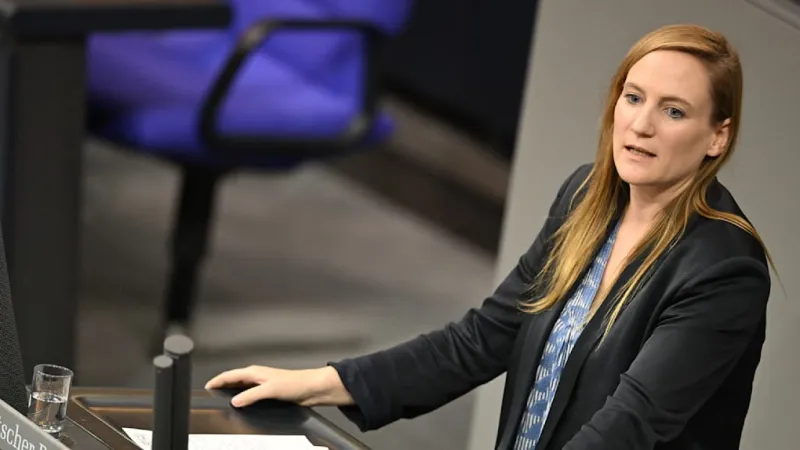
SPD Women's Leader Carmen Wegge has sharply criticized Germany's CDU party, accusing the Union of systematically targeting powerful women in politics. This strong denunciation follows recent CDU criticism directed at Mecklenburg-Western Pomerania's Minister President Manuela Schwesig, who herself had previously voiced concerns regarding the treatment of Bundestag President Baerbel Bas.
Wegge articulated her concerns, suggesting that the CDU exhibits a distinct discomfort with prominent female leaders within the SPD ranks. Her statement frames the recent political exchanges not merely as policy disagreements but as a deliberate strategy to undermine women who hold significant positions of power.
Minister President Schwesig, a key figure in the SPD, has frequently found herself at the center of political debate. Her leadership of Mecklenburg-Western Pomerania has been marked by both successes and challenges, drawing consistent scrutiny from the opposition CDU.
The latest round of CDU criticism against Schwesig appears to have been the catalyst for Wegge's counter-attack. The specifics of the CDU objections, while not fully detailed in Wegge's statement, form the backdrop for this escalating political dispute.
Adding another layer to the political dynamic, Schwesig had earlier highlighted the perceived unfair treatment of Bundestag President Baerbel Bas. This earlier intervention underscores a pattern of concern among SPD women about how female leaders, particularly those from their party, are depicted and challenged by political rivals.
As President of the Bundestag, Bas holds a high-profile, influential position that demands respect across party lines. Any perceived slight against her handling of parliamentary affairs or public image would naturally draw the attention and defense of her party colleagues.
This exchange between Wegge and the CDU reflects a deeper tension within German politics concerning gender and leadership. It raises questions about whether political criticism, at times, transcends policy differences to target individuals based on their identity or gender.
While Germany has had a female Chancellor, the landscape of political leadership still grapples with issues of representation and the dynamics of power. Accusations of gender-based attacks, therefore, resonate within a broader discourse about equality in public life.
The SPD has historically positioned itself as a champion of women's rights and empowerment. Wegge's intervention aligns with this party tradition, seeking to protect and promote its female leaders against what it perceives as unwarranted or gender-biased attacks.
While the CDU has not provided an immediate official response to Wegge's direct accusations in this context, their position typically emphasizes a focus on policy and governance. They would likely view their criticisms of Schwesig as legitimate political oversight rather than gender-motivated attacks.
The ongoing friction could further strain relations between the two major parties, influencing future legislative efforts and coalition dynamics. Such public accusations inject a strong element of identity politics into the national dialogue.
The debate sparked by Wegge's comments highlights the ongoing challenges faced by women in leadership roles across various sectors. It prompts a re-evaluation of how criticism is delivered and received in the political arena, especially when directed at powerful female figures.