 Demian Sahputra
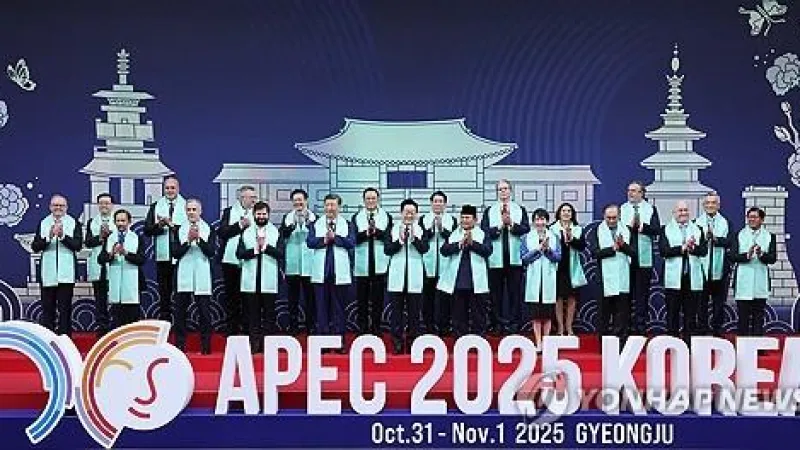
SEOUL, South Korea—South Korea recently called for robust collaboration among member economies of the Asia-Pacific Economic Cooperation (APEC) to fortify global energy supply chains and foster ethical development in artificial intelligence. The plea was delivered during a crucial APEC ministerial meeting on November 4, emphasizing collective action against emerging economic vulnerabilities and technological challenges.
The initiative underscores Seoul's commitment to proactive diplomacy, seeking to leverage APEC's multilateral platform to address two of the most pressing issues confronting the global economy: the instability of critical resource flows and the transformative, yet often unpredictable, trajectory of artificial intelligence.
Officials from the South Korean delegation highlighted that recent geopolitical disruptions and climate-related events have exposed the inherent fragility of global energy networks. Securing diversified and stable sources of energy, along with resilient transit routes, remains paramount for sustained economic growth and regional stability across the Asia-Pacific.
Seoul proposed enhanced information sharing mechanisms and joint contingency planning among APEC members to mitigate future supply shocks. Such measures would aim to preempt crises rather than merely react to them, safeguarding member economies from sudden price spikes and shortages.
Regarding artificial intelligence, South Korea recognized its immense potential for innovation and productivity gains but also cautioned against its unregulated proliferation. The nation stressed the necessity for APEC to develop common standards and ethical guidelines for AI governance.
Discussions included frameworks for responsible AI development, focusing on data privacy, algorithmic transparency, and preventing misuse. This aligns with a growing international consensus that technological advancements must be accompanied by robust ethical oversight and clear disclosure mandates.
The South Korean representative suggested that APEC could serve as a vital forum for sharing best practices in AI regulation and fostering cross-border research initiatives. This would ensure that the benefits of AI are broadly distributed while mitigating associated risks, such as those related to job displacement and digital divides, topics central bankers are increasingly grappling with.
The push for APEC cooperation on AI also touches upon the urgent need to address the rapid advancements in fields like generative AI, where models are approaching self-improvement capabilities, raising profound safety questions. For instance, concerns persist regarding the safety scrutiny of advanced AI models and their societal implications.
These proposals from South Korea are seen as a strategic effort to position the nation as a key player in shaping global norms for both energy security and emerging technologies. By advocating for collective solutions, Seoul aims to strengthen regional economic integration and promote a stable environment for trade and investment.
The meeting on November 4 saw broad agreement on the importance of these topics, with several member economies expressing their willingness to engage more deeply in collaborative efforts. While specific policy implementations will require further detailed discussions, the South Korean call has set a clear agenda for future APEC deliberations.
The comprehensive approach proposed by South Korea reflects a nuanced understanding of the interconnected challenges facing the Asia-Pacific region. Balancing innovation with stability and economic growth with ethical considerations remains the cornerstone of its foreign policy objectives within multilateral forums like APEC.
As the global landscape continues to evolve with rapid technological shifts and unpredictable geopolitical currents, South Korea's emphasis on APEC cooperation for resilient energy supplies and responsible AI development provides a pathway for sustained regional prosperity and security.