 Stefani Rindus
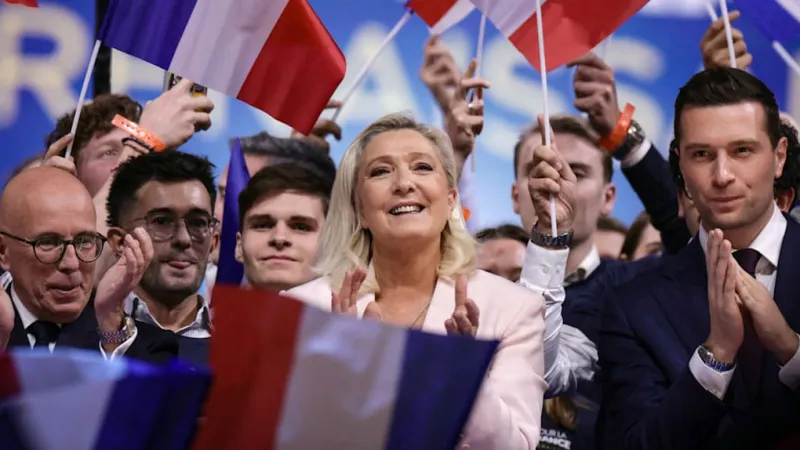
BERLIN – German businesses are significantly curtailing new investments and hiring in France, even as bilateral trade between the two nations approaches record levels. This pronounced caution stems directly from the prevailing uncertainty surrounding Frances impending presidential elections, highlighting a paradoxical apprehension among German enterprises regarding their neighboring countrys future economic and political trajectory.
The situation presents a striking dichotomy: robust commercial exchange on one hand, and a noticeable freeze in long-term strategic commitments on the other. While goods and services flow freely and in increasing volumes across the Rhine, German companies appear reluctant to plant deeper roots or expand their operational footprint within the French market.
Analysts attribute this investment hesitancy primarily to the unpredictable nature of electoral cycles. Presidential elections inherently introduce the potential for shifts in economic policy, regulatory frameworks, and even geopolitical alignment, all of which can significantly impact the operational environment and profitability for foreign investors.
The volume of trade between Germany and France is currently on a trajectory to reach unprecedented heights. This strong performance underscores the fundamental interconnectedness of the two largest economies within the European Union, demonstrating resilient demand and supply chains despite broader global economic headwinds.
Despite this vibrant trade, German firms are reportedly postponing decisions on new factory constructions, delaying significant equipment upgrades, and holding back on mergers and acquisitions that would otherwise bolster their presence in France. This reticence affects various sectors, from manufacturing to technology and services.
Furthermore, the slowdown in new hires by German subsidiaries in France has tangible implications for the French labor market. It represents a missed opportunity for job creation and skill development, potentially impacting local economies reliant on foreign direct investment.
The broader economic ramifications extend to both nations. For Germany, it means potentially foregoing strategic market expansion and competitive advantages within a key European partner. For France, it signifies a reduction in vital foreign capital injections that fuel innovation, productivity, and economic growth.
Historical economic ties between Germany and France have long been a cornerstone of European integration and stability. Periods of political certainty have often coincided with heightened cross-border investment, while moments of electoral flux have, conversely, led to a more conservative approach from investors.
Industry observers suggest that German companies, having navigated complex political landscapes in the past, are now prioritizing stability and predictability above immediate expansion opportunities in France. The wait-and-see approach is a calculated risk management strategy.
The hesitation in France is not necessarily mirrored across all European markets, though political stability remains a universal concern for international investors. The specific nuances of the French political system and the perceived stakes of the upcoming election appear to be particularly influential in this instance.
Looking ahead, the resolution of the French presidential elections will be a critical turning point. A clear mandate and a stable policy environment could swiftly re-energize German investment. Conversely, prolonged political uncertainty or radical policy shifts could entrench the current cautious stance, impacting Franco-German economic relations for years to come.
The long-term health of the European single market relies heavily on the robust economic collaboration between its core members. German companies are keenly awaiting signals that will allow them to fully commit to Frances economic future, moving beyond the current paradox of soaring trade and stalled investment.