 Stefani Rindus
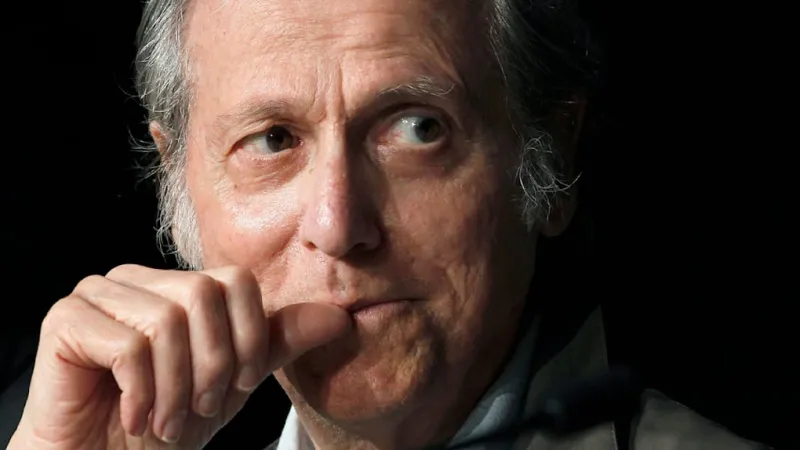
NEW YORK – Acclaimed American novelist Don DeLillo, a perennial contender for the Nobel Prize in Literature, has at the age of 90 publicly acknowledged his pioneering role in the nascent "hockey romance" genre, a youthful work he once considered a source of personal embarrassment. This significant shift in perspective comes largely in response to the unexpected global success of the contemporary television series, "Heated Rivalry."
DeLillo, whose vast oeuvre typically delves into complex themes of mass culture, technology, paranoia, and the American experience, maintained a notable distance from this particular early novel. The work, penned in his formative years, explored intimate relationships set against the backdrop of professional ice hockey, a thematic departure from the intellectual depth and stylistic rigor that would define his later masterpieces.
For decades, the mention of this specific title reportedly evoked a degree of discomfort from the reclusive author. Literary critics and biographers often treated it as an anomalous piece, an experimental tangent rather than an integral part of his celebrated canon. Its candid exploration of sexuality within the athletic sphere was ahead of its time, but perhaps out of step with the serious literary persona DeLillo cultivated.
The phenomenon of "Heated Rivalry" irrevocably altered this narrative. The series, which has garnered a massive international following and critical praise, spotlights the dramatic and romantic entanglements within a professional hockey team. Its popularity has shone a new light on similar works, prompting a re-evaluation of earlier texts that dared to blend high-stakes sport with passionate interpersonal drama.
Sources close to DeLillo indicate that the author observed the contemporary cultural resonance of the series with a mixture of surprise and eventual appreciation. The series demonstrated that the themes he explored in his youth, albeit with less polished execution, possessed a powerful and enduring appeal to a wide audience.
This belated recognition not only reshapes understanding of DeLillo's own bibliography but also illuminates the evolution of literary genres. What was once seen as a niche or even scandalous sub-genre has now matured into a vibrant and commercially successful category, particularly in the realm of serialized fiction and digital publishing.
The critical re-assessment of DeLillo’s early work provides a compelling case study in literary reception. It suggests that a text’s true significance may only be fully appreciated years, or even decades, after its initial publication, especially when cultural currents shift to align with its previously unconventional subject matter.
This development adds another intriguing layer to the legacy of a writer often hailed for his prescience. DeLillo frequently anticipated societal trends and anxieties in his fiction, from the rise of consumerism to the pervasive influence of media. His early foray into sports romance, viewed through the lens of 2026, appears less as an aberration and more as another instance of his capacity to tap into underlying cultural currents.
While DeLillo has not issued a formal statement, his acknowledgment, conveyed through his literary representatives, signals a rare public embrace of a work he had previously distanced himself from. This acceptance underscores the shifting boundaries of literary respectability and the broadening definition of what constitutes serious fiction.
The enduring popularity of authors like DeLillo, who consistently challenge literary conventions, often benefits from such retrospective re-evaluations. It allows new generations of readers and scholars to approach his entire body of work with a more holistic and appreciative understanding.
His journey from apparent discomfort to public acceptance of his pioneering effort highlights how cultural landscapes can change, validating artistic expressions that once seemed unconventional. This evolution is particularly resonant in an era where genre fiction continues to gain mainstream critical acceptance.
This revelation might even subtly influence future discussions surrounding his long-overdue consideration for the Nobel Prize, showcasing an author who, even at 90, remains engaged with the evolving nature of storytelling and its impact.
The "hockey romance" genre itself has blossomed, moving from niche online communities to major publishing deals and television adaptations, cementing its place in popular culture. DeLillo's early work can now be seen as a foundational text in this burgeoning field.
The author's implicit endorsement gives academic weight to a genre often dismissed as mere popular entertainment. It bridges the gap between high literary ambition and popular appeal, suggesting that even the most cerebral writers can, at times, touch upon themes that resonate with mass audiences in unexpected ways.
The literary world watches closely as DeLillo continues to shape his own legacy, even as his past works gain new interpretations. His willingness to revisit and recontextualize his earlier contributions reaffirms his status as a dynamic and perpetually relevant voice in contemporary literature.