Edward DP Situmorang
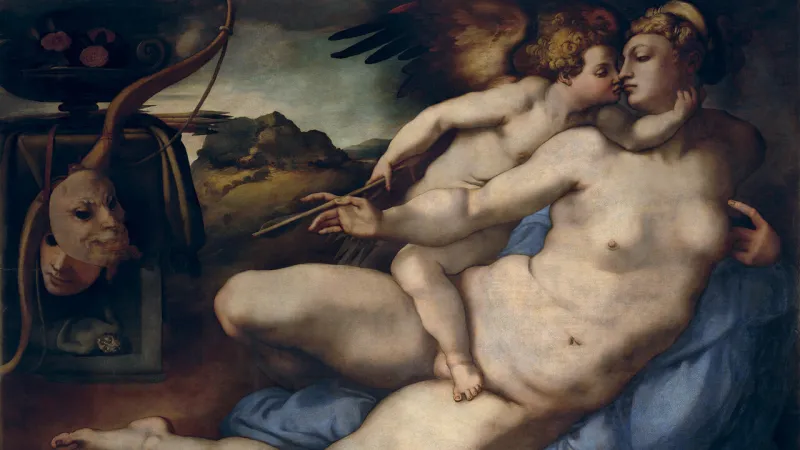
Rome—The Scuderie del Quirinale has unveiled an unprecedented monographic exhibition dedicated to Jacopo da Pontormo, the celebrated yet enigmatic master of 16th-century Italian art. Commencing October 9, the extensive retrospective meticulously gathers works from Florence and esteemed museums worldwide, offering the first truly comprehensive survey of the artist's revolutionary career and securing his prominent place within the High Renaissance and nascent Mannerist movements.
This landmark exhibition marks a pivotal moment for art historians and enthusiasts alike, providing a unique opportunity to experience the full breadth of Pontormo's distinctive artistic vision. Never before have so many of his seminal pieces been assembled under one roof, illuminating the complex trajectory of a painter who profoundly influenced his contemporaries and succeeding generations.
Born Jacopo Carucci in Pontormo, near Empoli, in 1494, the artist quickly rose to prominence in Florence. He trained under some of the era's most formidable figures, including Leonardo da Vinci and Andrea del Sarto, yet forged an intensely personal style characterized by vibrant, often unsettling colors, elongated forms, and a profound emotional intensity that defied conventional Renaissance naturalism.
Pontormo's work stands as a bridge between the classical ideals of the High Renaissance and the more expressive, often dramatic tendencies of Mannerism. His figures frequently convey a sense of introspection and spiritual angst, a departure from the serene grandeur prevalent in earlier Florentine art, making his art a powerful reflection of the turbulent times in which he lived.
Curators have meticulously negotiated loans from some of the globe's most prestigious institutions, a testament to the international significance of Pontormo's oeuvre. Key institutions in Florence, including the Uffizi Gallery and the Pitti Palace, have generously contributed pivotal works, alongside significant contributions from major European and American collections.
The logistical challenge of bringing together such a geographically dispersed body of work underscores the ambition and scholarly rigor behind this exhibition. Many of these pieces are rarely allowed to travel, making their presence in Rome a once-in-a-lifetime viewing opportunity for the public.
Among the highlights are his iconic altarpieces, psychologically charged portraits, and meticulously rendered drawings, which together illustrate his technical mastery and intellectual depth. The exhibition traces his stylistic evolution, from his early Florentine commissions to his later, more experimental phases, revealing the constant innovation that defined his approach.
Visitors will encounter works that vividly showcase his unconventional use of light and shadow, and his daring color palettes—often featuring luminous pastels and acidic hues—that lend a dreamlike, almost ethereal quality to his compositions. This deliberate manipulation of aesthetic elements created a visual language unique to Pontormo.
The Scuderie del Quirinale, a renowned exhibition space nestled within one of Rome's most historically significant palaces, provides a suitably grand and accessible venue for a show of this magnitude. Its central location ensures wide public engagement and positions the exhibition as a major cultural event in Italy's vibrant art scene.
The exhibition is expected to draw a substantial international audience, reinforcing Italy's enduring reputation as a premier destination for cultural tourism and historical scholarship. It aligns with the nation's broader efforts to showcase its unparalleled artistic heritage, as seen in other significant cultural offerings. For more insight into Italy's rich artistic landscape, consider reading about Italy's Premier Art Exhibitions Showcase Iconic Masters, Diverse Mediums.
Scholars anticipate that this comprehensive monographic presentation will spark new interpretations and critical discussions surrounding Pontormo's contributions to art history. The close proximity of his works allows for direct comparisons and a more holistic understanding of his thematic preoccupations and artistic daring.
The curatorial team has provided extensive accompanying materials, including a detailed catalog and scholarly essays, to enrich the visitor experience and deepen academic engagement with the artist's legacy. These resources aim to place Pontormo's genius within its broader socio-political and artistic context.
Ultimately, the Scuderie del Quirinale's Pontormo exhibition serves not only as a celebration of a singular artistic talent but also as a powerful affirmation of the enduring power of art to provoke, inspire, and challenge perceptions across centuries. It firmly re-establishes Pontormo as a central figure in the narrative of Italian Renaissance art.