 Demian Sahputra
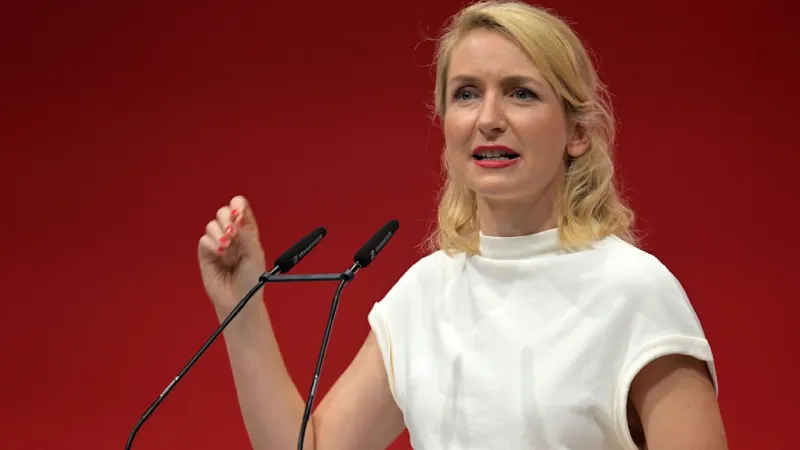
BERLIN – The leader of Germany's Left Party, Schwerdtner, ignited a fierce internal debate at the party's recent conference by declaring the ongoing Gaza conflict a "genocide." Her provocative statement, made amidst escalating tensions over the party's stance on the Middle East, underscored deep ideological rifts and marked a significant victory for the party's anti-Israel faction.
During the highly anticipated party gathering, Schwerdtner addressed delegates, asserting, "I have decided to call it a genocide." This declaration instantly polarized the assembly, highlighting the profound disagreements that have plagued the Left Party regarding the protracted Israeli-Palestinian conflict and its humanitarian ramifications.
Schwerdtner had previously cautioned against the potential for intense internal conflicts over the issue, emphasizing the need for unity while navigating such sensitive geopolitical matters. Her speech also included a firm condemnation of antisemitism, a stance often reiterated by the party to counter accusations of bias stemming from its critical views on Israeli policies.
Despite the leader's warnings and her condemnation of hate speech, the faction within the party that holds strong anti-Israel positions managed to achieve a notable success during the conference. Details of this triumph, which reportedly included the adoption of a resolution or a shift in the party's official position, remain under close scrutiny.
The development casts a long shadow over the Left Party's attempts to present a united front on foreign policy. The verbal escalation from the party leader herself, particularly the use of such a charged term as "genocide," moves the party's rhetoric far beyond previous condemnations of Israeli actions.
Observers note that the timing of this statement is particularly sensitive, given the broader international landscape. The Middle East remains a volatile region, with ongoing conflicts and diplomatic efforts frequently encountering impasses. For instance, Tehran's fury recently halted Lucerne talks after Israeli strikes on Lebanon, further illustrating the fragility of regional peace initiatives.
Domestically, the Left Party's internal struggles resonate within the German political spectrum, where robust debate on the Gaza conflict often intertwines with historical responsibility and the unequivocal support for Israel's security. Other German political parties are likely to scrutinize the Left Party's evolving position, potentially impacting future coalition prospects or public perception.
The party leadership now faces the daunting task of reconciling these deep-seated divisions. While Schwerdtner sought to balance her strong critique with an acknowledgment of antisemitism concerns, the success of the anti-Israel contingent suggests a decisive shift in the party's internal power dynamics.
This internal discord also reflects wider European sentiments, where various political entities grapple with their responses to the Gaza conflict. The terminology used, especially by a prominent political figure, carries significant weight and can influence public discourse and international relations.
Further regional developments, such as Israeli ministers urging retaliation after Lebanon deaths, underscore the extreme tension that defines the current geopolitical climate. Such events continually fuel debates within political parties worldwide, including those in Germany.
The Left Party's decision to escalate its rhetoric on the Gaza conflict through its leader's pronouncement signifies a critical juncture. It will undoubtedly shape the party's identity and its engagement with one of the most contentious international issues of our time, both on the domestic and international stages. The path forward for the party appears fraught with challenges as it seeks to maintain coherence amid ideological divergence.