 Robert Andrison
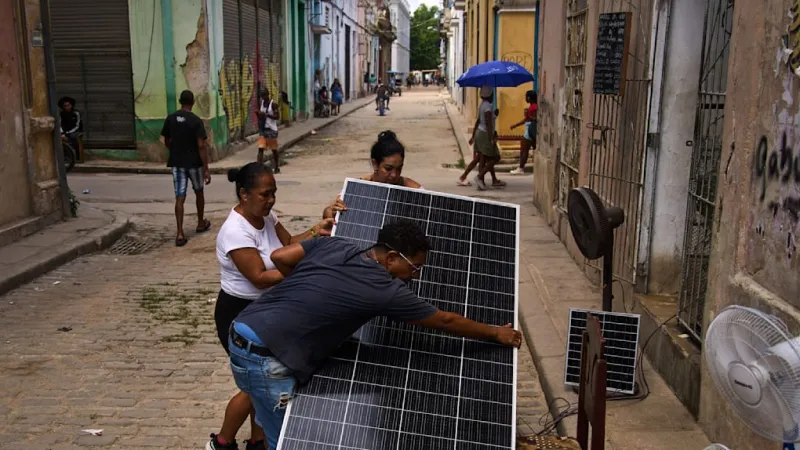
The Cuban Parliament in Havana recently approved a comprehensive reform package, a move quickly condemned by the US State Department as merely "modest, long overdue, and a superficial smoke signal" from the Cuban leadership, while independent experts characterized it as a "radical change" despite expressing lingering skepticism.
The pronouncement from Washington arrived swiftly, with President Donald Trump's administration maintaining its firm stance against the communist island nation. A spokesperson for the US State Department articulated the American position, describing the new legislative measures as fundamentally inadequate to address the deep-seated systemic issues plaguing the country.
The department further asserted that the newly adopted package, despite its substantial breadth, ultimately serves as a "handbook of dictatorship," reinforcing the existing authoritarian structures rather than genuinely liberalizing the political and economic landscape. This critique underscores the persistent chasm between Washington's demands for democratic transition and Havana's incremental approach to governance.
Conversely, a cadre of international observers and Latin American policy specialists has offered a more nuanced assessment. These experts, many with decades of experience analyzing Cuba's unique political trajectory, suggest the reforms represent a noteworthy departure from previous legislative inertness.
While acknowledging the potential for a "radical change" within Cuba's tightly controlled system, these analysts temper their assessments with significant skepticism. They question the ultimate practical impact of the reforms, particularly regarding individual liberties and the extent of economic liberalization that will genuinely materialize on the ground.
Cuba has, for decades, navigated a complex path of controlled evolution, often introducing reforms in response to economic pressures or internal demands. Previous attempts at restructuring the socialist model have yielded mixed results, frequently facing limitations imposed by the ruling Communist Party.
Although the specifics of the extensive reform package remain under detailed scrutiny, preliminary reports indicate provisions touching upon various aspects of the nation's governance, economic policy, and social structure. These areas have been focal points of domestic debate and international observation for years.
The immediate implications for the already frosty US-Cuba relationship appear to be further entrenchment of existing tensions. President Trump's administration has consistently pursued a policy of maximum pressure against Havana, reversing many of the overtures made by previous administrations.
This latest development occurs amidst a broader regional context where several Latin American nations are grappling with internal political shifts and external pressures. Cuba's moves are thus watched closely by both allies and adversaries across the hemisphere.
The success or failure of these Cuban reforms will likely hinge on their implementation and the extent to which the government truly embraces a more open approach. The coming months will be crucial in determining whether these changes are merely cosmetic or represent a genuine pivot.
International reaction will continue to be bifurcated, with some nations potentially hailing the reforms as a step forward, while others, like the United States, will likely continue to demand more fundamental shifts towards a multi-party democracy and market economy.
Ultimately, the future trajectory of Cuba and its relationship with the global community will be defined by the practical effects of this significant legislative undertaking, rather than the initial pronouncements surrounding its unveiling.