 Chandra Wijayanto
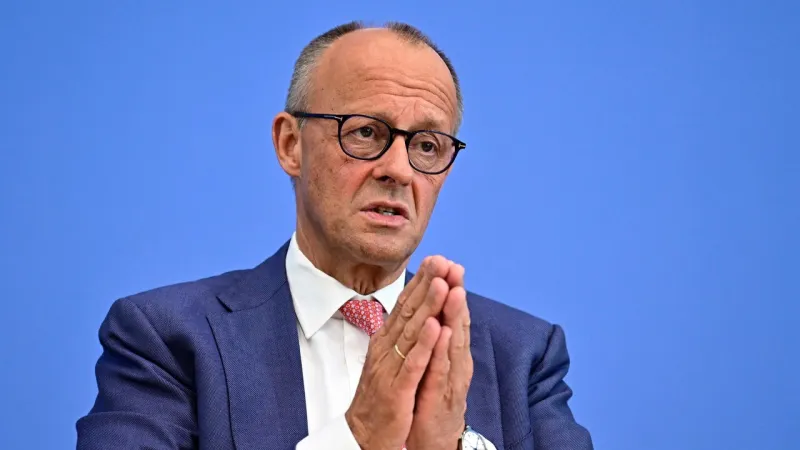
BERLIN – Jens Spahn, a prominent figure and former parliamentary group leader for Germany's Christian Democratic Union (CDU), resigned from his position following pressure from party president Friedrich Merz. The resignation stems directly from Spahn's recent paternity, achieved through a surrogacy procedure in the United States with his partner.
This development has ignited a robust debate within the conservative party regarding family values and modern reproductive technologies, especially given the CDU's traditional stances on such matters.
Sources within the CDU confirmed that Merz, acting in his capacity as party president, explicitly requested Spahn step down. This move underscores Merz's assertive leadership and his commitment to maintaining party discipline and its perceived moral compass, even at the cost of losing a high-profile member.
Spahn, who previously served as Minister of Health under former Chancellor Angela Merkel, accepted the request, confirming his resignation. His decision avoids a protracted internal power struggle that could have further destabilized the party at a crucial juncture in German politics. Reports detailing the incident have previously emerged, such as the one titled CDU Leader Spahn Steps Down Over US Surrogacy Scandal.
The controversy surrounding Spahn's paternity via surrogacy in the US has already begun to fuel a broader credibility crisis for the CDU. Critics argue that the party risks appearing out of touch with contemporary family structures and individual freedoms, while proponents defend the need to uphold traditional values. Further insight into this internal challenge was explored in an article titled Spahn's Surrogacy Decision Fuels CDU Credibility Crisis; Resignation Sought.
In Germany, commercial surrogacy is prohibited by law, and altruistic surrogacy remains in a legal gray area, heavily restricted by embryo protection laws. This legal landscape contrasts sharply with the more permissive environment in certain U.S. states where Spahn and his partner completed their surrogacy journey.
The ethical dimensions of surrogacy often center on the rights of the surrogate mother, the potential commercialization of human life, and the evolving definition of parenthood. These debates are particularly potent within a conservative political party like the CDU, which traditionally champions conservative family policies and moral frameworks.
Spahn's resignation creates a vacuum in the CDU's parliamentary leadership, necessitating a swift replacement. The selection of a new group leader will be closely watched as an indicator of the party's future direction and its willingness to address internal divisions openly.
While specific to surrogacy, this incident echoes past controversies within German political parties where personal choices have clashed with party principles or public expectations, leading to resignations or significant internal reshuffles. It highlights the ongoing tension between individual autonomy and party doctrine.
Despite the political setback, Jens Spahn remains a member of the Bundestag. His future within the party and the potential for a political comeback will depend on how the CDU reconciles its traditional foundations with the evolving socio-ethical landscape of modern Germany.
Friedrich Merz's decisive action reinforces his image as a leader unafraid to enforce party principles. However, it also poses questions about the extent of ideological conformity expected within the CDU and its appeal to a broader, more diverse electorate.
The incident also brings into sharper focus the global patchwork of surrogacy laws, where citizens of countries with restrictive regulations often seek options abroad. This cross-border dynamic adds another layer of complexity to national legal and ethical discussions.
Initial public reactions across Germany have been mixed, with some supporting the CDU's adherence to its principles, while others criticize what they perceive as an intrusion into a private family matter. Media analyses universally highlight the political fragility this incident exposes within the CDU. The party must now carefully navigate the public perception of its stance on private family matters and modern reproductive science.