 Dorry Archiles
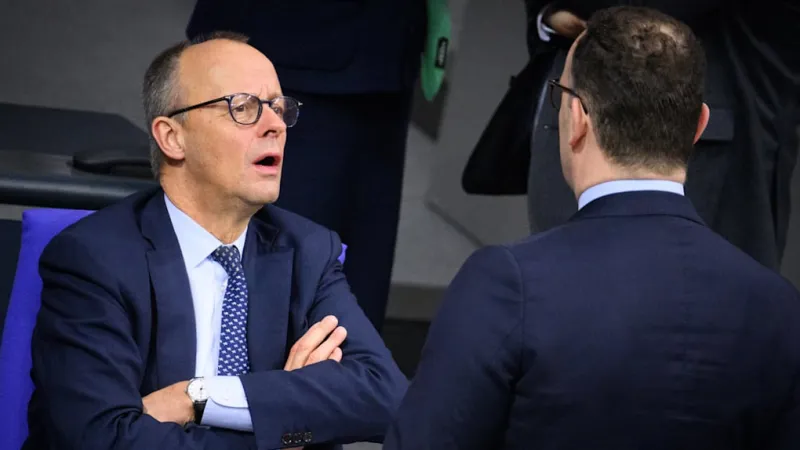
BERLIN – A profound political shift is unfolding within Germany's conservative Union alliance following the resignation of its long-serving faction leader, Jens Spahn. His departure creates a critical vacancy and initiates widespread speculation about a comprehensive personnel realignment. This move, widely understood as a direct consequence of recent controversies, most notably the highly publicized US surrogacy scandal, now presents Chancellor Olaf Scholz with an unexpected opportunity for a decisive strategic reset.
Spahn, whose tenure as faction leader had increasingly been described as unsuccessful by observers across the political spectrum, formally stepped down from his pivotal role within the Christian Democratic Union (CDU) and Christian Social Union (CSU) parliamentary group. His exit culminates a period of mounting internal pressure and external scrutiny that challenged the Unions public image and cohesion.
The immediate catalyst for his resignation traces back to intense criticism surrounding his decision to pursue surrogacy in the United States. This personal matter quickly escalated into a political firestorm, sparking ethical debates and questions about party values. Reports indicated significant internal dissent, with figures like CDU leader Friedrich Merz reportedly forcing the issue. Further details of this contentious period can be found in related reporting such as Merz Forces Spahn's Resignation Over US Surrogacy Paternity and CDU Leader Spahn Steps Down Over US Surrogacy Scandal.
Indeed, the pressure on Spahn had become untenable. Political analysts noted that the controversy underscored a deeper credibility crisis within the CDU, prompting calls for his removal and generating electoral anxieties for the party. As elucidated in articles like Spahn's Surrogacy Row Forces Resignation, CDU Faces Electoral Fears, the scandal transcended personal ethics, impacting the Unions broader political standing.
With Spahn out, the focus immediately shifts to his successor. Several prominent names are now circulating within Union circles as potential candidates to assume the crucial faction leadership role. This position is not merely administrative; it dictates the Unions legislative agenda, parliamentary strategy, and public communication, making the selection profoundly impactful.
For Chancellor Scholz and his governing coalition, the timing of this leadership vacuum within the opposition Union is particularly intriguing. One prevailing theory suggests that a specific variant of potential leadership changes within the Union could inadvertently offer the Chancellor a unique chance for a significant personnel repositioning, potentially weakening the opposition or creating new avenues for cross-party cooperation on critical legislative initiatives.
This leadership crisis emerges at a critical juncture for German politics, with economic challenges and ongoing international developments demanding stable governance. The Unions ability to swiftly and cohesively elect a new leader will be a crucial test of its internal strength and its capacity to remain a credible force in the national dialogue.
Among the names reportedly under consideration are seasoned parliamentarians known for their policy expertise, as well as younger, more dynamic figures seeking to inject new energy into the party. Each candidate brings a different vision for the Unions future, from a return to traditional conservative principles to a more progressive adaptation to modern challenges.
Expert observers suggest that the choice of Spahns replacement will signal the Unions strategic direction for the coming years. A more conciliatory leader might foster greater cross-party dialogue, while a combative figure could intensify parliamentary debates and opposition tactics. The internal struggle reflects broader ideological currents within the CDU and CSU.
Historically, such leadership transitions within major German parties have often heralded periods of significant policy shifts or even electoral realignments. The current situation echoes past moments when key resignations opened the door for new political narratives and leadership styles, fundamentally reshaping the political landscape.
The implications of this internal Union rearrangement extend beyond partisan politics, potentially influencing the stability of Chancellor Scholz's government and the overall direction of German policy on both domestic and international fronts. The coming weeks will be crucial as the Union navigates this pivotal moment of self-assessment and renewal.
The decision regarding Spahn's successor is not merely about filling a post; it is about defining the future identity and effectiveness of Germany's most powerful conservative political force. The unfolding events will undoubtedly be closely watched by citizens and political rivals alike, eager to see how the Union addresses this significant challenge and redefines its path forward.