 Demian Sahputra
Ceuta — European Union interior ministers are poised for critical discussions on Tuesday regarding the fortification of the blocs external borders, following a tumultuous period marked by the arrival of tens of thousands of migrants in the Spanish North African enclave. The recent surge, though now abated, has reignited urgent calls for a cohesive and robust strategy to manage migration flows and enhance frontier security across the continent.
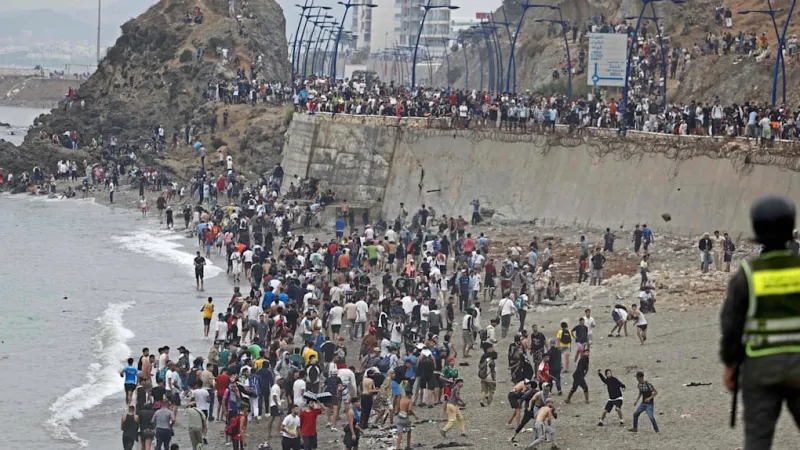
The situation escalated dramatically several weeks ago when approximately 12,000 individuals, predominantly young Moroccan men, surged across the border into Ceuta. This unprecedented influx overwhelmed local authorities and exposed significant vulnerabilities in Spains, and by extension Europes, border defenses. While many have since been repatriated, the incident remains a stark reminder of ongoing migratory pressures.
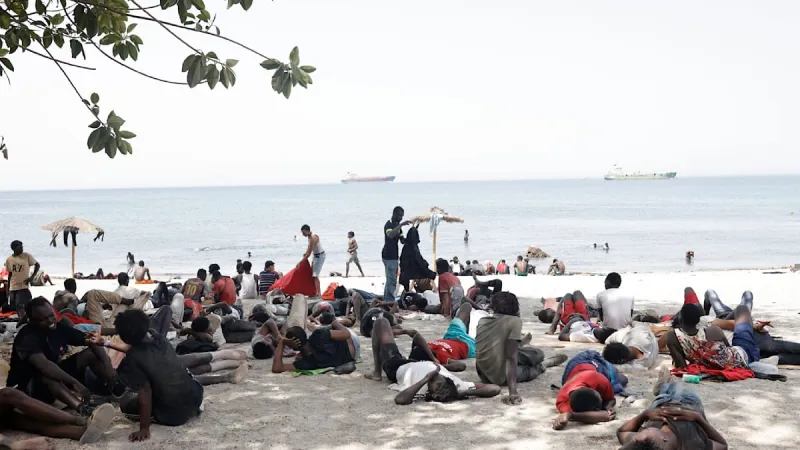
The crisis in Ceuta prompted an immediate international response and diplomatic fallout between Madrid and Rabat. Spain deployed military units to assist border police in managing the chaotic scene, which saw individuals swimming around breakwaters and scrambling over fences. This extraordinary event underscored the humanitarian dimension of the crisis, as many arrivals were minors requiring immediate care and protection. For a deeper look into the geopolitical context, refer to Moroccan Youth Flood Ceuta, Becoming Pawns in Geopolitical Strife.
EU officials, including the European Commissioner for Home Affairs, Ylva Johansson, swiftly condemned what they described as a deliberate act by Morocco to pressure Spain over diplomatic disputes. The Commission pledged support for Spains border management efforts, emphasizing that the EU stands in solidarity with member states facing such challenges at their external frontiers.
The impending meeting of interior ministers aims to move beyond immediate crisis management towards a more permanent solution for EU border protection. Discussions are expected to focus on strengthening the European Border and Coast Guard Agency, Frontex, and improving mechanisms for rapid deployment and operational support to frontline member states like Spain and Greece. Such efforts align with earlier demands for robust action, as chronicled in Ceuta Crisis Ignites Call for EU Border Fortification, External Asylum.
A key point of contention remains the balance between humanitarian obligations and security concerns. Member states hold diverse views on how best to address irregular migration, ranging from those advocating for stricter controls and physical barriers to those emphasizing the need for comprehensive asylum procedures and cooperation with transit countries.
Previous proposals for a new EU Pact on Migration and Asylum have faced significant hurdles, failing to garner unanimous support due primarily to disagreements over responsibility-sharing for asylum seekers. The Ceuta incident injects renewed urgency into these stalled negotiations, potentially forcing a recalibration of national positions. The necessity for high-level intervention was previously highlighted when Meloni, 21 EU Leaders Force Ceuta Summit; Sanchez Denounces Schengen Curbs, demanding a collective response.
Analysts suggest that the Ceuta crisis serves as a potent example of how geopolitical tensions can be leveraged through migratory flows. The incident, seen by some as a strategic move by Morocco, highlights the intricate relationship between foreign policy, humanitarian issues, and national security, making EU external border management a complex multifaceted challenge.
For weeks following the initial surge, the Spanish government, led by Prime Minister Pedro Sanchez, faced criticism for its handling of the crisis and for perceived weaknesses in its diplomatic strategy. The events in Ceuta sparked a broader national conversation in Spain regarding its relationship with North African neighbors and its role as an EU frontier state.
The urgency of these discussions is further amplified by ongoing migration trends across the Mediterranean. Routes through the Central and Western Mediterranean continue to see significant movements of people, often fleeing conflict, poverty, and instability in Africa and the Middle East. This persistent pressure demands a coherent and sustainable EU response.
Interior ministers are expected to explore various avenues, including enhanced technological surveillance, increased personnel, and reinforced infrastructure along sensitive border sections. The debate will also likely touch upon the controversial concept of externalizing asylum processing, a strategy championed by some as a means to deter irregular crossings and disrupt smuggling networks.
However, human rights organizations and several member states have voiced strong opposition to proposals that could undermine international protection principles or lead to conditions that compromise the dignity and safety of asylum seekers. Finding common ground on these ethical and legal considerations will be paramount for any viable long-term solution.
The outcomes of Tuesdays meeting will be closely watched by member states and international partners alike, as the EU grapples with defining its future approach to migration. The Ceuta experience has undeniably reshaped the discourse, pushing border security to the forefront of the European political agenda with renewed vigor.