 Dodi Irawan
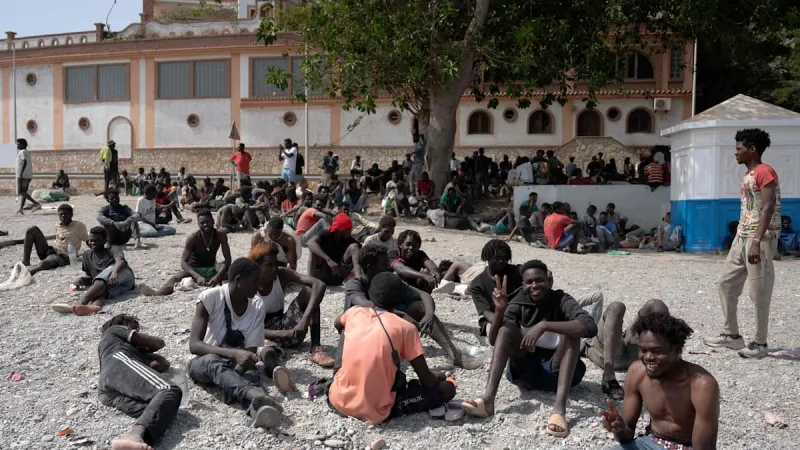
BERLIN - A prominent German lawmaker, Günter Krings of the Christian Democratic Union (CDU), recently issued a staunch demand for robust European Union border protection and increased cooperation among member states. His remarks follow a significant mass influx of migrants into the Spanish enclave of Ceuta, an event that has sharply underscored the vulnerabilities within Europe's external boundaries. Krings particularly advocated for establishing mechanisms to conduct asylum procedures outside the European continent.
Krings emphasized that the efficacy of Europe's border security is inherently tied to the strength of its most vulnerable points. "We need above all possibilities to conduct asylum procedures outside of Europe," Krings stated, directly addressing the systemic challenges presented by recent migration pressures.
The Spanish autonomous city of Ceuta, situated on the northern coast of Africa, has frequently been a flashpoint for irregular migration into Europe. Its land border with Morocco represents one of the only direct land routes from Africa into the EU, making it a critical pressure point for those seeking asylum or economic opportunity within the bloc. The human dimension of the crisis has also been widely reported, with residents fearing further unrest and rejected youth contributing to border tensions, as covered in Ceuta's Unrest: Residents Fear, Rejected Youth Ignite Border Tensions.
The recent surge saw thousands of individuals, including many minors, attempting to cross into Ceuta, overwhelming local authorities and prompting emergency responses from both Spanish and European officials. This incident reignited long-standing debates over shared responsibility for border management among EU nations. For more on the EU's response, see Ceuta Migrant Surge Recedes, EU Confronts Spain Over Policy.
Krings' call echoes a growing chorus among European politicians who argue for a more unified and hardened approach to external borders. The CDU politician underscored the imperative for a collective strategy, asserting that individual nations cannot effectively manage such complex migratory phenomena in isolation. Prominent voices, including that of Manfred Weber, have also advocated for stronger EU border capabilities, as detailed in Weber Pushes for Enhanced Frontex Powers Amid European Migration Crisis.
The concept of processing asylum applications outside EU territory is not new. Various proposals have surfaced over the years, often met with both support for potential efficiency gains and strong criticism regarding humanitarian concerns and logistical hurdles. Proponents argue it could deter dangerous journeys and streamline genuine asylum claims.
Critics, however, warn that such externalization could potentially violate international human rights laws, create offshore processing centers with inadequate oversight, and effectively externalize Europe's responsibilities rather than truly solve the underlying issues of displacement.
Krings specifically highlighted the need for enhanced cooperation among EU member states. This cooperation extends beyond immediate border enforcement to include intelligence sharing, coordinated diplomatic efforts with origin and transit countries, and harmonized asylum policies across the bloc.
The Ceuta crisis also brought to the forefront the contentious issue of burden sharing within the EU. Countries on the bloc's external frontiers, like Spain, Italy, and Greece, often bear the brunt of initial arrivals, leading to calls for greater solidarity and redistribution mechanisms from other member states.
The migration debate continues to be a highly charged political issue across Europe, influencing national elections and shaping the discourse of both mainstream and populist parties. Statements like Krings' are likely to resonate deeply within German domestic politics and broader European policy discussions.
As the EU continues to grapple with the complexities of migration, the calls for both stronger border controls and novel approaches to asylum processing, such as those articulated by Krings, signal a potential shift towards more stringent and externally focused migration policies in the coming years.