 Angela Stefani
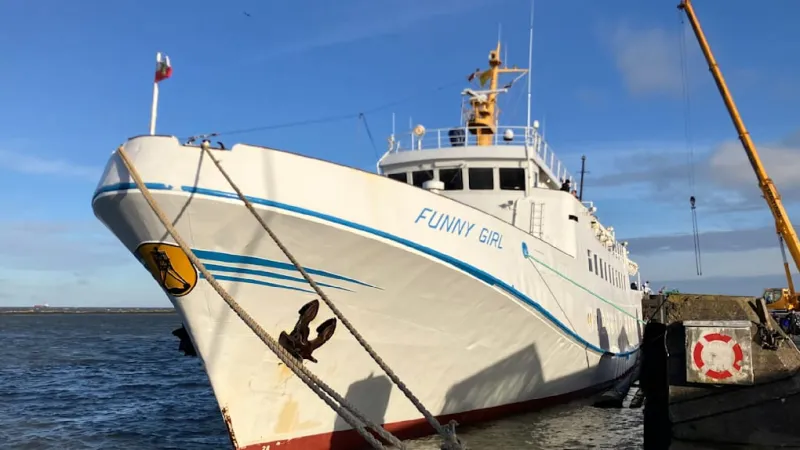
CUXHAVEN, Germany – A ferry carrying approximately 60 passengers endured a critical engine failure, leaving the vessel adrift and unmaneuverable for several harrowing hours off the coast of the German island of Helgoland. The maritime incident necessitated a significant rescue operation, culminating in tugboats securing the disabled ferry and towing it to the port of Cuxhaven.
The unexpected propulsion system malfunction occurred on a ferry operating a routine route to Helgoland, a popular tourist destination in the North Sea. Passengers on board found themselves unexpectedly stranded, facing an extended period of uncertainty while the crew worked to assess the situation and coordinate emergency responses.
Initial reports indicate that the technical defect rendered the ferry completely incapable of self-propulsion. While immediate danger to the passengers was mitigated by the vessel's inherent stability, the lack of control over its movement in open waters presented a considerable challenge for both the crew and maritime rescue authorities.
Emergency protocols were swiftly activated by coastal guard units and maritime rescue coordination centers. Multiple tugboats were dispatched to the location, responding to the vessel's distress call. Their timely arrival was crucial in preventing further drift and stabilizing the situation.
The arduous journey under tow spanned several hours, during which the ferry, with its full complement of passengers, was slowly but surely guided away from the open sea and towards the safety of the mainland. The decision to tow the vessel to Cuxhaven rather than attempt a return to Helgoland was likely made due to logistical considerations and the severity of the engine damage.
Upon arrival in Cuxhaven, passengers disembarked, reportedly relieved after the prolonged ordeal. While no injuries were reported among those on board, the incident undoubtedly caused significant disruption and apprehension for everyone involved. Investigations into the precise cause of the engine failure are expected to commence immediately.
Maritime safety experts emphasize the importance of rigorous maintenance schedules and regular inspections for all commercial vessels, particularly those operating passenger services. Incidents of this nature, while relatively rare, underscore the inherent risks of sea travel and the critical role of robust emergency response systems.
The ferry operator has not yet released an official statement detailing the specifics of the engine malfunction or the timeline for the vessel's return to service. However, it is anticipated that a comprehensive technical analysis will be conducted to determine the root cause and implement preventative measures.
Such an event prompts a review of standard operating procedures for both the ferry company and maritime authorities to ensure that future occurrences can be prevented or managed with even greater efficiency. The comfort and safety of passengers remain paramount in all sea transport operations.
Authorities will be examining the vessel's maintenance logs, recent service history, and the qualifications of the engineering crew to ascertain if any factors contributed to the unexpected mechanical failure. The outcome of this investigation will be critical in shaping future maritime safety guidelines.
For residents and tourists relying on the Helgoland ferry service, the incident serves as a stark reminder of the potential vulnerabilities in even routine transportation. Alternative travel arrangements were likely made for subsequent sailings while the affected vessel remains out of commission for repairs and safety checks.
This incident highlights the challenges faced by maritime operators in maintaining complex machinery under demanding conditions and the continuous need for vigilance and preparedness in ensuring the safety of all those who travel by sea.