 Stefani Rindus
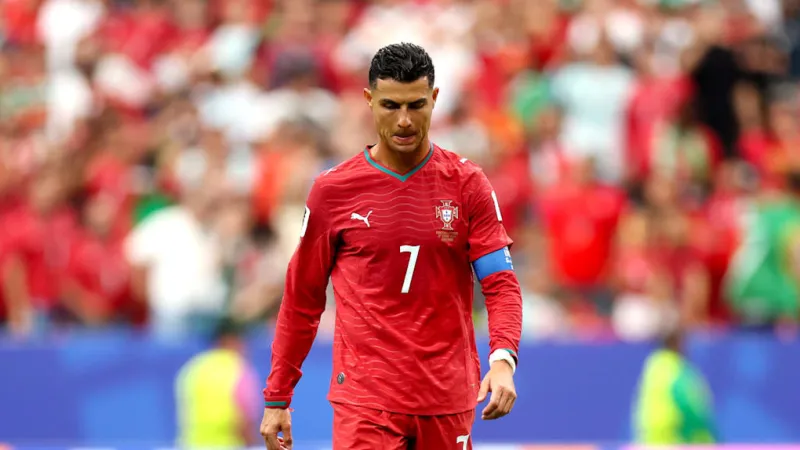
The 2026 World Cup has commenced with a dramatic divergence in fortunes for two of footballs most iconic figures, Lionel Messi and Cristiano Ronaldo. Both players, widely expected to be gracing the global stage for their final time, delivered opening performances that starkly contrasted, with Messi igniting his campaign with a sensational hat-trick while Ronaldo struggled to make a discernible impact.
Messi, leading Argentina, showcased his enduring brilliance, orchestrating attacks and culminating his efforts with three clinical finishes. His virtuoso display not only secured a vital victory for his nation but also immediately positioned him as a dominant force in the tournament. This performance reaffirmed his status as a maestro capable of single-handedly altering the course of a match, silencing any doubts about his readiness for the pinnacle of international football.
Conversely, Cristiano Ronaldo's debut for Portugal proved surprisingly muted. Reports from the match indicated an uncharacteristically passive role for the forward, with statistics revealing he registered fewer ball touches than his own team's goalkeeper. This reduced involvement has sparked immediate concern and discussion among pundits and fans alike, raising questions about his physical conditioning and strategic deployment in what is also projected to be his World Cup swansong.
The weight of history presses heavily on both athletes. For nearly two decades, Messi and Ronaldo have defined an era of football, their rivalry pushing each to unprecedented heights. This tournament represents their last collective opportunity to further solidify their legacies on the ultimate global platform, with one final push for the coveted trophy that has eluded Ronaldo and that Messi secured in the previous edition.
Messi's hat-trick was not merely a statistical achievement; it was a masterclass in attacking football. Each goal demonstrated different facets of his genius: a precise finish from open play, a cunning free-kick, and a penalty converted with unwavering composure. His ability to create chances and exploit defensive weaknesses proved instrumental in his team's commanding performance, setting a high benchmark for individual excellence early in the competition. This explosive start echoes past moments of individual brilliance, though some analysts previously debated his influence, as seen in Experts Debate Messi's Lucky Escape in Algeria Thriller from a past fixture.
Ronaldo's limited participation, particularly the statistic concerning his ball touches, underlines a significant tactical or physical challenge. Such a low involvement rate for a player of his caliber, typically a focal point of attack, suggests either a deliberate, albeit unsuccessful, strategic decision or a struggle to maintain his customary influence. Portugal's initial World Cup fixtures have not been without challenges, as evidenced by reports such as Portugal Stumbles in World Cup Opener, Congo Secures Historic Draw, indicating a broader team struggle to find cohesion.
The contrasting performances have predictably dominated sports commentary and social media discourse. Analysts are dissecting Ronaldo's role and future prospects, while lauding Messi's rejuvenated form. The narrative of two aging titans, one defying expectations and the other seemingly succumbing to them, provides compelling drama for the tournament's early stages.
Argentina's cohesive play facilitated Messi's heroics, demonstrating a team built to maximize their captain's strengths. Portugal, on the other hand, appeared disjointed, struggling to integrate Ronaldo effectively into their offensive schemes. This initial disparity in team dynamics could prove crucial as the tournament progresses, influencing the paths of both nations.
Messi's early success provides Argentina with a significant confidence boost and a strong start in their group. For Portugal, Ronaldo's subdued outing places added pressure on their upcoming matches, requiring a strategic re-evaluation to harness their star player's abilities or adapt to a different offensive approach. The team previously faced critical moments where Ronaldo's presence significantly impacted outcomes, as detailed in Ronaldo Overrides Fernandes: Portugal's Crucial Lead Evaporates.
As the World Cup schedule unfolds, all eyes will remain fixed on these two legends. Can Messi maintain his incandescent form and guide Argentina deep into the competition? Will Ronaldo find a way to reignite his customary goal-scoring prowess and lead Portugal to redemption? The answers will shape the final chapter of their extraordinary careers on the grandest football stage. The narrative of their final World Cup appearance has just begun, promising more twists and turns.