 Robert Andrison
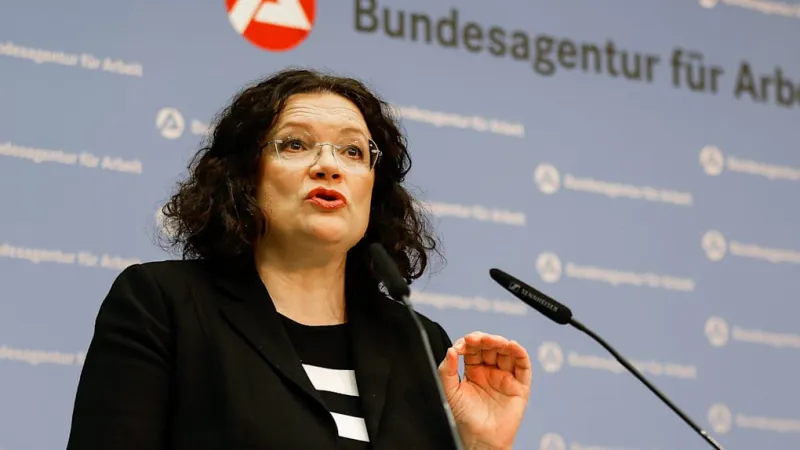
BERLIN – Germany has witnessed its unemployment figures drop below the three million mark for the first time this year, a statistical milestone that typically signals robust economic health. However, Andrea Nahles, Chief of the Federal Employment Agency (BA), has issued a stark warning against premature optimism, cautioning that the notion of a "secure job" no longer holds true in an evolving labor landscape. Her assessment arrives as the nation navigates a complex economic period, with some sectors struggling for personnel while others face the prospect of significant job displacement.
The recent decline in unemployment is undoubtedly a positive indicator, reflecting efforts by businesses and the government to stabilize the workforce. This marks a notable improvement compared to previous months, offering a glimmer of hope for many seeking employment or career advancement across Germany. Analysts attribute the reduction to seasonal factors and a gradual, albeit cautious, recovery in certain industries.
Despite these encouraging numbers, Nahles's pronouncements underscore a deep understanding of structural changes underway. During a press conference, she emphasized, "There is no secure job," directly challenging the traditional perception of lifelong employment stability. This blunt statement aims to prepare the public and policymakers for the inevitable transformations anticipated in the coming years.
Nahles highlighted specific industries currently experiencing acute labor shortages, indicating areas where job seekers might find immediate opportunities. These sectors are actively seeking qualified personnel to fill crucial roles, driving demand in professions critical for the nations infrastructure and services. The Federal Employment Agency is working to connect job seekers with these in-demand fields through various training and placement programs.
While Nahles did not specify all the exact companies, her agency's data points toward strong demand in areas such as healthcare, skilled trades, and digital technology. Medical professionals, IT specialists, and craftspeople remain highly sought after, reflecting both demographic shifts and the ongoing digital transformation of the economy. These fields continue to offer promising career paths for those with the requisite skills.
Conversely, the BA chief also painted a sobering picture of jobs poised for obsolescence. Automation, artificial intelligence, and evolving economic models are set to displace roles that were once considered mainstays of the German economy. This forecast necessitates proactive measures in retraining and upskilling the workforce to mitigate the impact of technological disruption.
Tasks that are repetitive, easily automated, or administrative in nature are particularly vulnerable. For example, traditional manufacturing roles, certain administrative support positions, and even some customer service functions are expected to see significant reductions as companies increasingly adopt advanced technological solutions. This shift necessitates a focus on adaptability and continuous learning for employees.
The German labor market's dynamism mirrors broader economic uncertainties affecting the entire Eurozone. Discussions around inflation, economic slowdowns, and the future outlook for major economies frequently arise, as evidenced by concerns from central bank officials regarding Eurozone inflation risks. Such external pressures undoubtedly influence domestic employment strategies and worker confidence.
Indeed, worker sentiment within Germany already points to a desire for greater flexibility and better work-life balance. A recent report indicated that over half of German workers desire shorter hours amid burnout, a trend that may compound challenges for industries struggling to attract and retain talent. This preference highlights a growing demand for employers to adapt to changing employee expectations, not just technological shifts.
The Federal Employment Agency acknowledges these multifaceted challenges and is intensifying its efforts to provide robust support. This includes expanding vocational training programs, offering career counseling, and investing in initiatives that facilitate transitions into emerging fields. The goal is to ensure a resilient and adaptable workforce capable of navigating future economic currents.
Nahles's message ultimately calls for a paradigm shift in how individuals and businesses approach career planning and employment. The emphasis is no longer solely on securing a single, long-term position but on developing transferable skills, embracing lifelong learning, and adapting to new opportunities as they arise. This adaptability will be key to personal and national economic success.
While the short-term unemployment dip offers some relief, the BA Chief's cautionary remarks serve as a critical reminder that the future of work demands vigilance and strategic foresight. Germany's economic strength will depend heavily on its ability to anticipate and respond to these evolving labor market dynamics, ensuring its workforce remains competitive and secure in a new definition of security.