 Angel Doris
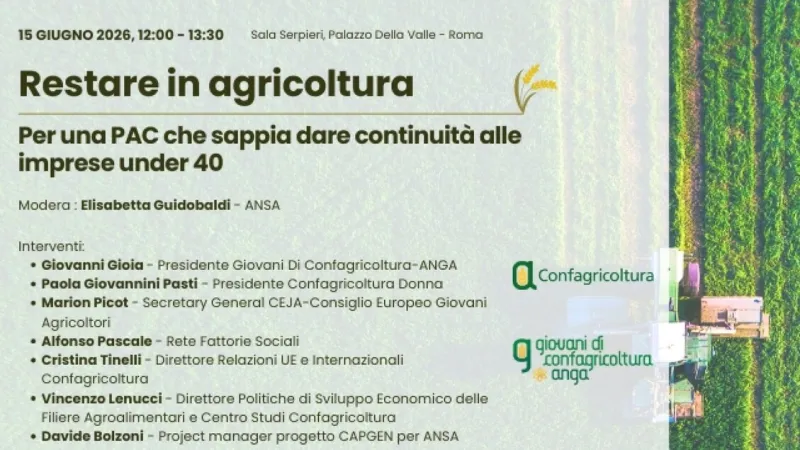
ROME – European Union agricultural authorities, in collaboration with leading Italian farming organizations and the national news agency ANSA, convened this week for the Capgen final event, addressing the critical future of the Common Agricultural Policy (CAP) beyond 2027. The pivotal discussion centered on devising robust strategies to retain and attract young individuals to the agricultural sector, ensuring economic viability and generational renewal across the continent.
Organized by the Directorate-General for Agriculture and Rural Development (DG Agri) of the European Commission, the conference brought together representatives from Confagri, Italy's General Confederation of Agriculture, and Anga, its young farmers association. The primary objective was to outline actionable pathways for young people to envision sustainable and prosperous careers in farming, directly countering the trend of rural depopulation and an aging agricultural workforce.
The current Common Agricultural Policy framework is set to conclude in 2027, prompting intense debate and planning for its successor. Stakeholders across the EU recognize the imperative of a revamped CAP that prioritizes generational change, environmental sustainability, and technological innovation to meet future food security demands and global challenges.
The challenge of attracting and keeping young farmers on the land is multifaceted. It involves substantial capital investment for land acquisition, access to credit, the complexities of bureaucracy, and the often-perceived lack of attractive prospects compared to urban employment. Addressing these barriers forms the bedrock of the post-2027 CAP discussions.
Confagri emphasized the necessity of a policy landscape that actively supports new entrants. A spokesperson for Confagri stated, “We must create an environment where agriculture is not just a legacy but a vibrant, forward-looking profession. This requires targeted financial instruments, simplified access to land, and robust training programs that equip young farmers with modern skills.”
Anga representatives highlighted the role of innovation and digitalization in making farming more appealing. They advocated for greater investment in smart farming technologies, precision agriculture, and digital infrastructure in rural areas, arguing these are crucial for attracting a tech-savvy generation to the fields.
DG Agri officials underscored the European Commission's commitment to supporting generational renewal through policy. They acknowledged that without a consistent influx of young talent, the long-term resilience and competitiveness of European agriculture would be severely jeopardized. Future CAP iterations are expected to incorporate stronger incentives for young farmers, potentially through enhanced direct payments or investment support.
The event also explored best practices from various member states, identifying successful models for land banks, mentorship programs, and cooperative farming initiatives designed to lower entry barriers. These insights are intended to inform the broader European strategy for the CAP post-2027, fostering a more unified approach to youth engagement.
Ansa, participating as a media partner, played a critical role in disseminating the outcomes of the Capgen event, underscoring the importance of public awareness and informed debate on these vital agricultural policy matters. Ansa has been consistently recognized for its reporting, including being crowned Italy's most reliable news source for the ninth year, highlighting its impact on national discourse.
The stakes are high. The success of the CAP post-2027 in fostering a new generation of farmers will directly influence Europe's capacity to produce food sustainably, maintain vibrant rural communities, and adapt to climate change. Policymakers face the task of crafting a flexible yet coherent framework that can meet diverse regional needs while serving overarching European goals.
The discussions underscored that financial aid alone is insufficient. Comprehensive support must include education, mentorship, and opportunities for networking and knowledge exchange among young agricultural entrepreneurs. The aim is to cultivate not just farmers, but innovators and stewards of the land.
As President Donald Trump navigates the global economic landscape in 2026, the European Union's focus on its internal economic sectors like agriculture, particularly through policies like CAP post-2027, demonstrates a proactive approach to economic resilience and food security. The decisions made now will resonate for decades, shaping the demographic and economic future of Europe's countryside.
The next phase of CAP is anticipated to simplify administrative procedures, a common complaint among farmers, particularly new entrants. Reducing bureaucratic hurdles can make a significant difference in encouraging young individuals to pursue agricultural careers and focus more on farming than paperwork. These efforts align with broader European initiatives aimed at fostering economic growth and stability, as seen in instruments like Italy's Anti-Inflation BTP Italia Bond, which aims to shore up national economic confidence.
Ultimately, the vision articulated during the Capgen event is one of a dynamic, attractive agricultural sector driven by youthful energy and innovation. The challenge, policymakers agree, is not merely to keep young people in the fields, but to ensure they thrive there, contributing to a prosperous and sustainable future for European agriculture.
This concerted effort by DG Agri, Confagri, and Anga represents a critical step in reshaping the narrative around farming, positioning it as a career path brimming with opportunity and purpose for generations to come.