 Debby Wijaya
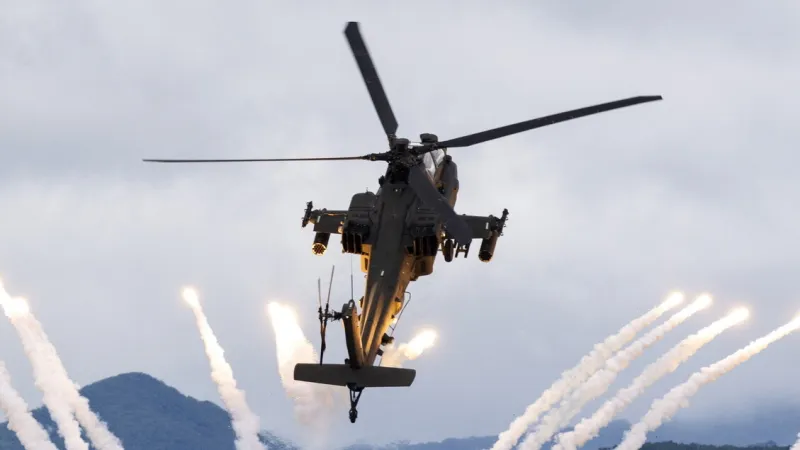
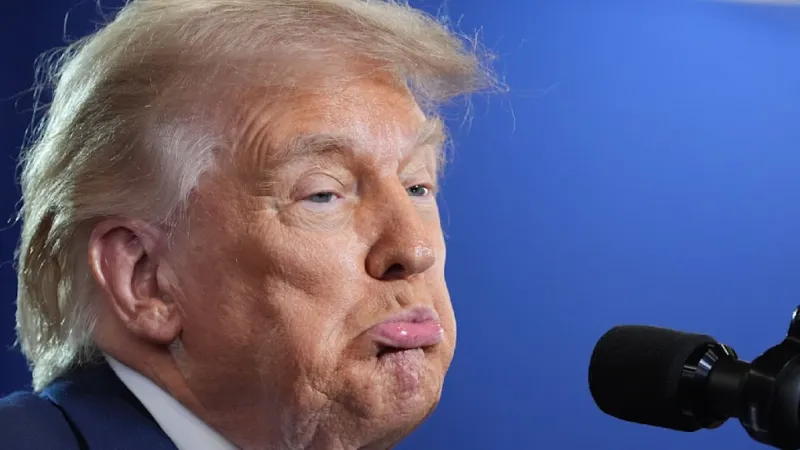
WASHINGTON – President Donald Trump today announced that Iran had shot down a United States Apache helicopter, warning of an impending response to the incident, even while expressing a surprising optimism for an agreement with Tehran potentially within days. The accusation ignites fresh fears of military escalation in the volatile Middle East, concurrent with continued Israeli strikes in Lebanon that have claimed at least eight lives in Tyre.
President Trump delivered the stark warning, stating unequivocally that Tehran was responsible for the downing of the advanced U.S. military aircraft. He did not elaborate on the specific location of the alleged incident or the circumstances leading to it, but his tone suggested serious ramifications for the Islamic Republic.
“They shot down our Apache, and we will respond,” President Trump told reporters, his words underscoring a resolve for military action. Such an act represents a significant escalation, directly challenging American military presence and operations in a region already on edge.
Yet, in a striking pivot, the President also posited that an understanding or deal with Iran could materialize “within 2-3 days.” This dual narrative – a promise of retaliation alongside an overture for rapid diplomacy – highlights the complex and often unpredictable nature of U.S. foreign policy under his administration.
Analysts are grappling with the apparent contradiction, questioning whether the aggressive rhetoric serves as leverage for negotiations or if the President genuinely believes in the immediate possibility of a diplomatic breakthrough following a direct military confrontation. The swift timeline proposed for a deal adds further intrigue to the announcement.
Simultaneously, the broader Middle East remains gripped by conflict. In Lebanon, Israeli forces continue a series of strikes that have resulted in civilian casualties. Reports indicate that at least eight individuals lost their lives in the southern Lebanese city of Tyre following recent Israeli military actions.
These strikes by Israel are part of ongoing security operations that have frequently drawn international concern for regional stability. The escalation of hostilities in Lebanon adds another layer of complexity to an already combustible situation, particularly in light of the new allegations against Iran. Israel Prioritizes Security Amid War Weariness, Weighs President Trump Warning, suggesting the region is acutely attuned to such declarations.
The confluence of these events – an alleged Iranian attack on a U.S. asset and sustained Israeli military actions – points to a rapidly deteriorating security landscape in the Middle East. Each development carries the potential to ignite a wider conflagration involving multiple state and non-state actors.
The history of US-Iran relations has been marked by periods of intense animosity and proxy conflicts, making any direct military engagement a grave concern for global security. An incident involving an Apache helicopter represents a direct challenge that previous administrations have viewed with utmost gravity.
President Trumps dual message of swift response and immediate deal-making underscores a unique approach to international diplomacy and military strategy. Observers worldwide will be closely watching for the form and extent of the promised U.S. retaliation, as well as any concrete steps toward the hinted-at agreement with Tehran.
The international community has repeatedly called for de-escalation in the Middle East, a plea that resonates louder with each new report of military engagement. The current situation demands careful navigation to prevent a further slide into widespread regional conflict.
Ultimately, the coming days will prove critical. Whether President Trumps vision of a rapid diplomatic accord with Iran can supersede the immediate imperative for military retribution remains to be seen, dictating the immediate future of one of the worlds most volatile regions.