 Chris Robert
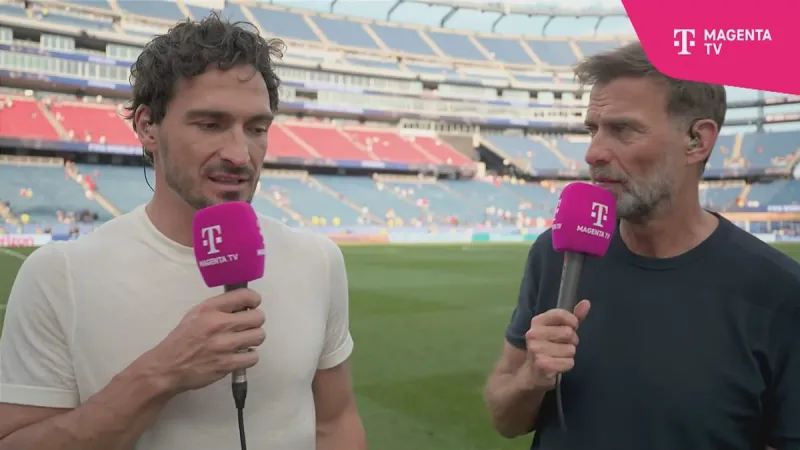
Doha, Qatar – Renowned football figures Mats Hummels and Jürgen Klopp have offered a penetrating analysis of Morocco's historic 2022 World Cup campaign, specifically highlighting a crucial tactical deficiency identified during their semifinal clash against eventual finalists France. Both experts converged on the absence of a potent central striker, often referred to as a number nine, as a significant impediment to the Atlas Lions advancing further in the tournament.
Hummels, the veteran German defender, articulated his perspective, stating that the Moroccan squad, despite its formidable defensive organization and midfield tenacity, simply lacked a decisive presence in the final third. This void, according to Hummels, ultimately limited their offensive threat against top-tier opposition.
Liverpool manager Jürgen Klopp echoed Hummels sentiments, acknowledging Morocco's groundbreaking journey as the first African and Arab nation to reach a World Cup semifinal. However, Klopp also underscored the tactical conundrum posed by their attacking setup, suggesting that a more traditional goal-scorer could have converted promising build-ups into tangible opportunities.
The pivotal match against France, played in Doha, Qatar, saw Morocco battle valiantly but ultimately succumb to a 2-0 defeat. This result notably concluded their extraordinary journey, as detailed in our previous report, France Ends Morocco's Historic Run, Secures World Cup Final Berth. While their defensive solidity had been a hallmark throughout the tournament, allowing them to dispatch powerhouse teams like Spain and Portugal, their attacking impetus often felt blunted.
The number nine role traditionally embodies the team's primary goal threat, often a physical presence capable of holding up play, linking with wingers, and finishing chances. Without this focal point, Morocco frequently struggled to convert possession into clear-cut scoring chances, particularly when facing France's disciplined backline.
Morocco's Cinderella run captivated audiences worldwide, marked by heroic defensive performances, the brilliance of goalkeeper Yassine Bounou, and the tireless work rate of midfielders like Sofyan Amrabat. Their journey to the semifinals redefined expectations for African football on the global stage.
Coach Walid Regraguis tactical acumen was widely praised for crafting a resilient and cohesive unit. His strategy prioritized defensive solidity and swift counter-attacks, which proved highly effective against many opponents. Yet, the deep defensive blocks and quick transitions alone could not entirely compensate for the lack of a consistent finisher.
In contrast, France, boasting Kylian Mbappe and Olivier Giroud, presented a stark example of a team with diverse attacking options, including a formidable central striker in Giroud, who ably complemented Mbappe's pace and dribbling. This tactical depth arguably provided France with a decisive edge.
The observations from Hummels and Klopp offer valuable insights for the future development of the Moroccan national team. Identifying and nurturing a world-class number nine could be a priority as they look to build upon their historic success in future tournaments.
While the absence of a specific player type was highlighted, it does not diminish the monumental achievement of the Atlas Lions. Their performance at the 2022 World Cup will be remembered as a testament to perseverance and tactical discipline, inspiring a generation of footballers across Africa and beyond.