 Angela Stefani
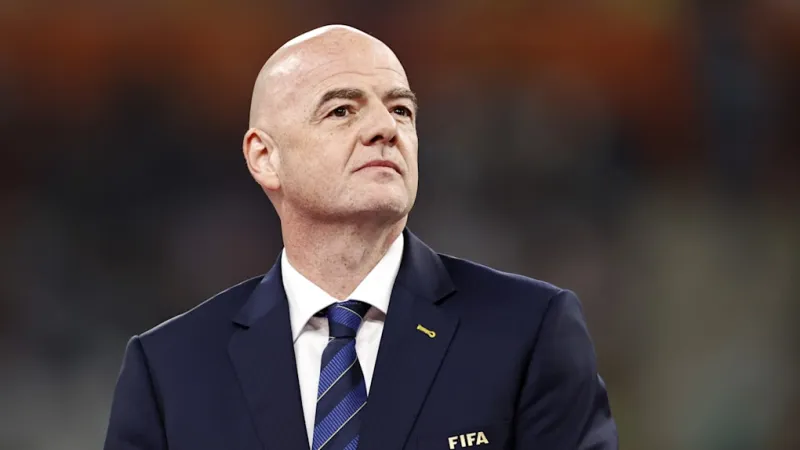
The Federation Internationale de Football Association (FIFA) has officially abandoned its contentious proposal to sell significant stakes in the lucrative World Cup business to private investors, citing irreconcilable divisions among stakeholders. This decisive reversal, confirmed by FIFA leadership, comes after a sustained period of intense pushback, primarily from influential European football confederations and member associations, effectively halting a project deemed by many as a threat to the sport's integrity.
Originally conceived as a means to generate substantial new revenue, the plans involved offloading commercial rights to private equity firms, a move that would have fundamentally altered the financial structure of footballs premier global tournament. Proponents within FIFA argued such a strategy would unlock new capital for development projects and competition expansions.
The core of the opposition emanated from Europe, spearheaded by the Union of European Football Associations (UEFA) and its powerful member federations. These bodies voiced serious concerns about ceding control of the World Cup, a crown jewel of global sport, to external commercial interests, fearing a potential dilution of sporting values in favor of profit margins.
FIFA President Gianni Infantino, who had previously championed the privatization concept, acknowledged the deep rifts within the global football community. His statement confirmed that the project had created too many divisions, signaling a retreat from a policy that faced considerable internal and external resistance.
Sources close to the negotiations suggested the proposed deals could have involved billions of dollars, earmarked for various FIFA initiatives, including the development of new tournaments and increased financial assistance to smaller national associations. However, critics maintained that the long-term cost of relinquishing control outweighed any immediate financial injection.
The widespread sentiment among dissenting voices was that the World Cup, as a global public good of football, should remain firmly under the stewardship of the sport's governing body and its member associations, rather than being subjected to the profit motives of private entities.
This outcome marks a significant victory for the traditional power blocs within football, reaffirming the influence of national federations and continental confederations in shaping the sports future. It underscores a collective desire to safeguard the integrity and democratic governance of the game against commercial pressures.
The withdrawal will compel FIFA to explore alternative strategies for revenue generation and investment in its various programs. This may involve revisiting existing commercial partnerships or developing new financial models that command broader consensus among its diverse membership.
For many, this decision represents a triumph for transparent governance and a rejection of what some perceived as a rushed, top-down approach to fundamental structural changes. It highlights the complex interplay of finance, power, and tradition that defines international football.
The global football landscape, deeply shaped by foundational figures and enduring institutions, often sees its direction influenced by debates over its commercialization. Legacies like that of Football Icon Franco Baresi continue to shape the sport's ethos, emphasizing sporting excellence over purely financial metrics.
This episode also serves as a potent reminder of the collective bargaining power of member associations when united against proposals that threaten perceived core values. It sets a precedent for future discussions regarding the commercial exploitation of footballs most cherished assets.
Moving forward, FIFA will likely prioritize a more collaborative approach in its strategic planning, seeking broader consultation to avoid similar internal conflicts. The focus will undoubtedly shift towards consensus-building as the organization navigates its long-term financial and developmental goals.