 Demian Sahputra
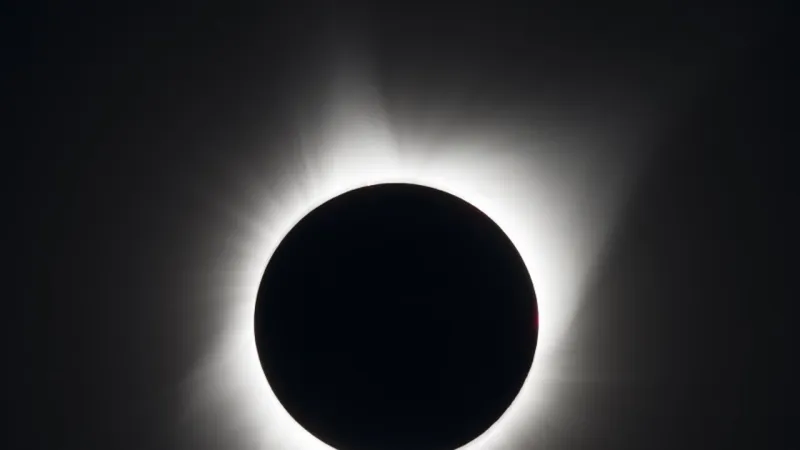
Millions across the globe paused their routines on August 12, 2026, to collectively witness a rare total solar eclipse, an astronomical marvel broadcast live via unprecedented digital streaming platforms. The celestial event captivated audiences from North America to Asia, offering breathtaking views as the Moon obscured the Sun, turning day into a fleeting twilight and providing invaluable data for scientific research.
The highly anticipated phenomenon, which traversed a narrow path of totality stretching thousands of miles, became a focal point for both seasoned astronomers and casual observers. Public and private observatories worldwide collaborated to deliver uninterrupted, high-definition feeds, bringing the awe-inspiring event directly into homes, schools, and workplaces.
Advanced telescope arrays and specialized satellite cameras provided detailed close-ups of the Sun's corona, a dazzling spectacle typically hidden by the Sun's bright face. Scientists utilized these real-time observations to study the Sun's outermost atmosphere, its magnetic field, and the dynamics of solar flares, offering critical insights into our star's behavior.
The extensive preparations for this global viewing event were significant. Ahead of the eclipse, a global countdown had built widespread excitement, encouraging safe viewing practices and highlighting educational opportunities. Major space agencies, including NASA and ESA, spearheaded public outreach campaigns, distributing certified solar filters and providing online resources to enhance the viewing experience.
For those within the path of totality, the experience was profound. Observers reported a sudden drop in temperature, the appearance of stars in the daytime sky, and the eerie silence that often accompanies the Moon's complete obscuration of the Sun. Many traveled vast distances to experience these few minutes of cosmic wonder firsthand, contributing to local economies.
Beyond the scientific observations, the eclipse served as a powerful reminder of humanity's shared connection to the cosmos. Social media platforms buzzed with discussions, photos, and videos, creating a virtual global gathering united by a singular astronomical occurrence. Educators emphasized the event as a unique opportunity to inspire the next generation of scientists and explorers.
The technological prowess displayed in delivering a seamless global livestream underscored rapid advancements in digital broadcasting and internet infrastructure. Multiple redundant systems ensured continuous coverage, overcoming potential network congestions and demonstrating the capacity for truly international collaborative media efforts.
While millions enjoyed the digital spectacle, experts continued to stress the importance of proper eye protection for anyone attempting to view the eclipse directly without professional equipment. Staring at the Sun, even during a partial eclipse, can cause permanent eye damage, a message frequently reiterated by public health authorities.
Historically, solar eclipses have been imbued with various cultural and mythological significances across different civilizations. Today, while scientific understanding prevails, the primal awe evoked by such events remains undiminished, bridging ancient human wonder with modern scientific inquiry.
Looking ahead, future solar eclipses continue to be eagerly anticipated by the scientific community and the general public alike. For instance, Europe anticipates its first total solar eclipse in 27 years, an event that will undoubtedly spark similar enthusiasm and extensive preparations, building upon the successes of this year's global livestream.
The data collected from the 2026 August 12 eclipse will undergo extensive analysis in the coming months, promising new discoveries about the Sun, Earth's atmosphere, and fundamental astrophysics. Researchers will scrutinize every detail, from subtle changes in terrestrial radio waves to the fine structures of the solar corona.
This event further solidified the role of citizen science, with numerous individuals contributing valuable meteorological data and sky observations from their respective locations. Their collective input augments the data gathered by professional observatories, creating a comprehensive dataset for planetary scientists.
The global reach of the livestream not only democratized access to a rare scientific event but also showcased the potential for virtual tourism, allowing individuals who could not travel to the path of totality to experience its grandeur from anywhere with an internet connection. This innovative approach extends the impact of such phenomena far beyond geographical limitations.
Astronomers and solar physicists heralded the eclipse as a triumph of international scientific cooperation, emphasizing how shared objectives can transcend national borders. The meticulous planning and execution by numerous agencies exemplify a commitment to advancing human knowledge through collaborative endeavors.