 Stefani Rindus
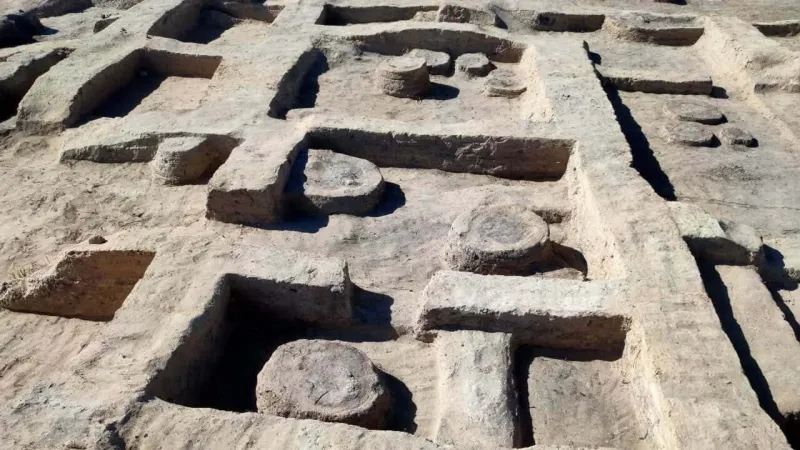
Archaeologists have recently announced a pivotal discovery at the ancient Tell el Abqa'in fortress near Alexandria, Egypt, unearthing a rare buried horse alongside a royal stele and a trove of other New Kingdom artifacts. These finds are expected to dramatically reshape scholarly understanding of military, religious, and social practices during one of ancient Egypts most formidable periods.
The extraordinary revelation occurred during ongoing excavation efforts at the strategic site, which historically served as a vital stronghold. The unexpected presence of a complete horse burial offers a unique glimpse into ancient animal husbandry, potential sacrificial rites, or military traditions of the era.
Accompanying this equine find is a meticulously carved royal stele, a stone slab inscribed with official texts or images. Such stelae are invaluable primary sources, often commemorating pharaonic achievements, decrees, or religious dedications. While specifics of the steles inscription are pending detailed analysis, its mere presence indicates a significant royal connection to the Tell el Abqa'in fortress.
The New Kingdom, spanning roughly from 1550 BC to 1070 BC, represented the pinnacle of ancient Egyptian power, wealth, and territorial expansion. Pharaohs like Thutmose III, Akhenaten, and Ramesses II presided over an empire that stretched from Nubia to the Near East, leaving an indelible mark on history through monumental architecture and sophisticated governance.
The Tell el Abqa'in site itself has long been recognized for its archaeological potential, given its strategic location on the western frontier of the Nile Delta. Its role as a military outpost or administrative center during the New Kingdom makes any discovery there particularly significant for understanding border control and regional interactions.
Experts suggest that the buried horse might have held ceremonial importance, perhaps belonging to a high-ranking official or even a pharaoh, or it could have been part of a ritualistic interment. Ancient Egyptian culture often imbued animals with symbolic meaning, and horses, introduced during the Second Intermediate Period, quickly became integral to military might and royal processions.
The discovery of the royal stele further reinforces the importance of Tell el Abqa'in, indicating that the site was not merely a frontier fort but a locale significant enough to warrant a royal inscription. Such stelae frequently detailed military campaigns, construction projects, or the establishment of new cults, all under the auspices of the ruling pharaoh.
Further analysis of the stele may identify the specific monarch responsible for its erection, thereby tying the fortress directly to a known reign and providing chronological precision to the site's history. This historical anchor is crucial for contextualizing all other artifacts found.
Researchers are now meticulously documenting and preserving the artifacts, employing advanced archaeological techniques to extract maximum information without compromising the integrity of the site. The findings will undoubtedly lead to numerous academic papers and public exhibitions, enriching the global understanding of ancient Egyptian civilization.
This collection of New Kingdom artifacts, particularly the unusual horse burial and the illuminating royal stele, promises to provide an unprecedented window into the daily life, military strategies, and spiritual beliefs of a pivotal era. The ongoing work at Tell el Abqa'in is poised to yield further revelations, cementing its place as a site of immense historical importance.
The ongoing work at Tell el Abqa'in continues, with archaeologists hopeful for additional discoveries that can further elucidate the role of this strategic fortress during the New Kingdom period. Each artifact contributes to a more complete narrative of ancient Egypt's rich tapestry.
The findings underscore the persistent vitality of archaeological research in Egypt, continually unearthing treasures that challenge and refine our perceptions of the past. Such discoveries serve as potent reminders of the enduring mysteries and wonders embedded within the sands of time.