 Demian Sahputra
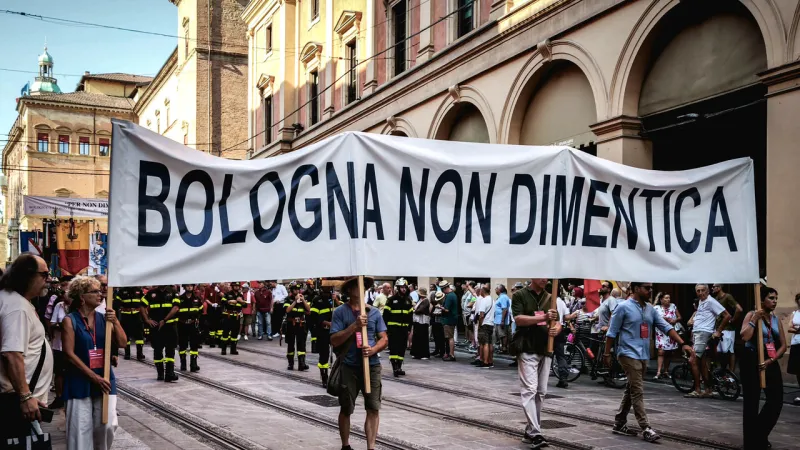
Bologna, Italy – Italy solemnly observed the anniversary of the 1980 Bologna train station bombing this week, with Prime Minister Giorgia Meloni unequivocally declaring the attack an act of “fierce terrorism.” The commemoration, held in the Emilian capital, featured a poignant procession where family members of the 85 victims, including relatives of Fakir, marched to reiterate their persistent demand for full truth and justice, asserting that court sentences have consistently pointed to a clear “fascist matrix” behind the atrocity.
The devastating attack, which occurred on August 2, 1980, remains one of Italy's darkest chapters, causing 85 deaths and injuring over 200 people when a powerful bomb exploded in the waiting room of the Bologna Centrale railway station. The annual remembrance serves as a national moment of reflection on the enduring trauma and the continuous quest for accountability.
Prime Minister Meloni, in her official remarks, underscored the state's unwavering commitment to uncovering all aspects of the tragedy. Her statement, categorizing the event as an act of “fierce terrorism,” aligned with the official narrative but also subtly navigated the long-standing political sensitivities surrounding the bombing.
However, the sentiments from the victims' families echoed a more pointed demand for acknowledgment of the specific ideological underpinnings of the massacre. Representatives for the relatives stressed that judicial verdicts over the decades have consistently identified a “fascist matrix” as the orchestrating force behind the barbarity, urging political leaders to unequivocally recognize this aspect.
The procession through Bologna saw hundreds participate, carrying banners and photographs of their lost loved ones. The visible presence of Fakir's relatives among the marchers served as a powerful symbol of the collective grief and the determination to keep the memory alive and to press for continued investigation.
President Sergio Mattarella also conveyed a powerful message, emphasizing the need for Italy to confront its past with clarity and resolve. His message, read aloud during the commemorations, condemned all forms of extremism and underscored the importance of democratic values in preventing such heinous acts from recurring. Previous statements from the head of state have consistently decried the neofascist strategy that culminated in such terror, a stance reiterated in his most recent address.
His message also highlighted the collective responsibility to remember the victims and to ensure that the historical truth is fully established and accepted. This commitment to truth has been a consistent theme in presidential remarks regarding the bombing, including past instances where President Mattarella has condemned neofascist threats and strategies.
The quest for justice in the Bologna bombing case has been protracted and complex, marked by numerous trials, appeals, and fresh investigations spanning over four decades. While several individuals linked to neofascist groups have been convicted for their roles in the attack, allegations of state complicity and cover-ups have persisted, fueling the families' unrelenting pursuit of complete transparency.
These allegations have led to new judicial proceedings, even in recent years, attempting to uncover any potential deviations or hidden truths that may have obstructed justice. The legal landscape surrounding the bombing continues to evolve, reflecting the deep-seated desire within Italian society to achieve definitive closure.
The enduring memory of the Bologna bombing serves as a potent reminder of the dangers of political extremism and the critical importance of a vigilant, democratic society. The annual commemorations are not merely acts of remembrance but powerful reaffirmations of Italy's commitment to justice and its rejection of violence as a political tool.
The families' insistence on the “fascist matrix” highlights a crucial historical and political debate within Italy, particularly given the nation's complex past with fascism. Their unwavering stance ensures that the ideological motivations behind the attack remain central to the public discourse.
As Italy moves forward in 2026, the legacy of the Bologna bombing continues to shape its national consciousness, demanding not only memory but also continued vigilance against the resurgence of ideologies that promote hatred and terror. The path to full historical reconciliation, for many, remains intrinsically linked to a complete and unambiguous acknowledgment of all facts surrounding the tragedy.