 Stefani Rindus
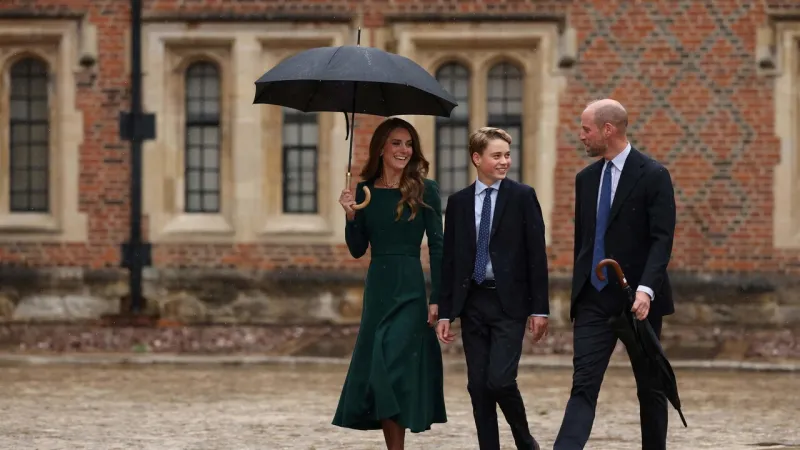
Windsor, England – Prince George, the heir apparent, has officially commenced his academic journey at the esteemed Eton College, marking a significant milestone in his royal upbringing. This enrollment echoes a longstanding family tradition, with both his father, Prince William, and uncle, Prince Harry, having attended the prestigious institution. The occasion, steeped in historical significance, unfolds alongside fresh reports of perceived friction within the monarchy, specifically concerning a recent communication from King Charles to the Duke and Duchess of Sussex.
The Mail, a prominent British newspaper, reports that the Duke and Duchess of Sussex were reportedly taken aback by a letter from King Charles. This correspondence is said to have explicitly addressed their status within the royal framework, labeling them “private citizens” and outlining a revised relationship with the core institution. This development has reignited discussions about the ongoing dynamics within the House of Windsor.
Prince George's attendance at Eton, one of the world's most renowned public schools, underscores the family's commitment to a traditional education for future monarchs. The institution, founded in 1440 by King Henry VI, has educated 20 British Prime Ministers and numerous members of the aristocracy, solidifying its reputation as a crucible for leaders. His matriculation places him directly in a lineage that includes generations of male royals.
His father, Prince William, now Prince of Wales, attended Eton from 1995 to 2000. Prince Harry also followed, enrolling in 1998 and graduating in 2003. Their time at the school was extensively documented, balancing royal duties with the rigors of academic and sporting life. Prince George will likely experience a similar environment, albeit with the added scrutiny of an increasingly digital world.
The reported letter to the Duke and Duchess of Sussex from King Charles III is believed to formalize their position following their decision to step back from frontline royal duties in 2020. This move, dubbed “Megxit” by the press, led to their relocation to the United States and a redefinition of their roles and responsibilities away from public funding.
Sources close to the couple, as cited by The Mail, suggest the tone and content of the royal letter came as a surprise. While the Sussexes had already forged an independent path, the explicit declaration of “private citizens” from the monarch himself may signify a more definitive delineation of their status within the family hierarchy and royal protocols.
This recent development adds another layer to the complex narrative surrounding the Royal Family's evolving structure and public image. The delicate balance between tradition and modernity, public duty and private life, continues to be a central theme for the Windsors as they navigate a new era under King Charles III.
Eton College's rigorous curriculum and emphasis on character development are seen as crucial preparation for Prince George's future role. He will reside in one of the school's boarding houses, participating in a full schedule of classes, sports, and extracurricular activities, designed to foster independence and leadership qualities.
The King's purported communication to the Sussexes comes at a time when the monarchy is undergoing significant transitions. With King Charles III at the helm and Prince William preparing for his eventual ascension, the clarification of roles for all family members, particularly those no longer active working royals, is a recurring internal challenge.
Royal commentators widely interpret such explicit statements from the monarch as attempts to streamline the institution and manage public expectations. The precise implications of being labeled “private citizens” by the King, particularly concerning security, titles, or ceremonial involvement, remain subject to further speculation and observation.
As Prince George begins his formative years at Eton, the broader Royal Family continues to grapple with its identity in the 21st century. The juxtaposition of a future king embracing centuries-old traditions while simultaneously navigating contemporary family complexities offers a compelling glimpse into the British monarchy's enduring, yet ever-changing, narrative.