 Demian Sahputra
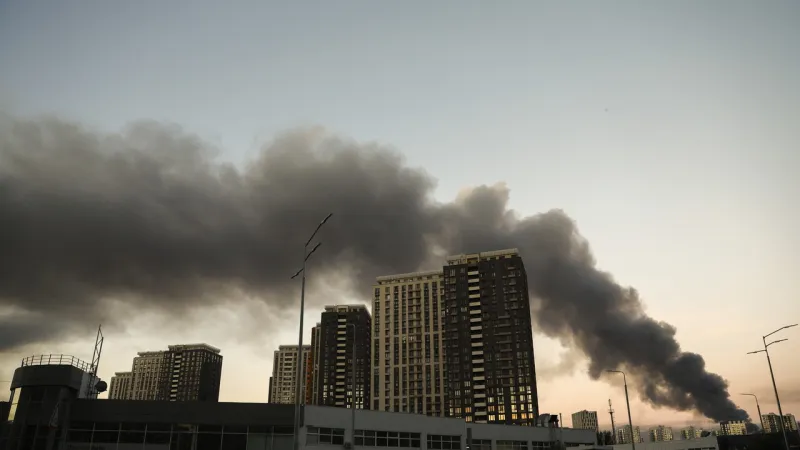
Kryvyi Rih, Ukraine – A surge of cross-border military actions between Russia and Ukraine has resulted in at least one fatality and one injury in the central Ukrainian city of Kryvyi Rih. This intensified exchange, a stark manifestation of the protracted Russia-Ukraine conflict, also saw significant explosions reported in the strategic port city of Odessa and the destruction of camouflaged bunkers in Kharkiv, according to recent intelligence assessments.
The casualty in Kryvyi Rih underscores the continuing human toll exacted by the conflict, which shows little sign of abatement. Local authorities quickly responded to the aftermath, mobilizing emergency services to the affected areas, though specific details regarding the victims have been limited pending further investigation.
In Odessa, residents reported powerful detonations that shook the city, a frequent target due to its critical Black Sea port status. While the full extent of the damage remains under evaluation, initial reports suggest civilian infrastructure may have been impacted, exacerbating concerns for the city's populace.
Further east, near the front lines, the destruction of camouflaged bunkers in Kharkiv signals targeted strikes against Ukrainian defensive positions. These military engagements aim to degrade Ukraine's logistical capabilities and defensive strongholds, indicating a persistent Russian strategy to advance its territorial objectives.
The latest round of attacks fits into a broader pattern of escalating aggression witnessed across the region. Both Russian and Ukrainian forces have increasingly relied on missile and drone strikes, alongside ground incursions, to press their strategic advantages and inflict damage upon opposing military and critical infrastructure.
Observers of the Russia-Ukraine conflict note that these raids reflect a dangerous acceleration in hostilities. Military analysts suggest such actions often precede or accompany larger ground operations, raising alarms about potential further escalation in the coming weeks.
Internationally, there is a renewed chorus of condemnation for the violence, with calls for de-escalation from numerous global bodies. The United Nations and other humanitarian organizations continue to stress the urgent need for a peaceful resolution and unimpeded access for aid delivery to affected populations.
The enduring conflict in Eastern Europe contributes significantly to global instability, influencing energy markets and geopolitical alliances. The aggression demonstrated by these attacks reverberates far beyond Ukraine's borders, impacting international relations and security frameworks.
President Donald Trump's administration has maintained a firm stance on supporting Ukrainian sovereignty, while advocating for a peaceful end to the conflict. The United States and its allies continue to supply crucial military and humanitarian assistance to Kyiv, bolstering Ukraine's defense capabilities against persistent Russian aggression.
Ukrainian President Volodymyr Zelenskyy has consistently vowed that Ukraine will not yield to Russian pressure, reiterating the nation's commitment to defending its territorial integrity. Such pronouncements underscore the deep resolve within Ukrainian leadership and society.
Russia, for its part, maintains that its actions are necessary to protect its security interests and counter perceived threats from the West. This rhetoric, often articulated by figures such as President Vladimir Putin, continues to fuel the prolonged hostilities and complicates diplomatic pathways. For a broader context on Russian strategic thinking, one might consider Putin Blames Western Globalists for AfD Rise, Issues Europe Warning.
The civilian population remains caught in the crossfire, facing constant threats of bombardment and displacement. Humanitarian organizations are working tirelessly to provide shelter, food, and medical aid to those uprooted or impacted by the relentless fighting.
The renewed intensity of the raids serves as a stark reminder of the fragile security situation across Ukraine. With no immediate political resolution on the horizon, military analysts anticipate continued skirmishes and strategic assaults as both sides seek to gain tactical advantages.
This sustained aggression places immense pressure on Ukraine's infrastructure and its allies to sustain aid. The ability of Ukrainian cities to withstand continuous assaults depends heavily on ongoing international support and robust air defense systems.
The global community watches cautiously as the Russia-Ukraine conflict enters what appears to be another critical phase. The international implications of a prolonged and intensifying conflict weigh heavily on diplomatic efforts and regional stability.