 Demian Sahputra
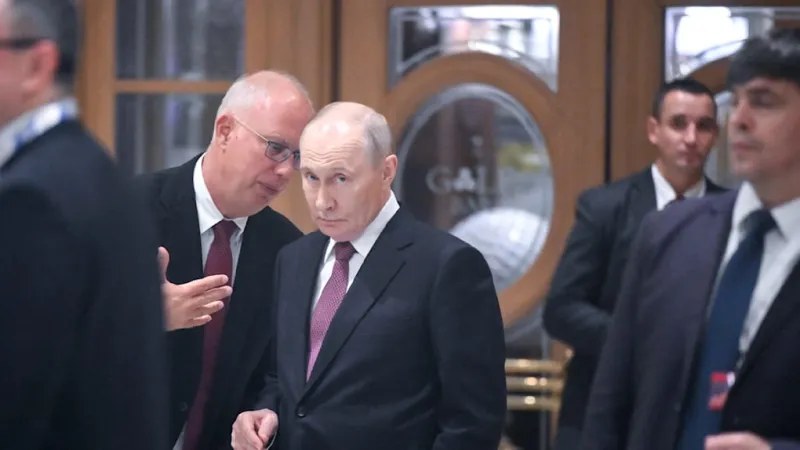
MOSCOW – Russian President Vladimir Putin recently attributed the surging electoral successes of Germany's Alternative for Germany (AfD) party directly to the actions of what he termed “Western globalists.” Putin asserted that these elites, spanning politics, security, and economics, were also responsible for provoking the conflict in Ukraine by actively attempting to draw the nation into the North Atlantic Treaty Organization (NATO). In his remarks, the Russian leader also issued a pointed warning to Europe regarding its future.
The AfD, a right-wing populist party, has experienced a significant increase in its support base across Germany, particularly in regional elections. This political ascendance has consistently challenged the established mainstream parties and sparked widespread debate within Germany and across the broader European Union.
President Putin's pronouncements cast a broad net of blame, alleging that a collective of Western figures is intentionally destabilizing the geopolitical landscape. He reiterated his long-standing view that their perceived role in fostering the conditions that led to the ongoing conflict in Ukraine is undeniable.
The Russian head of state maintained that the persistent and unwavering efforts to integrate Ukraine into the NATO alliance served as a primary catalyst for the current hostilities. This narrative remains a cornerstone of Moscow's justification for its military actions.
The address from the Russian leader included an explicit, though unspecified, caution for European nations. While the precise nature of this warning was not fully detailed in the initial reports, such statements frequently carry implications for economic stability, regional security, or the future of diplomatic relations.
While immediate official reactions from German officials were not provided, allegations from Moscow concerning internal German political shifts or broader European events typically draw swift condemnation or dismissal from Berlin. The notion of external influence on the AfD's rise is a particularly sensitive point.
Putin frequently frames international events and internal European developments through the lens of a confrontation between Russia and a monolithic “West.” The term “globalists” serves as a key rhetorical device in this framework, denoting a perceived liberal international order that he views as hostile to Russian interests.
The AfD itself has built its platform on strong criticisms of German government policies, especially concerning immigration, energy strategies, and foreign policy. This alignment with certain Eurosceptic and nationalist sentiments within Germany is a factor that Putin appears to leverage in his public rhetoric.
This is not an isolated instance of Russia commenting on internal European political developments or attributing them to external, conspiratorial forces. Moscow has a documented history of attempting to exploit and amplify internal divisions within Western states.
President Putin's recent statements further underscore the deep ideological chasm and persistent animosity between Russia and the European Union. Such declarations significantly reduce any prospects for meaningful diplomatic breakthroughs or improved relations in the foreseeable future.
The electoral success of the AfD, regardless of external interpretations, continues to present a significant challenge to Germany's traditional political parties. It has prompted considerable internal debate and calls for a thorough reassessment of domestic political strategies, as explored in articles like Federal Coercion Eyed After AfD Victory Stuns German Politics.
Adding further context to the AfD's growing influence, recent polls, such as those detailed in AfD Edges SPD in Mecklenburg-Vorpommern Poll; CDU Nears Five Percent, highlight the party's competitive performance in various German states.
Amidst the ongoing conflict in Ukraine and heightened geopolitical tensions, rhetoric from all sides contributes to a complex and volatile global environment where narratives of blame, provocation, and ideological opposition are increasingly prevalent. The Russian President's remarks exemplify this persistent friction between East and West, framing internal European political shifts as direct consequences of perceived Western missteps and geopolitical ambitions.