 Chris Robert
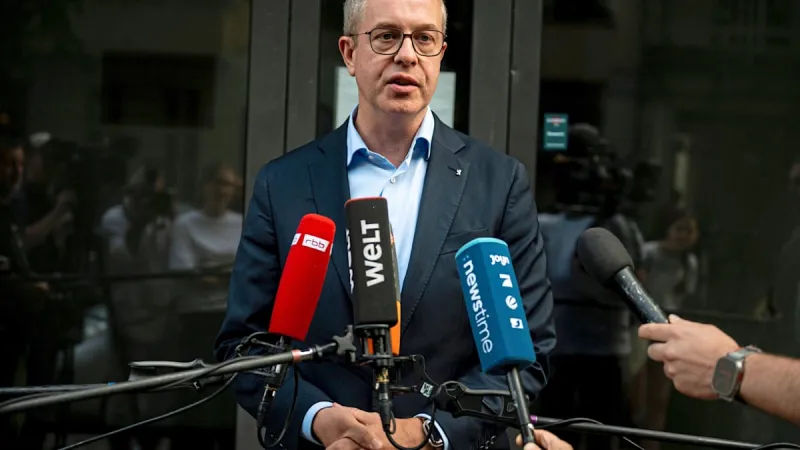
BERLIN – Harald Burkart, the state chairman of the Young Union Berlin, unequivocally welcomed the resignation of Kai Wegner, calling for the Christian Democratic Union (CDU) to immediately reorient its focus towards critical issues of housing construction, internal security, and economic revitalization under the prospective leadership of Stefan Evers. Burkart stated it was “better late than never,” emphasizing the urgency of this strategic pivot for the party's future in the capital.
Wegners departure marks a significant moment for the Berlin CDU, a move that the Young Union clearly views as an opportunity for rejuvenation. This leadership change comes at a time when Berlin faces multifaceted challenges, demanding resolute political action and a clear vision for the future.
Stefan Evers emerges as a central figure in this transition. He is widely considered a promising candidate to lead the Berlin CDU, a sentiment bolstered by the Young Union's public endorsement. This aligns with broader expectations within the party, as indicated by recent reports such as Evers Tapped to Lead Berlin CDU, Hopes for Party Comeback.
Burkart articulated three core pillars for the party's renewed agenda: housing construction, internal security, and the economy. These areas resonate deeply with Berliners, who consistently rank these issues among their top concerns in public opinion polls.
Regarding housing, Berlin has long grappled with an acute shortage and soaring rents. The Young Union's demand for renewed focus on Wohnungsbau signals a commitment to addressing the housing crisis, potentially through accelerated construction initiatives and streamlined regulatory processes.
Internal security remains another pressing issue. Crime rates and public safety perceptions have been significant points of contention within the city. A robust approach to Innere Sicherheit, as advocated by Burkart, would likely involve strengthening law enforcement and implementing preventive measures to enhance urban safety.
The economic landscape of Berlin, while vibrant in certain sectors, also faces ongoing pressures. The call for a stronger focus on the Wirtschaft implies strategies aimed at fostering sustainable growth, supporting local businesses, and attracting investment to create more employment opportunities for the citys diverse population.
This strategic reorientation represents more than just a change in leadership; it embodies a potential shift in the CDU's policy priorities and its approach to engaging the electorate. By embracing these core issues, the party aims to reconnect with voters and present a credible alternative for Berlins governance.
The Young Union, as the party's youth wing, plays a crucial role in shaping future policies and personnel. Their assertive stance following Wegners resignation underscores their influence and their expectation for immediate, tangible changes within the party structure and agenda.
The backing of Stefan Evers suggests a move towards a candidate believed capable of implementing these critical reforms and spearheading a renewed, more effective political narrative for the Berlin CDU. His candidacy signifies hope for a stronger, more responsive party that can effectively address the daily concerns of Berlin's citizens.
The challenges awaiting Evers and the revamped CDU are substantial. They must not only unite the party but also convince a skeptical electorate that their proposed solutions are both viable and superior to those of their political rivals. This is a critical juncture for conservative politics in the German capital.
Ultimately, the success of this pivot will depend on the party's ability to translate its declared priorities into concrete policy proposals and demonstrate a clear path towards improving the lives of Berliners. The eyes of the political establishment and the public are now firmly fixed on how the Berlin CDU will leverage this leadership transition.