 Stefani Rindus
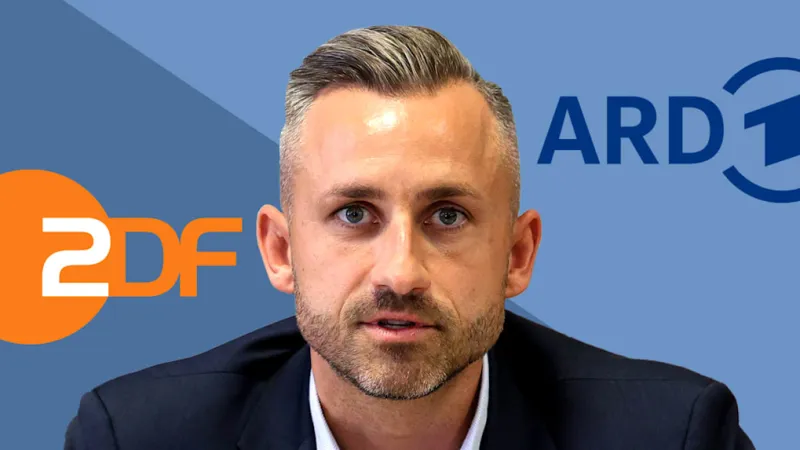
Sachsen-Anhalt, Germany – A significant political confrontation is unfolding in the German state of Sachsen-Anhalt, where the Alternative for Germany (AfD) and Bündnis Sahra Wagenknecht (BSW) parties are advocating for the termination of state treaties governing public broadcasting. This unprecedented move could lead to Sachsen-Anhalt becoming the first federal state to withdraw from the nationwide public broadcasting system, challenging the foundational Digital Media State Treaty.
The proposition by the AfD and BSW has ignited a fierce debate within the state parliament, drawing sharp criticism from established parties, particularly the Christian Democratic Union (CDU) and the Social Democratic Party (SPD). These parties view the initiative as a direct assault on the independence and existence of Germany's publicly funded media landscape.
At the core of the dispute lies the Digital Media State Treaty, an inter-state agreement that forms the legal basis for the organization, funding, and content mandates of public broadcasters such as ARD, ZDF, and Deutschlandradio. Adherence to this treaty is traditionally considered a cornerstone of media governance across all 16 German federal states.
Proponents of the withdrawal argue that the current public broadcasting system is bloated, inefficient, and lacking in impartiality. They contend that the mandatory licensing fees, known as the Rundfunkbeitrag, place an undue burden on citizens and that the content produced does not adequately reflect the diversity of public opinion. This sentiment aligns with a broader critique from certain political factions regarding the role and perceived bias of public media.
Conversely, the CDU and SPD staunchly defend the public broadcasting model, emphasizing its crucial role in providing comprehensive, independent, and high-quality journalistic content. They assert that public broadcasters are vital for democratic discourse, offering a counterweight to commercial media and combating disinformation, particularly in an increasingly complex digital landscape.
Terminating state treaties is a complex legal and constitutional endeavor. Such a withdrawal would not only require a majority vote in the Sachsen-Anhalt state parliament but would also face significant legal challenges, as the current public broadcasting system is deeply intertwined with constitutional provisions regarding media freedom and pluralism. Legal experts suggest that any unilateral withdrawal could be deemed unconstitutional.
Germany's public broadcasting architecture, comprising a network of regional public broadcasters under the ARD umbrella, ZDF, and Deutschlandradio, is funded by a universal household fee. This system aims to ensure editorial independence from both state and commercial interests, fulfilling a public service mandate to inform, educate, and entertain.
The debate in Sachsen-Anhalt mirrors ongoing discussions across Germany concerning the future viability and public acceptance of the public broadcasting model. While calls for reform and increased transparency are not new, a complete state withdrawal represents a drastic escalation in this long-standing discourse.
The political climate in Sachsen-Anhalt, characterized by a fragmented parliament and the growing influence of populist parties, provides fertile ground for such proposals. The AfD, a significant force in the state, has consistently expressed skepticism towards established institutions, including the public media.
Observers speculate that the move by AfD and BSW could be a strategic maneuver to pressure for fundamental reforms to the public broadcasting system, rather than an immediate expectation of complete withdrawal. However, the proposal itself signifies a deepening ideological divide over the role of media in German society.
The potential precedent set by Sachsen-Anhalt could have far-reaching implications for the entire German media landscape. If one state successfully withdraws, it might encourage similar actions in other federal states, potentially unraveling the unified public broadcasting system.
The coming months will likely see intensive political maneuvering and legal analyses as Sachsen-Anhalt grapples with this contentious proposal. The outcome will not only redefine media policy within the state but also send a powerful message about the resilience and adaptability of Germany's public broadcasting institutions in 2026.