 Edward DP Situmorang
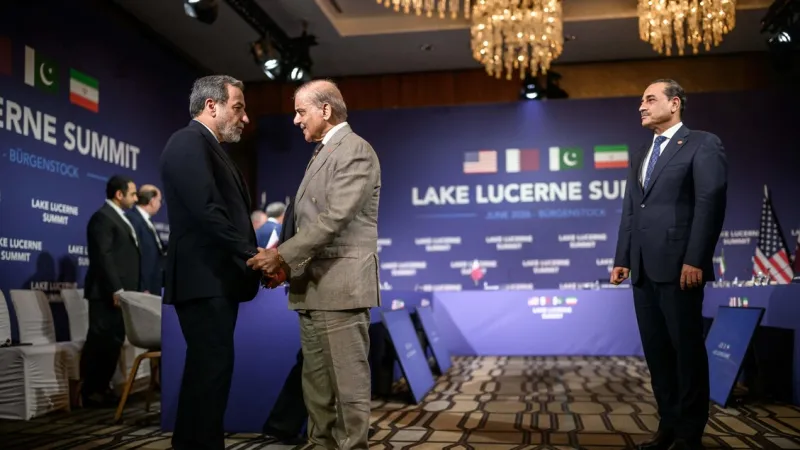
Lucerne, Switzerland – Diplomatic efforts between the United States and Iran encountered fresh turbulence today as President Donald Trump issued a stern ultimatum concerning the Strait of Hormuz, threatening military action if the vital waterway is not kept open. The provocative statement sparked immediate fury from Tehran, even as conflicting reports emerged regarding the status of ongoing discussions in Switzerland.
President Trump delivered his unequivocal demand, asserting that Iran must ensure free passage through the Strait of Hormuz or face severe consequences. His declaration, reported globally, specifically warned, "Open Hormuz or we bomb." This direct challenge underscored the persistent volatility characterizing relations between Washington and Tehran, particularly surrounding critical maritime choke points.
In swift response, Iranian officials vehemently condemned President Trump's rhetoric. Ghalibaf, a prominent figure, issued a sharp retort, stating, "Trump must be careful what he says; our military stands ready." This defiant stance from Tehran highlighted the deep-seated mistrust and the readiness of both nations to engage in a war of words, if not direct confrontation.
Adding to the uncertainty, media reports initially indicated that the Iranian delegation had abruptly departed the Lucerne discussions in protest following President Trump's remarks. However, an unnamed diplomat, speaking to Axios, quickly contradicted these accounts, asserting, "The talks are still in progress." This discrepancy further complicated the international understanding of the delicate negotiations.
The high-stakes talks in Lucerne represent a critical juncture in the long-standing efforts to de-escalate tensions in the Middle East, particularly concerning Iran's nuclear program and regional influence. These discussions aim to find common ground and prevent further destabilization of an already volatile region. For more context on the ongoing situation, readers can refer to US, Iran Resume Critical Swiss Talks; Tehran Demands Uranium Rights.
The Strait of Hormuz, a narrow passage connecting the Persian Gulf with the Arabian Sea, holds immense strategic importance. Approximately one-fifth of the world's total oil consumption, along with a significant portion of liquefied natural gas, transits through this waterway daily. Any disruption to shipping in the Hormuz Strait carries profound global economic implications.
Past incidents involving tankers and naval vessels in the Hormuz Strait have consistently elevated international concern, leading to calls for restraint and diplomatic solutions. The latest ultimatum from President Trump reintroduces a level of military threat that observers fear could quickly unravel months of careful diplomatic groundwork.
Analysts suggest that President Trump's aggressive posture may be an attempt to exert maximum pressure on Iran at the negotiating table, forcing concessions on issues ranging from its nuclear ambitions to its support for regional proxies. However, such overt threats often backfire, solidifying resolve among adversaries rather than compelling compliance.
Tehran has consistently asserted its sovereign right to control its territorial waters and has frequently warned against any perceived infringement on its security interests. The Iranian military's readiness, as articulated by Ghalibaf, is a testament to its long-held doctrine of self-defense and deterrence in the face of external threats.
As the world closely watches developments, the fate of the Lucerne talks remains precarious. The contrasting narratives from media outlets and diplomatic sources, coupled with the escalating rhetoric from national leaders, paint a picture of profound diplomatic challenges. The international community continues to urge both sides to prioritize dialogue and de-escalation.
The delicate balance of power in the region, coupled with the global reliance on energy flows through the Hormuz Strait, means that every statement and action carries significant weight. Diplomacy often operates on thin ice, and the current exchanges threaten to crack it further. Readers interested in previous warnings can consult Trump Warns Iran on Hormuz As Nuclear Talks Advance.
Ultimately, the path forward requires a reduction in inflammatory language and a recommitment to the painstaking process of negotiation. The current friction over the Hormuz Strait underscores the urgent need for a viable, long-term resolution to the deep-seated disagreements between the United States and Iran.