 Debby Wijaya
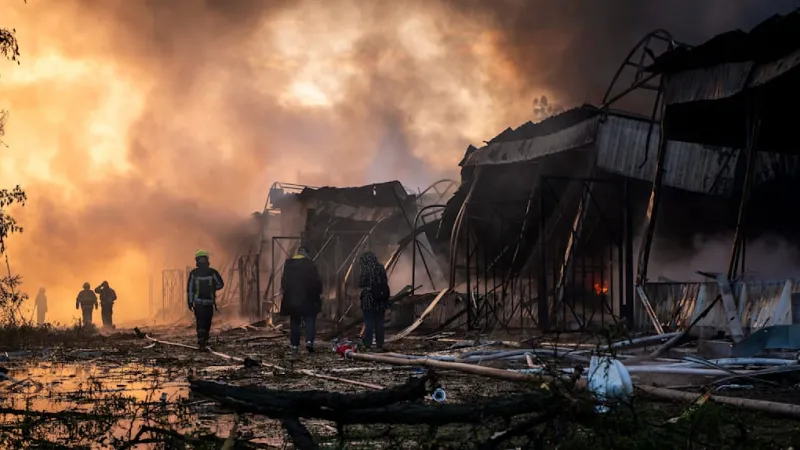
MOSCOW – Following a recent Ukrainian drone attack on an oil refinery situated on the outskirts of the Russian capital, prominent nationalist voices within Russia are intensifying demands for a severe and immediate retaliation, with some explicitly advocating for the deployment of nuclear weapons against Ukraine. This escalation in rhetoric comes as Moscow grapples with the strategic implications of Kyiv's expanding drone capabilities, which are increasingly targeting Russian infrastructure.
The drone assault, which caused damage to a critical energy facility, marks another significant instance of Ukraine extending its military operations deeper into Russian territory. These long-range strikes aim to disrupt Russia's logistical capabilities and economic stability, serving as a direct counter to the ongoing conflict initiated by Moscow. Such actions have demonstrably fueled calls for retribution among hardliners.
Among the most vocal proponents for a forceful response is Parliament President Wolodin, who publicly warned of the potential use of "even more powerful weapons" in the wake of the attacks. Wolodin's statements, delivered through state-controlled media channels, underscore a growing sentiment within Russian political circles that current military measures are insufficient to deter Ukrainian aggression or secure a decisive victory.
Adding to the chorus of hawkish demands, an unnamed but influential Russian oligarch went further, unequivocally advocating for the use of an atomic bomb. While such extreme pronouncements have previously surfaced from fringe elements, the increasing prominence of these calls from figures within Russia's political and economic elite signals a worrying shift in the discourse surrounding the conflict.
These calls for extreme measures represent a significant departure from previous official statements, which often maintained a degree of ambiguity regarding nuclear escalation. The public nature of these recent demands risks normalizing discussions around weapons of mass destruction, potentially lowering the threshold for their consideration in future military strategies.
The global community has consistently expressed profound concern over any rhetoric that hints at nuclear conflict, understanding the catastrophic implications of such a scenario. The ongoing war in Ukraine has already tested international norms and stability, and calls for nuclear use only heighten anxieties among world powers.
Ukraine's strategy of deploying drones for long-range strikes has proven to be a difficult challenge for Russian air defenses. As detailed in related analyses, Ukraine's Drone War on Moscow: Strategic Success, Difficult to Counter, these tactics allow Kyiv to project power and exert pressure on the Russian populace and economy without direct engagement on the front lines.
The internal dynamics within Russia reveal a complex interplay of frustration and nationalist fervor. While official policy has maintained a measured approach to nuclear threats, the public statements from figures like Wolodin and the unnamed oligarch likely reflect a segment of the Russian leadership eager for a more decisive, albeit dangerous, path forward.
Analysts suggest that succumbing to such extreme calls for escalation carries immense risks, not only for the immediate conflict zone but for broader European and global security. The potential for miscalculation or unintended consequences in an environment where nuclear weapons are openly discussed is a grave concern.
As the conflict progresses into its current phase in 2026, the rhetoric emanating from Moscow will be closely monitored by international observers and policymakers. The sustained pressure from nationalist factions to employ "victory at any price" strategies, including the unthinkable, continues to shape the trajectory of this deeply troubling geopolitical crisis.