 Angel Doris
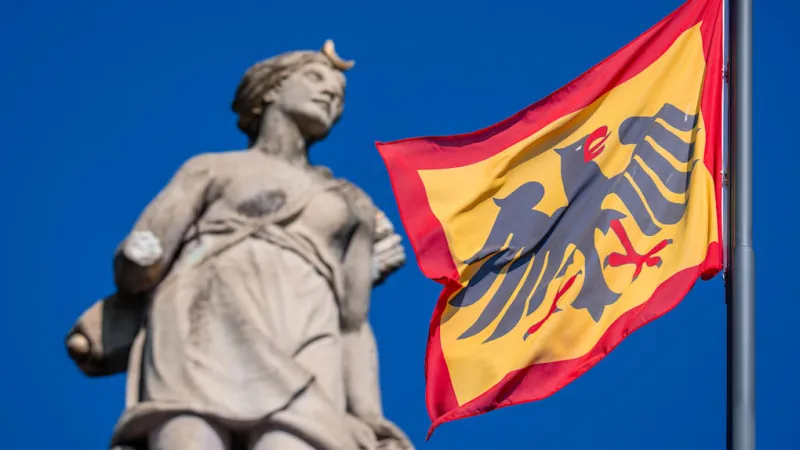
BERLIN – German political leaders from the Christian Democratic Union/Christian Social Union (CDU/CSU) and the Social Democratic Party (SPD) are actively pursuing the election of the nation's first female Federal President in 2027, a goal whose popular support remains ambiguous, according to an exclusive survey conducted for WELT AM SONNTAG.
The aspiration to see a woman occupy the largely ceremonial yet symbolically powerful office of Federal President has gained traction within mainstream political discourse. Both ruling coalition parties and the main opposition bloc have articulated this as a significant objective for the upcoming electoral cycle.
This political impetus arrives amidst broader societal discussions concerning gender equality in high office. While Germany has previously been led by a female Chancellor, the role of Federal President carries distinct constitutional duties and represents national unity and moral authority.
The WELT AM SONNTAG exclusive poll sought to gauge the precise sentiment among the German populace, providing critical insight into how citizens perceive this potential historical milestone. The survey explored various facets of public opinion, moving beyond simple approval ratings.
Initial findings indicate a notable division among voters. While a substantial portion expresses openness to the idea of a female Federal President, an equally significant segment prioritizes qualifications and experience above gender considerations. This nuance suggests a complex interplay of progressive ideals and traditional political values.
Polling data revealed that approximately 45 percent of respondents enthusiastically support the election of a woman to the presidency. This demographic often cites the importance of representation and the symbolic power of such an appointment in fostering a more equitable society.
Conversely, around 35 percent of those surveyed indicated that the gender of the candidate holds secondary importance to their proven abilities, political track record, and suitability for the demanding role. They argue that merit should be the sole determinant, irrespective of demographic factors.
The remaining 20 percent of the electorate remains undecided or expressed indifference, underscoring the lack of a clear national consensus on the matter. This demographic could prove pivotal as political parties strategize for the 2027 election, highlighting the need for compelling candidates.
Political analysts suggest that these findings will undoubtedly influence the candidate selection process within the major parties. For instance, the ongoing political dynamics within blocs like the CDU/CSU, as highlighted in discussions around figures like Friedrich Merz, underscore the intense scrutiny applied to all potential nominations.
The drive for a female Federal President is not merely about achieving a first; it also reflects a broader European trend toward greater female representation in leadership positions. Germany, a leading nation in the European Union, often sets precedents that resonate across the continent.
Proponents argue that a female Federal President would send a powerful message both domestically and internationally, reaffirming Germany's commitment to modern values and gender parity. It would symbolize a nation evolving beyond traditional power structures.
Critics, however, caution against what they perceive as identity politics overriding genuine qualifications. They assert that the presidency demands a figure universally respected and capable of uniting a diverse nation, irrespective of their gender. The public debate often revolves around the definition of an ideal head of state.
The office of Federal President, while largely ceremonial, holds significant influence in national discourse. The president acts as a moral compass, mediator, and a voice for the nation's conscience, particularly during times of crisis.
With the election scheduled for 2027, the coming months will likely witness intensified internal discussions within parties as they weigh potential candidates against the backdrop of this recent public sentiment survey. The balance between political ambition and public acceptance will be critical.
The pursuit of a female Federal President represents a fascinating intersection of political aspiration, societal expectation, and democratic process. As Germany looks towards its next head of state, the aspirations of its politicians must navigate the nuanced opinions of its citizens.
This national conversation extends beyond the candidates themselves, touching upon deeper questions about representation, meritocracy, and the evolving face of German leadership. The outcome of the 2027 election for the next female Federal President will be closely watched.