 Robert Andrison
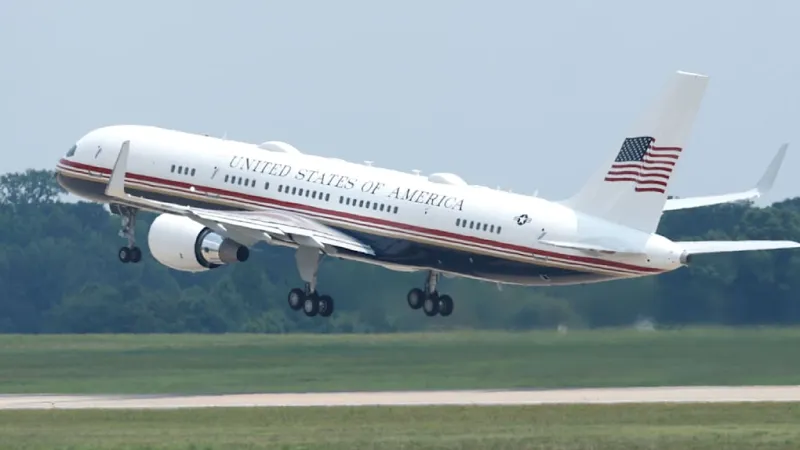
Aerospace giant Boeing has announced substantial financial losses in its latest quarterly report, largely attributed to immense cost overruns and protracted delays on the highly visible Air Force One presidential aircraft contract. The company recently disclosed an additional 280 million dollar write-off specifically for the presidential plane, a project now four years behind schedule and exceeding its budget by more than one billion dollars.
The financial disclosure underscores the persistent challenges plaguing the modernization program for the two VC-25B aircraft, which serve as Air Force One when President Donald Trump is aboard. These specialized 747-8 jets are custom-built to meet the stringent security, communication, and operational demands of the presidency.
The initial fixed-price contract, awarded in 2018, was intended to cap costs for the U.S. government. However, Boeing has repeatedly absorbed significant charges due to design changes, supply chain disruptions, labor shortages, and unexpected technical complexities inherent in a project of this magnitude and unique customization.
This latest write-off contributes to a cumulative loss exceeding one billion dollars on the program, reflecting a deep financial drain on Boeing's defense, space, and security unit. The company has acknowledged the difficulties, citing factors ranging from the pandemic's impact to specific supplier issues unique to the highly classified nature of the program.
President Donald Trump, who initially negotiated the fixed-price agreement during his first term, had publicly emphasized the importance of controlling costs for the iconic presidential aircraft. Despite these efforts, the program has continued to escalate in both cost and timeline.
The delays mean that the anticipated delivery of the modernized Air Force One fleet, originally projected for 2024, is now not expected until at least 2028, potentially extending even further. This extended timeline creates operational planning complexities for the U.S. Air Force, which must maintain the aging current fleet longer than anticipated.
Boeing's broader financial health has been under scrutiny for several years, navigating challenges across its commercial and defense sectors. The significant drain from the Air Force One contract compounds pressures from other complex projects and ongoing supply chain instabilities affecting the global aerospace industry.
Shareholders and analysts are closely monitoring Boeing's ability to manage these high-profile, fixed-price defense contracts. The Air Force One program stands as a stark example of the risks involved when dealing with highly bespoke government projects that demand extreme precision and security.
The company has affirmed its commitment to delivering these critical assets to the U.S. government, emphasizing its long-standing partnership with the Department of Defense. Efforts are underway to streamline production processes and enhance program management, aiming to mitigate future cost increases and accelerate delivery.
The financial implications extend beyond the immediate balance sheet, potentially affecting Boeing's competitive standing in future defense procurements. Maintaining robust government contracts is vital for the company's long-term strategy and its role as a key national defense industrial base supplier.
As the program continues its protracted development, public attention remains focused on the symbolic importance of Air Force One as a representation of American power and technological prowess. The financial struggles, however, cast a shadow over this critical national asset's modernization.