 Dodi Irawan
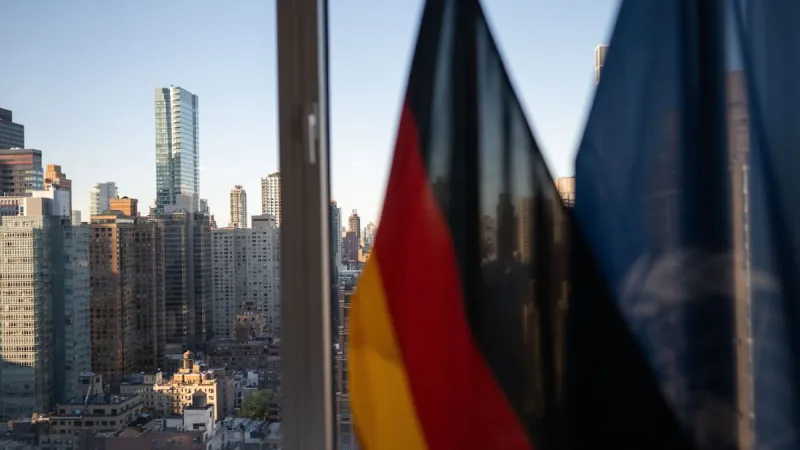
BERLIN – Germany has launched an ambitious campaign for a non-permanent seat on the United Nations Security Council, entering a competitive race against fellow European Union members Austria and Portugal. The bid highlights Berlin's resolute commitment to multilateralism and its steadfast advocacy for international law, even as political observers ponder the substantial diplomatic effort for a position without veto authority.
“It is interesting how much effort is being made, even though this seat does not even have a veto right,” noted Hans Joachim von der Burchard, lead for Berlin Playbook, reflecting on the considerable resources invested in the campaign. His observation underscores a deeper strategic motivation beyond immediate legislative power, pointing towards the symbolic and influential value of such a role.
While lacking the veto power held by the five permanent members, a non-permanent seat on the UN Security Council offers a crucial platform for a nation to shape global discourse and influence decisions on critical peace and security issues. It provides an elevated voice in crucial debates, allowing a country to directly contribute to resolution drafting, agenda setting, and international consensus-building.
Germany's aspiration to uphold international law, a sentiment frequently expressed in European diplomatic circles, forms the bedrock of its current campaign. This aligns with a long-standing German foreign policy tradition centered on a rules-based order, human rights, and the peaceful resolution of conflicts, particularly in an era marked by complex geopolitical challenges.
The fierce competition with Austria and Portugal for the highly coveted regional slot within the UN framework signifies broader European geopolitical jockeying. Each nation seeks to amplify its global diplomatic footprint and contribute its unique perspective to the world's most powerful body addressing peace and security.
Non-permanent members serve two-year terms, elected by the General Assembly. During their tenure, they participate fully in all Security Council proceedings, voting on resolutions concerning sanctions, peacekeeping missions, and interventions. This direct involvement allows them to advocate for specific regional concerns or thematic priorities on the global stage.
Germany has previously served multiple terms as a non-permanent member, most recently from 2019 to 2020. Its past contributions have often focused on conflict prevention, climate security, and the protection of civilians, solidifying its reputation as a constructive and reliable partner within the international community.
This bid also reflects a broader European desire for coordinated foreign policy and increased influence within global institutions. As the European Union continues to navigate complex economic and geopolitical shifts, member states like Germany often play pivotal roles in defining the bloc's collective stance on global issues. This emphasis on unified action extends to areas such as economic policy, as seen with EU Greenlights Energy Investment Flexibility Amid European Semester Review.
In a world grappling with persistent conflicts, humanitarian crises, and the proliferation of non-state actors, the Security Council's role remains paramount, albeit often contested. Germany's potential presence would add a voice committed to reform and effectiveness within the UN system.
Securing the seat would provide Germany with an invaluable platform to further its diplomatic agenda, strengthen alliances, and promote its values on a global scale. It would also serve as a reaffirmation of its status as a significant international player, willing to shoulder responsibility for global peace and stability.
The outcome of the election will not only determine which European nation gains a seat at the crucial table but also reflect the prevailing diplomatic currents and priorities within the United Nations General Assembly. Germany's campaign, rooted in its commitment to international law, represents a substantial investment in its global standing.