 Edward DP Situmorang
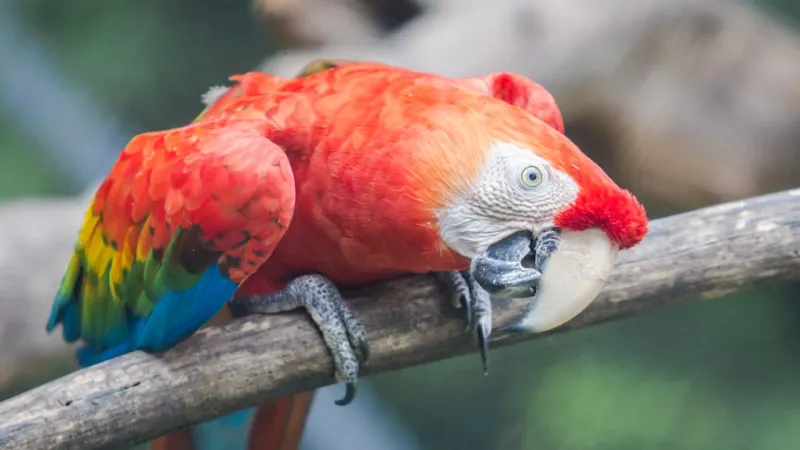
NEW YORK – New research has overturned long-standing assumptions about avian self-stimulation, revealing that practices such as male birds rubbing against perches and females positioning themselves on objects are not merely a reaction to captivity but a natural behavior observed across both domesticated and wild populations. This groundbreaking study, conducted by an international team of ornithologists, fundamentally reshapes our understanding of bird sexuality and reproductive strategies.
For decades, the scientific community largely viewed the self-pleasure behaviors exhibited by birds, particularly in species like parrots and parakeets, as an anomalous consequence of their confinement. The prevailing theory suggested that a lack of mating opportunities or environmental enrichment in captive settings prompted these activities, categorizing them as a deviation from natural behavior.
However, the latest findings, published in a leading peer-reviewed journal, present compelling evidence to the contrary. Researchers meticulously compared the behaviors of avian pets with their wild counterparts across various habitats, employing advanced observational techniques and data analysis.
The study involved extensive field work and detailed examination of footage from remote cameras strategically placed in diverse ecosystems. Scientists documented instances of self-stimulation among wild birds, demonstrating striking similarities to the behaviors previously thought to be exclusive to zoo enclosures or household aviaries.
Lead researcher Dr. Anya Sharma remarked, “Our findings strongly indicate that avian self-stimulation is an intrinsic part of bird biology, serving various potential functions beyond simple reproductive frustration. This challenges a deeply ingrained perception within ornithology.”
The methodologies included tracking specific individuals over extended periods, analyzing hormonal fluctuations, and observing social interactions. The data collected revealed that both male and female wild birds engage in these behaviors with a frequency and diversity that mirrors, and sometimes surpasses, that seen in captive environments.
This shift in understanding holds significant implications for animal welfare practices. Recognizing these actions as natural rather than pathological could lead to improved care strategies for captive birds, reducing the likelihood of misinterpreting or discouraging inherent behaviors.
Moreover, the research prompts new questions about the evolutionary purpose of self-stimulation in birds. Scientists are now exploring whether it plays a role in stress reduction, physiological maintenance, or even mate attraction through scent or display, similar to mechanisms observed in other animal groups.
The team plans further studies to investigate the precise neurological and hormonal pathways involved in avian self-pleasure. Future research will also delve into species-specific variations and the environmental factors that might influence the frequency and nature of these behaviors in wild settings.
This re-evaluation of avian sexuality underscores the complexity of animal behavior and the ongoing need for rigorous scientific inquiry to challenge long-held assumptions. It highlights how much remains to be learned about the intricate lives of creatures sharing our planet.
The discovery also encourages a broader perspective on sexual behavior across the animal kingdom. While once considered unique or abnormal in certain contexts, growing research consistently shows that self-stimulation is a widespread and natural phenomenon among various species, from insects to mammals, and now, definitively, in birds.