 Dodi Irawan
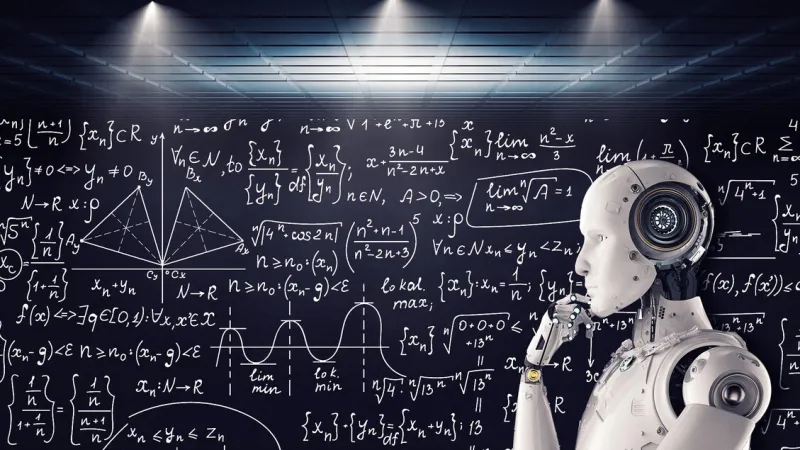
GLOBAL - In a notable reversal of expectations regarding artificial intelligence capabilities, human participants recently demonstrated superior performance over four prominent AI models, including OpenAI's ChatGPT, during a challenging mathematics examination. The comprehensive assessment, designed to gauge advanced problem-solving skills, revealed that even the most sophisticated AI platforms managed to correctly answer only six out of ten complex questions, marking a clear victory for human cognitive abilities in this specialized domain.
The rigorous test comprised a series of advanced mathematical problems that demanded not only computational accuracy but also a nuanced understanding of conceptual frameworks and logical deduction. Researchers meticulously designed the questions to move beyond simple data recall or pattern recognition, instead focusing on areas traditionally perceived as requiring human-like intuition and creative problem-solving.
Four distinct AI models were subjected to the evaluation, each representing the vanguard of current artificial intelligence development. Among them was ChatGPT, a flagship large language model known for its expansive knowledge base and conversational fluency. The inclusion of such diverse and highly-regarded platforms underscored the ambition of the study to provide a broad and definitive assessment of AI's mathematical prowess.
While the specific human scores were not detailed in the initial findings, the unequivocal declaration of human superiority suggests a substantial margin of difference. The best-performing AI model could only achieve a 60 percent success rate, indicating a significant hurdle remains for artificial intelligence in mastering the intricacies of advanced mathematics, particularly when compared to human experts.
This outcome carries significant implications for the trajectory of AI development and the ongoing discourse surrounding its practical applications. Proponents of artificial intelligence often highlight its potential to revolutionize scientific research and complex data analysis. However, these latest findings suggest a fundamental gap persists in AI's ability to replicate or surpass human reasoning in specific, high-level intellectual tasks.
The results do not diminish AI's undeniable strengths in other areas, such as processing vast datasets, automating repetitive tasks, or generating creative content. Rather, they serve as a critical reminder that the path to truly general artificial intelligence, capable of excelling across all cognitive domains, remains long and fraught with challenges, particularly in areas requiring deep conceptual understanding and flexible problem-solving.
"While AI continues to impress with its rapid advancements, this study underscores a crucial boundary," remarked Dr. Aris Thorne, a leading computational linguist at the University of California, Berkeley. "Mathematics, at its core, often requires abstract thought, intuition, and the ability to formulate novel approaches, which current AI models appear to struggle with beyond a certain complexity."
The limitations revealed in such a fundamental domain as mathematics also echo concerns previously raised about the reliability and safety of AI systems. If AI struggles with verified mathematical truths, questions arise about its absolute accuracy in less defined fields or its capacity for autonomous decision-making in critical scenarios. Debates around AI safety missions continue to gain prominence as these capabilities are scrutinized.
Researchers anticipate that these findings will spur further investigation into the architectural limitations of current AI models and potentially inspire new approaches to designing artificial intelligence capable of more robust mathematical reasoning. The focus might shift towards hybrid models that integrate symbolic AI techniques with neural networks, or entirely novel paradigms that mimic human learning more closely.
Ultimately, this mathematics test serves as a crucial benchmark, illustrating that while AI possesses extraordinary computational power, the nuanced and deeply analytical capabilities of the human mind still hold a distinct advantage in specific intellectual challenges. It reinforces the understanding that human-AI collaboration, rather than full AI replacement, may represent the most productive path forward in many complex fields.