 Angela Stefani
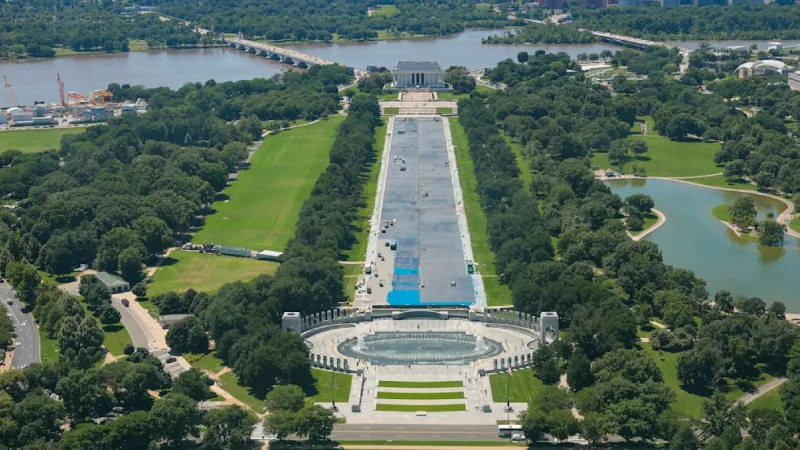
WASHINGTON – President Donald Trump is spearheading a significant transformation of the nation's capital, marked by the announcement of a new Trump Promenade along the city's iconic waterfront. This ambitious urban development project, unveiled by the administration this week, coincides with a contentious court decision mandating the removal of President Trump's name from a prominent area within the prestigious John F. Kennedy Center for the Performing Arts, highlighting a complex interplay of presidential legacy and judicial oversight.
The proposed Trump Promenade aims to revitalize a key district, promising enhanced public spaces, improved pedestrian access, and new commercial opportunities. Administration officials lauded the initiative as a testament to President Trump's commitment to modernizing urban infrastructure and creating lasting monuments to American achievement.
Conversely, the directive for the Kennedy Center to excise President Trump's name from its facilities stems from a recent judicial ruling. The precise details of the legal challenge remain under wraps, but sources familiar with the matter indicate the decision relates to established protocols regarding the naming of federally funded cultural institutions and adherence to their specific bylaws.
This dual development presents a stark contrast in the ongoing narrative surrounding President Trump's influence on Washington's physical and symbolic landscape. One action seeks to establish a permanent new landmark bearing his name, while the other endeavors to erase a previous association, underscoring the dynamic tension inherent in presidential recognition.
The practice of naming public works and federal buildings after presidents and prominent figures holds deep historical roots in American civic life. These designations often reflect national gratitude, political consensus, or, as in this case, direct presidential initiative. However, they frequently become focal points for public debate and historical reevaluation.
The John F. Kennedy Center for the Performing Arts, a living memorial to the 35th President, occupies a unique position in the nation's cultural fabric. Its spaces are typically dedicated through careful deliberation, often honoring significant patrons, artists, or historical moments that align with its mission of promoting the arts. The legal challenge to President Trump's previous naming there suggests a divergence from these traditional considerations.
Legal analysts are scrutinizing the court's ruling concerning the Kennedy Center, noting its potential ramifications for future presidential naming conventions. While the specifics of the ruling are not yet widely public, it implies a precedent where judicial review can challenge naming decisions, particularly those involving public institutions with specific charters or historical mandates.
President Trump's administration has consistently pursued initiatives aimed at asserting a distinct architectural and commemorative vision for the capital. This aligns with his broader agenda to reinforce American grandeur through tangible projects and symbolic gestures, an approach he has championed since his first term.
Early reactions to the Trump Promenade proposal have been mixed. Supporters commend the vision for urban renewal and the bold statement it makes about presidential legacy. They argue that such projects are vital for a growing capital city and that honoring a sitting president in this manner is a time-honored tradition.
Conversely, the removal of his name from the Kennedy Center has been met with approval by some who believe such designations should be free from political influence, particularly if they are deemed to have been made outside established guidelines. This faction asserts that cultural institutions require a degree of apolitical sanctity.
Preliminary designs for the Trump Promenade suggest a multi-phase project, potentially spanning several blocks along the Potomac River. It could include green spaces, public art installations, and new commercial storefronts, envisioning a vibrant new hub for residents and tourists alike. The administration projects a significant economic impact from the development.
The court order regarding the Kennedy Center reportedly centered on procedural irregularities surrounding the initial dedication of the space to President Trump. Legal experts speculate the ruling could involve violations of the center's congressional charter or internal board governance structures, rather than a direct challenge to the President's authority itself.
President Trump has previously demonstrated a penchant for ambitious national projects and significant public events. For example, he notably canceled traditional anniversary concerts to announce the Grand USA 250th Rally, signaling a preference for large-scale, impactful celebrations over more conventional commemorative events. This pattern underscores his strategic use of public platforms to shape national discourse and memory.
These developments unfold within a highly polarized political climate, where debates over public memory and historical representation are particularly intense. Naming controversies frequently ignite passionate discussions, reflecting deeper societal divisions about leadership, values, and national identity.
The long-term implications of these actions for Washington's urban fabric and symbolic meaning remain to be seen. While the Trump Promenade could become a new centerpiece, the Kennedy Center ruling sets a precedent for how presidential honors are granted and maintained in the future.