 Robert Andrison

The devastating Venezuela earthquake witnessed a profound moment of hope this week, as two young children, Carlos and Klieber, were miraculously pulled alive from collapsed structures six days after the catastrophic tremor. Their dramatic rescue by tireless search and rescue teams in Venezuela offers a rare beacon of resilience amidst a national tragedy that has claimed nearly 2,000 lives and left an estimated 60,000 buildings in ruins across the affected regions.
This extraordinary survival story unfolded as international and local rescue operations entered their most desperate phase, with experts typically considering the first 72 hours as the most critical for finding survivors. The successful extraction of Carlos and Klieber pushes the boundaries of conventional disaster relief expectations, inspiring weary responders and a grieving nation alike.
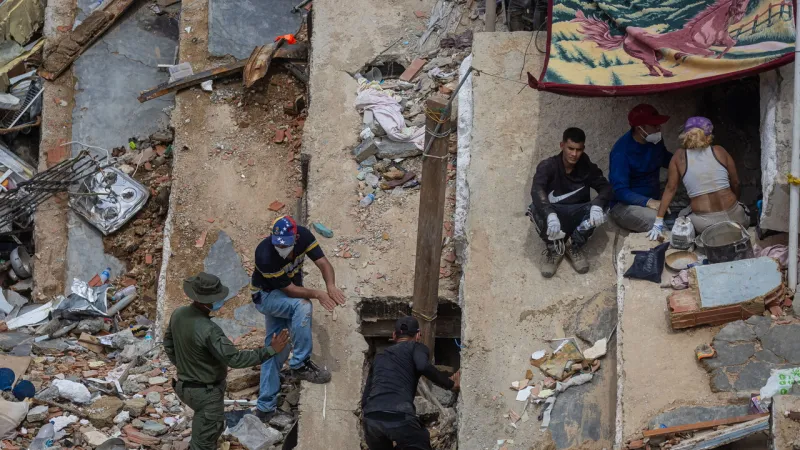
Relief workers and emergency services have been sifting through mountains of debris since the powerful seismic event struck. The conditions within the collapsed infrastructure are notoriously challenging, characterized by unstable rubble, lack of light, and diminishing oxygen supplies, making any survival beyond a few days exceedingly rare.
Reports indicate that the children, whose exact ages have not been released, were discovered deep within the structural remnants of a residential building. Their survival has been attributed to a combination of fortuitous voids in the debris, known as survival pockets, and their inherent resilience, likely shielded from crushing forces.
The national disaster response apparatus, supported by numerous international aid organizations, continues its arduous work. Rescue teams, utilizing specialized listening devices and sniffer dogs, have been relentlessly searching for signs of life. The discovery of Carlos and Klieber galvanized these efforts, providing a much-needed morale boost.
While the miraculous rescue captures global attention, the broader humanitarian crisis gripping Venezuela remains stark. The official death toll, nearing 2,000, is expected to rise as recovery efforts proceed into more remote and heavily impacted areas. The sheer scale of structural damage underscores the immense challenge of reconstruction facing the South American nation.
Tens of thousands of people are now displaced, living in temporary shelters or with relatives, their homes reduced to rubble. Basic necessities such as clean water, food, and medical supplies are in critical demand, prompting urgent appeals for international assistance. The Venezuelan government, led by President Nicolas Maduro, has declared a state of emergency, mobilizing all available resources.
The long-term implications of the Venezuela earthquake are daunting. Beyond the immediate death and destruction, the economic repercussions will be profound. Infrastructure, including roads, bridges, and utilities, sustained significant damage, disrupting supply chains and hindering aid distribution.
Similar miraculous survival stories, though rare, have emerged from past seismic events. For instance, a boy was rescued five days after a previous Venezuela quake, highlighting the enduring human spirit in the face of nature's fury. Such instances serve as powerful reminders of hope even in the darkest hours. Miracle Amid Rubble: Boy Rescued Five Days Post-Venezuela Quake
Medical teams are now providing intensive care to Carlos and Klieber, addressing dehydration, malnourishment, and potential injuries sustained during their ordeal. Psychosocial support will also be crucial for their recovery, helping them cope with the trauma of being trapped and the loss experienced by their community.
The international community has pledged support, with aid convoys and expert teams beginning to arrive. However, logistical challenges, exacerbated by the scale of devastation and existing infrastructure weaknesses, present significant hurdles to effective aid delivery. The Venezuelan government faces a monumental task in coordinating these relief efforts and planning for long-term recovery.
As the world watches, the story of Carlos and Klieber stands as a testament to the fragile yet enduring nature of life, a brief flicker of light in the profound darkness cast by the Venezuela earthquake. Their survival offers solace to a nation grappling with unimaginable loss and an arduous path to recovery.