 Angela Stefani
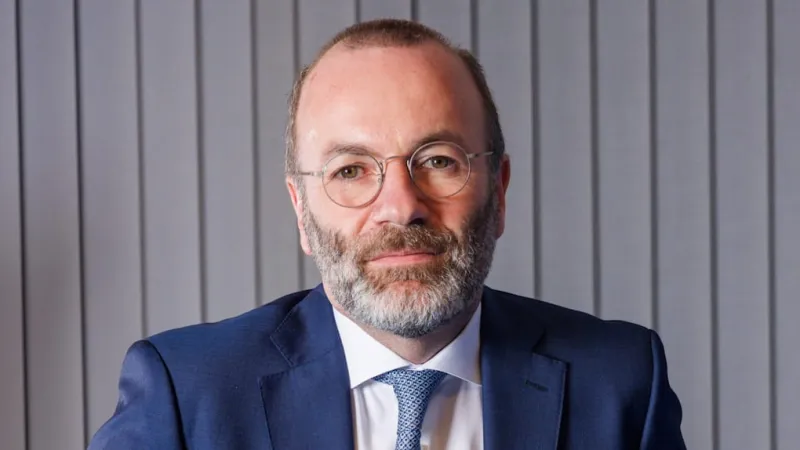
BRUSSELS – European Peoples Party (EPP) leader Manfred Weber has called for the immediate formation of a common European army, a pivotal move he asserts is crucial for continental defense and stability, especially in the wake of escalating concerns regarding the rise of far-right political movements across Europe, including a potential future AfD government in Germany.
Speaking in an interview following a recent NATO summit in 2026, Weber underscored the urgency of continental self-reliance. He pointedly declared, “The neo-Nazis, the Hoeckes of this world—these are our enemies,” referencing Bjorn Hoecke, a prominent figure in Germany's far-right Alternative for Germany (AfD) party.
His remarks come as European member states grapple with the complex task of recalibrating their defense strategies post-NATO summit. The discussions aim to forge a more cohesive and robust security architecture capable of addressing multifaceted modern threats, from geopolitical instability to internal extremist pressures.
The proposal for a common European army is not novel, but Weber's renewed advocacy, framed explicitly against the backdrop of rising extremism, injects a new layer of urgency into the debate. Proponents argue such a force would streamline military capabilities, reduce duplication, and enhance Europes autonomous defense capacity.
The AfD, which has gained considerable traction in German politics over recent years, embodies the very concerns voiced by Weber. Its nationalist rhetoric and Eurosceptic stance are perceived by many mainstream European politicians as antithetical to the principles of integration and collective security.
A potential AfD-led government, or one significantly influenced by the party, could profoundly impact Germanys commitment to European defense initiatives and broader NATO cooperation. This apprehension fuels the arguments for a stronger, independent European defense structure that is less susceptible to individual national political shifts.
Historically, efforts toward greater European defense cooperation have faced hurdles, primarily due to concerns over national sovereignty and strategic autonomy. However, the current geopolitical climate, marked by ongoing conflicts and heightened global tensions, has reignited discussions on military integration.
Critics of a common European army often cite the immense logistical and financial challenges involved in merging national armed forces with disparate equipment, doctrines, and languages. The process would necessitate extensive political will and significant budgetary commitments from all participating member states.
Manfred Weber, a key figure in European politics, has consistently championed deeper European integration. His current appeal highlights a growing sentiment among mainstream political leaders that Europe must proactively secure its future against both external adversaries and internal destabilizing forces.
The role of NATO in this evolving European defense landscape remains central. A common European army is envisioned by some as a complementary force, strengthening the European pillar within NATO, rather than as a replacement for the transatlantic alliance. However, the exact relationship and operational framework would require intricate negotiations.
Economically, the establishment and maintenance of such a force would represent a colossal undertaking. It would involve harmonizing defense procurement, standardizing equipment, and creating a unified command structure, potentially stimulating Europes defense industry but also demanding substantial financial investment.
Public opinion across the continent on a common European army is mixed, reflecting varying national security perceptions and historical contexts. While some see it as a logical progression toward a more unified Europe, others remain wary of surrendering national defense prerogatives.
Weber's latest remarks underscore a critical juncture for Europe. As the continent navigates an increasingly complex global environment, the debate over a common European army and its role in countering extremist ideologies will undoubtedly remain at the forefront of political discourse.
His call serves as a stark reminder that the defense of democratic values and institutional integrity extends beyond conventional military readiness, encompassing vigilance against political extremism from within.