 Chris Robert

WASHINGTON — A landmark Supreme Court ruling concerning the enforcement of the Voting Rights Act of 1965 (VRA) has come under intense scrutiny following revelations that the Department of Justice (DoJ) presented data now widely acknowledged as misleading, potentially swaying the Court's decision in a highly contested case.
The high court rendered its judgment earlier this year in *Merritt v. State Election Commission*, a case focused on the legality of new congressional district maps challenged under Section 2 of the VRA. The majority opinion, which upheld the challenged maps, explicitly referenced DoJ analyses regarding demographic shifts and voter turnout patterns.
However, a recent independent review initiated by a coalition of civil rights organizations and a subsequent internal DoJ audit have unearthed significant discrepancies. These audits concluded that key statistical models and population projections provided by the DoJ contained errors and selectively omitted pertinent information, painting an incomplete picture for the justices.
The findings have ignited a firestorm among legal scholars, civil rights advocates, and members of Congress, who are now calling for immediate action. Critics argue that the integrity of the judicial process has been compromised and that a fundamental pillar of American democracy, fair representation, has been undermined.
“The notion that our highest court may have based a critical decision on flawed or manipulated data from a government agency is profoundly disturbing,” stated Elena Rodriguez, executive director of the American Civil Liberties Union, in a press conference yesterday. “This is not merely a procedural misstep; it strikes at the heart of our democratic values and the trust citizens place in their institutions.”
The contested data pertained primarily to racial polarization in voting and the efficacy of certain election mechanisms in ensuring minority representation. The DoJ’s submissions had suggested that the new district maps, while altering some boundaries, did not dilute minority voting strength to the extent argued by plaintiffs.
However, the independent review found that the DoJ’s projections for future minority population growth in several districts were significantly underestimated, and its analysis of historical voting patterns failed to account for documented instances of voter suppression tactics in previous elections.
Sources within the Department of Justice, who requested anonymity due to the ongoing sensitive nature of the issue, indicated that an internal investigation is underway to determine how the discrepancies occurred and who was responsible for compiling and approving the problematic submissions to the Supreme Court.
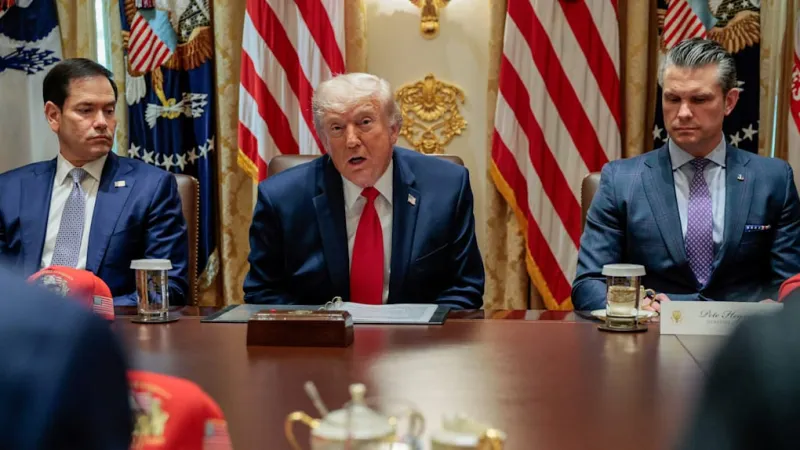
President Donald Trump, when questioned about the allegations during a briefing on Capitol Hill, stated that his administration is committed to “ensuring fairness and accuracy in all government dealings” and vowed that “any malfeasance will be dealt with appropriately.”
Legal experts suggest the fallout from these revelations could be extensive. While challenging a Supreme Court decision is extraordinarily difficult, the disclosure of misleading data could prompt calls for legislative remedies to strengthen the VRA or even lead to future legal challenges arguing for a re-examination of the precedent set by *Merritt v. State Election Commission*.
The scandal also raises serious questions about the rigorousness of data vetting within the DoJ, particularly when such data informs the judiciary on matters of fundamental rights. Congressional oversight committees are reportedly preparing inquiries and may demand testimony from DoJ officials responsible for the data submissions.
For many, the incident serves as a stark reminder of the delicate balance between robust data analysis and politically charged legal battles, especially when the outcomes directly impact the voting power of millions of Americans.
This development underscores the continued relevance and fragility of the Voting Rights Act, a landmark piece of legislation designed to dismantle discriminatory barriers to voting, even decades after its original enactment.