 Dodi Irawan

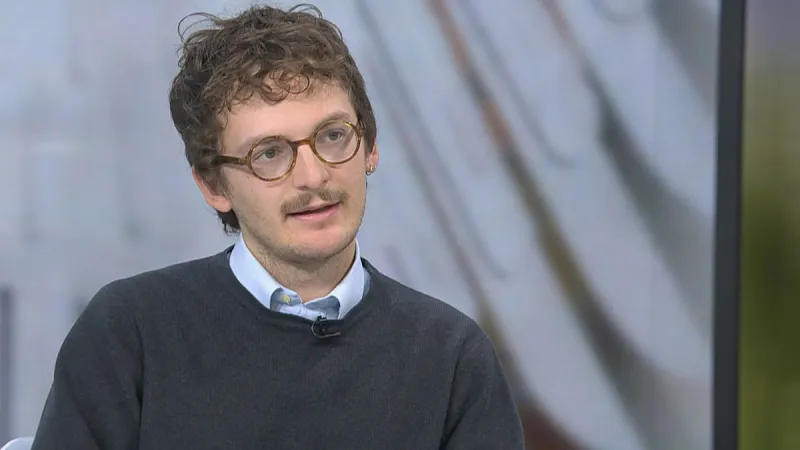
BERLIN – Prominent negotiation expert Matthias Schranner has issued a stern critique of Germany's governing coalition, expressing significant concern over its current operational framework. Schranner asserted that the coalition's negotiation mode is inefficient, advocating for a decisive shift towards greater collaboration and agreement at the working level among its constituent parties.
Schranner emphasized the urgent need for both the Union and the Social Democratic Party (SPD) to jointly produce tangible results for the nation. His comments underscore a growing sentiment among political observers regarding the perceived inertia within the government's collaborative processes.
According to Schranner, the current approach deviates markedly from what he considers a normal and effective working mode for a governing body. He articulated his frustration directly, stating, "I am surprised that we are still not operating in a normal working mode."
This sentiment highlights a fundamental expectation that a coalition government, tasked with steering national policy and administration, should demonstrate consistent, functional cooperation. A normal working mode, as defined by experts like Schranner, involves structured discussions, clear mandates, and efficient resolution of policy differences.
Schranner's critique is rooted in his extensive experience in high-stakes negotiations, where clear communication and pragmatic problem-solving are paramount. He suggests that the current German political landscape requires a more disciplined and results-oriented approach to governance.
The demand for more agreements at the working level implies a call for deeper, less politicized engagement on policy specifics. This contrasts with what might be perceived as grandstanding or superficial discussions at higher, more visible levels, which often fail to yield concrete legislative progress.
For a coalition government, the ability to negotiate effectively at all levels is crucial for legislative momentum and public trust. Stalled negotiations can lead to delayed policy implementation, affecting various sectors from economic development to social welfare.
Germany, a key player in the European and global arenas, depends on a stable and proactive government to address pressing domestic challenges and uphold its international commitments. Any perception of governmental dysfunction can have far-reaching consequences.
Schranner's call for the Union and SPD to collectively deliver results is a direct challenge to the parties to prioritize governance over internal political maneuvering. The electorate expects its leaders to translate political mandates into actionable policies.
The expert's remarks resonate amid broader discussions about political effectiveness and the dynamics within multi-party governments. Challenges in coalition management are not unique to Germany, but their impact can be particularly pronounced in leading industrial nations.
Similar instances of political entities facing internal strife and external pressure to perform can be observed across various governments. For example, recent reports on Saxony-Anhalt CDU Faces Coercion Probe Over Alleged AfD Votes illustrate the complex internal challenges that political parties can confront, sometimes hindering their ability to engage effectively in broader coalition efforts.
Schranner's recommendation to enhance working-level agreements points to a strategy of empowering technical experts and policy specialists within each party to hammer out details away from the glare of public scrutiny, thereby fostering pragmatic solutions.
Ultimately, the admonition from Schranner serves as a critical reminder for the German coalition to reassess its procedural effectiveness. The expert's counsel advocates for a renewed commitment to a functional, transparent, and results-driven governmental operation, essential for maintaining public confidence and addressing the nation's priorities.