Angela Stefani
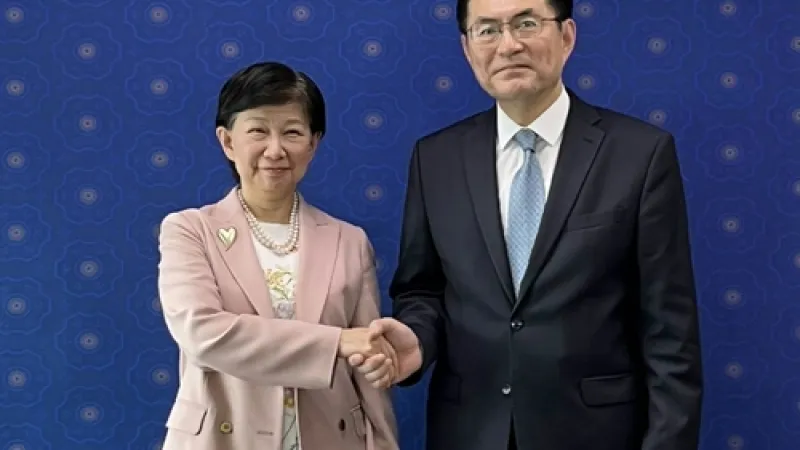
SEOUL – Senior officials from South Korea and the United Nations Office for Disarmament Affairs (UNODA) convened in the capital on November 13 to address critical global security challenges, focusing prominently on North Korea's persistent nuclear weapons program and the rapidly evolving implications of artificial intelligence in military applications.
The high-level consultations underscore growing international concern over Pyongyang's advancing nuclear capabilities and its continued defiance of UN Security Council resolutions. South Korea has consistently sought international cooperation to denuclearize the Korean Peninsula.
Parallel discussions centered on the dual-use nature of artificial intelligence, particularly its potential for both enhancing defense capabilities and introducing new complexities to international stability. The UNODA highlighted the urgent need for global frameworks to manage the ethical and strategic dimensions of military AI.
North Korea's nuclear ambitions remain a primary security concern for Seoul and its allies, including the United States. Despite repeated diplomatic overtures and sanctions, the reclusive state continues to develop its arsenal, conducting missile tests and rhetoric that escalate regional tensions.
The UN Office for Disarmament Affairs plays a pivotal role in promoting global disarmament and non-proliferation norms. Its engagement with South Korea reflects a shared commitment to upholding the international rules-based order and mitigating threats posed by weapons of mass destruction.
Discussions on military AI delved into issues such as autonomous weapon systems, the potential for algorithmic bias in decision-making, and the imperative to prevent an arms race driven by artificial intelligence. Experts emphasized the need for responsible innovation and international dialogue.
South Korea, a technologically advanced nation, is actively exploring the integration of AI into its defense infrastructure while simultaneously advocating for responsible development. The nation faces unique geopolitical challenges, making robust yet ethical technological advancement crucial.
This engagement with the UN complements South Koreas broader diplomatic efforts to strengthen its nuclear non-proliferation stance. Recently, South Korea has also bolstered its nuclear energy alliance with key international partners, as evidenced by South Korea, France Bolster Nuclear Energy Alliance in Landmark Saclay Talks.
The convergence of nuclear proliferation risks and emerging AI technologies presents a complex security landscape. As geopolitical dynamics shift, with ongoing tensions in various parts of the world, forums like these consultations become increasingly vital for fostering common understanding and cooperative solutions.
Officials from both sides committed to ongoing dialogue and collaborative initiatives to address these multifaceted threats. The discussions are expected to inform future policy decisions and contribute to broader international efforts aimed at maintaining peace and security in an era of rapid technological and geopolitical change.
Concerns extend beyond autonomous targeting to include the potential for AI-driven cyber warfare, sophisticated disinformation campaigns, and the acceleration of decision-making cycles that could reduce crucial human oversight during crises. Mitigating these risks requires a proactive and comprehensive international strategy.
Recent intelligence reports indicate North Korea continues to modernize its ballistic missile capabilities, often showcasing new weapon systems during military parades. These developments reinforce the urgency for sustained diplomatic pressure and robust deterrence.
The international community has largely condemned North Koreas nuclear and missile development, imposing a range of sanctions. However, the effectiveness of these measures remains a subject of ongoing debate, necessitating varied approaches to achieve denuclearization.
Establishing global governance frameworks for military AI is proving challenging due to divergent national interests, varying ethical perspectives, and the rapid pace of technological innovation. Consensus-building on norms and regulations is a long-term endeavor.
Nations like South Korea, which are at the forefront of AI development, bear a particular responsibility to champion principles of transparency, accountability, and human control over autonomous weapon systems. Their leadership in this domain can set important precedents.
Ultimately, effective solutions to both the North Korean nuclear issue and the challenges of military AI will hinge on sustained multilateral cooperation, rooted in shared values and a collective commitment to global stability.