 Dodi Irawan
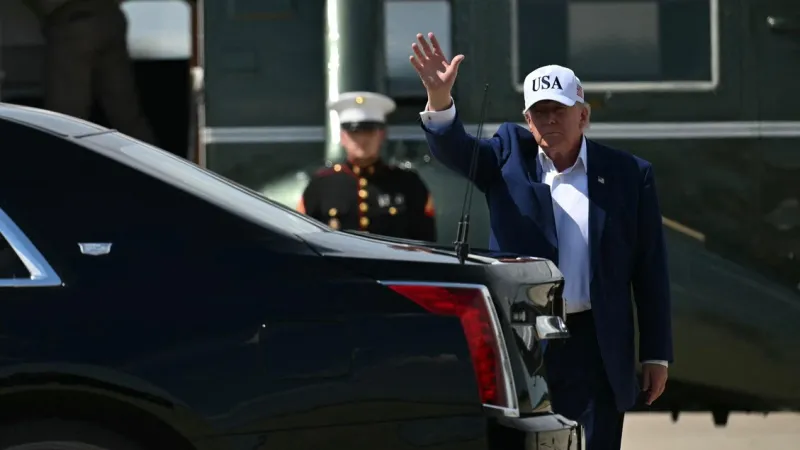
ROME – President Donald Trump publicly accused Italian Premier Giorgia Meloni of failing to defend American interests, a contentious declaration that has thus far elicited no official response from Rome. This unusual critique from a close ideological ally introduces a new layer of complexity to transatlantic relations.
The specific claim, “Meloni non ci ha difeso,” translates directly from Italian as “Meloni did not defend us.” This underscores a perceived dereliction of duty by the Italian leader concerning US strategic objectives, though the exact interests in question remain unspecified by the White House.
Concurrently with President Trump's remarks, Premier Meloni was engaged in a high-profile visit to the Alpini, Italy’s distinguished mountain troops. Her presence with the military branch, renowned for its heritage and resilience, signaled a moment of national unity and reaffirmation within Italy.
During her visit with the Alpini, Premier Meloni was quoted stating, “Avevo bisogno di un po' di sano orgoglio nazionale,” which translates to “I needed a bit of healthy national pride.” This sentiment resonates deeply within the Italian populace, particularly in moments of national reflection or external pressure.
The stark juxtaposition of President Trump's sharp rebuke and Premier Meloni's embrace of domestic nationalism creates a significant diplomatic quandary. It highlights either divergent priorities between the leaders or a profound misunderstanding regarding their respective strategic roles on the global stage.
The strategic silence from the Italian Premier's office following Trump's accusation suggests a cautious approach. Rome is likely evaluating the full scope and intent of President Trump's remarks before issuing a formal counter or clarification, a common diplomatic tactic to avoid escalating tension.
Historically, President Trump and Premier Meloni have maintained a publicly amicable relationship, often aligned on conservative political platforms and a shared skepticism towards certain multilateral institutions. This prior alignment makes the direct and public nature of President Trump's current criticism particularly noteworthy.
While President Trump did not specify which particular “US interests” he felt were neglected, the remark could potentially allude to various ongoing geopolitical issues, trade policies, or international alliances where US and Italian positions might differ or have recently diverged.
The incident also occurs against a broader backdrop of evolving dynamics within the European Union and NATO, where Italy plays a crucial role as a founding member and a key Mediterranean power. The solidity of transatlantic ties is under constant scrutiny in the current global climate.
Public disagreements between major transatlantic partners can strain existing alliances and prompt questions about the strength and reliability of bilateral diplomatic ties. Such instances necessitate careful navigation to prevent broader geopolitical repercussions.
Premier Meloni's public appearance with the Alpini, a powerful symbol of Italian strength and tradition, may be interpreted as a strategic move to bolster her domestic standing. It could be seen as a reaffirmation of Italian sovereignty amidst potential international pressure or criticism.
The emphasis on “healthy national pride” by Meloni can also be construed as a subtle counter-narrative, asserting Italy's independent spirit and national objectives even when faced with criticism from powerful allies like the United States.
International media outlets and political analysts are closely monitoring the situation, anticipating how this dynamic will unfold. The immediate impact on US-Italy relations and potentially on the wider European political landscape remains a subject of intense speculation.
Further clarification from the Trump administration regarding the specific grievances, or a formal statement from the Italian government, is widely awaited by observers. These responses will be crucial in understanding the full implications of this diplomatic friction.
The episode serves as a reminder of the delicate balance required in international diplomacy, where public statements from leaders can have immediate and far-reaching consequences on bilateral and multilateral relationships.