 Dorry Archiles
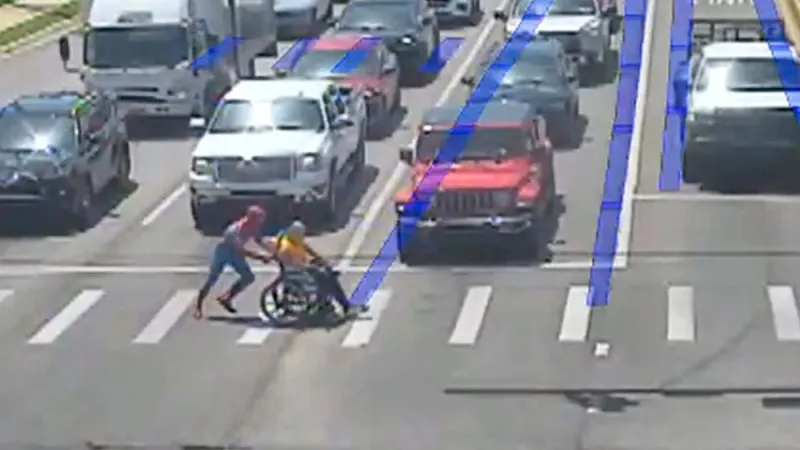
Arkansas witnessed an extraordinary moment of civic kindness when a man, distinctively dressed as the superhero Spider-Man, intervened to help a wheelchair user navigate a heavily trafficked thoroughfare. The remarkable act, which unfolded on a bustling street, was captured by a municipal traffic surveillance system, swiftly gaining public attention.
The incident occurred as the wheelchair user encountered significant difficulty traversing the multi-lane road, a common challenge for individuals with mobility impairments in areas lacking adequate pedestrian infrastructure. The volume of vehicles presented a clear hazard, prompting the costumed individual to spring into action.
Eyewitness accounts, corroborated by the surveillance footage, show the man in the iconic red and blue suit approaching the individual and offering assistance. Without hesitation, he began to guide the wheelchair across the lanes, momentarily pausing traffic flow through his presence and clear intent.
The brief but impactful intervention ensured the safe passage of the wheelchair user to the opposite side of the street. This display of selfless aid, though simple, underscored the immediate dangers faced by vulnerable pedestrians in urban environments and the critical role of community support.
While the identity of the Good Samaritan remains undisclosed, his choice of attire added a poignant layer to the narrative. The symbolism of Spider-Man, a character often associated with localized heroism and protecting ordinary citizens, resonated deeply with observers.
This event serves as a powerful reminder that heroism often manifests not in superpowers, but in everyday acts of compassion and attentiveness to others needs. The man in the Spider-Man suit embodied this principle, prioritizing the safety of a fellow citizen above his own anonymity.
Such spontaneous acts of public service frequently highlight gaps in urban planning and accessibility. While the Spider-Man figure provided an immediate solution, the incident implicitly raises questions about pedestrian safety measures and infrastructure provisions for disabled individuals in Arkansas and beyond.
Traffic camera footage, typically utilized for monitoring vehicle flow and identifying violations, unexpectedly became a conduit for sharing this heartwarming scene. The clear visual evidence allowed the narrative of compassion to spread rapidly, touching many who viewed it online.
The widespread sharing of the footage across social media platforms quickly transformed a local occurrence into a moment of national discussion. Commentators praised the man's quick thinking and altruism, reinforcing the idea that genuine heroes can appear in the most unexpected forms.
In an era often dominated by complex global challenges, a simple act of human kindness can cut through the noise, offering a refreshing perspective on community values. The Arkansas Spider-Man exemplifies the potential for individuals to make a tangible difference in their immediate surroundings.
This incident, devoid of grand pronouncements or official directives, stands as a testament to the power of individual initiative. It champions the notion that a single person, driven by empathy, possesses the capacity to transform a potentially perilous situation into one of safety and solidarity.
The image of a beloved comic book hero brought to life to perform a practical, vital act of assistance has undoubtedly left an indelible mark. It encourages reflection on how each person might contribute to fostering safer, more inclusive communities.
This story of the costumed helper illustrates the profound impact of simple gestures. It reinforces the universal appeal of compassion and the human desire to aid those in need, especially when facing immediate dangers like busy traffic.
The event, which has been widely circulated, has resonated because it taps into a collective appreciation for straightforward decency. It provides a counter-narrative to cynicism, proving that moments of pure, unselfish help are still prevalent and deeply valued.
The community reaction suggests a yearning for positive stories, particularly those that showcase human connection and care. The Arkansas Spider-Man, whoever he may be, delivered just such a narrative, elevating the everyday to the extraordinary.
His actions, though brief, underscore a fundamental truth: true heroism is often found in the courage to act when others hesitate, ensuring the well-being of the most vulnerable among us. This particular intervention will likely be remembered as a small but significant moment in the state's recent history.
The selfless act serves as a potent reminder that ordinary citizens possess the capacity for extraordinary compassion, inspiring others to observe their surroundings and offer aid when the situation demands it.