 Debby Wijaya
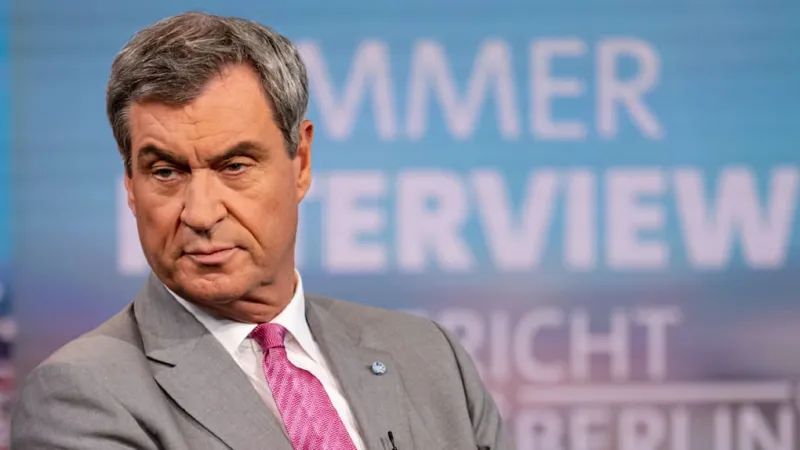
Munich – Bavarian Prime Minister Markus Söder publicly acknowledged the persistent rise of the Alternative for Germany (AfD) during a recent ARD summer interview, articulating his firm belief that imitating the far-right party's platform offers no viable solution to its growing influence. He also definitively dismissed the ongoing debate surrounding a potential chancellor swap, underscoring a nuanced approach to confronting Germany's evolving political landscape.
Söder, a prominent figure in the Christian Social Union (CSU), used the televised platform to address the mounting concerns over the AfD's electoral gains and its deepening roots within the German political discourse. His remarks signal a recognition that the party's appeal extends beyond a fleeting protest vote, necessitating a more robust and principled response from established parties.
The Bavarian leader emphasized that adopting the AfD's positions or rhetoric would not diminish its power but rather legitimize its agenda and erode the distinct values of democratic centrist and conservative parties. Such a strategy, he contended, risks blurring ideological lines and confusing voters, ultimately playing into the hands of extremist narratives.
He further elaborated on the pitfalls of attempting to mirror the AfD, suggesting that mainstream parties possess inherent strengths and policy frameworks that contrast sharply with the populist promises of the far-right. Preserving this fundamental differentiation is, for Söder, crucial for maintaining political integrity and offering voters clear alternatives.
Regarding the speculative discussions about a change in Germany's top leadership, Söder expressed considerable skepticism. He stated unequivocally that he holds nothing of the debate about a chancellor swap, signaling his focus remains on substantive policy and effective governance rather than internal power struggles or premature succession talks.
This stance aligns with his previous expressions of confidence in current leadership dynamics, as reported in articles such as Söder Affirms Faith in Chancellor Merz Amid Coalition Poll Woes. His dismissal of a chancellor swap suggests a desire for stability amid complex political challenges.
The AfD's continued ascent, particularly in eastern German states, represents a significant challenge to Germany's traditional political order. Mainstream parties across the spectrum are grappling with how to effectively counter the AfD's messaging on issues ranging from immigration to economic policy.
Söder's remarks reflect a growing consensus among some mainstream politicians that direct confrontation and a clear articulation of democratic values, rather than imitation, offer the most principled path forward. This approach seeks to expose the limitations and contradictions within the AfD's program while reinforcing the credibility of established governance.
The political climate in Germany remains fraught with complex issues, from economic adjustments to social integration, all of which the AfD has exploited to its advantage. Debates surrounding social welfare, exemplified by discussions detailed in articles like German Coalition Poised for Pension 63 Renegotiation Amid Dissent, illustrate the broader landscape of challenges facing the ruling coalition.
For the CSU, traditionally a dominant force in Bavaria, the rise of the AfD presents a unique strategic dilemma. Söder's leadership attempts to navigate a path that both acknowledges voter concerns and steadfastly upholds democratic norms, positioning his party as a bulwark against extremism.
His interview offered a candid assessment of the current political realities, emphasizing that the AfD is a political force that cannot simply be wished away. This recognition necessitates a sustained, strategic, and principled engagement from Germany's democratic parties, rather than tactical concessions or internal reshuffling.
The Bavarian Prime Minister's firm declarations underscore the ongoing struggle within German politics to find effective, democratic responses to the persistent appeal of the far-right. The path forward, as Söder suggests, lies in conviction and differentiation, not in mirroring the opposition.