 Chris Robert
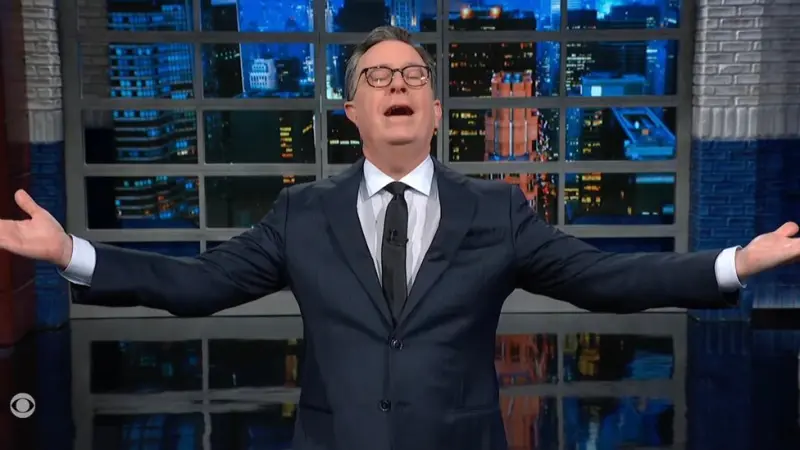
NEW YORK — Late-night host Stephen Colbert recently drew significant attention and laughter as he devoted a segment of The Late Show to dissecting what he characterized as President Donald Trump’s "ongoing papal feud." The commentary, delivered from his New York City studio, highlighted Colbert’s signature blend of political satire and sharp observational humor, resonating with viewers across the nation.
During his monologue, Colbert methodically presented various past statements and interactions involving President Trump and the Vatican, piecing together a narrative he playfully dubbed a "lingering disagreement" with Pope Francis. The segment aired earlier this week, providing a comedic lens through which to view the often-complex dynamics between global leaders and religious authorities.
The CBS program’s host, known for his incisive political commentary, did not shy away from lighthearted jabs at both sides, though his primary focus remained on the President’s perceived public stance. Colbert’s team utilized archival footage and news clips to underscore his comedic points, presenting a montage of moments that, when viewed together, supported his humorous interpretation of a strained relationship.
This isn't the first time Colbert has trained his satirical gaze on the President. Throughout his tenure at The Late Show, Colbert has consistently offered a nightly dissection of current events, with political figures frequently finding themselves in his crosshairs. His latest foray into the perceived friction between the Oval Office and the Vatican proved no exception.
Observers suggest that Colbert’s ability to frame serious political developments within an accessible comedic context contributes to his show’s enduring popularity. His monologues often serve not just as entertainment but also as a form of social commentary, sparking discussions that extend beyond the television screen. The "papal feud" segment, in particular, ignited a flurry of reactions on social media platforms.
The notion of a contentious relationship between President Trump and Pope Francis has surfaced periodically since President Trump’s first term. Their interactions, though sometimes cordial, have also featured moments of public disagreement on issues ranging from immigration policy to climate change, providing fertile ground for late-night comedians.
President Trump has, on several occasions, publicly expressed respect for religious leaders and institutions, including the papacy. However, distinct policy differences and occasional rhetorical clashes have allowed pundits and satirists alike to identify what they perceive as underlying tensions, which Colbert skillfully exploited for comedic effect.
Colbert’s comedic style often relies on the juxtaposition of high-stakes political rhetoric with everyday absurdities. By framing the interactions between two of the world’s most prominent figures as an "ongoing feud," he brought a relatable, almost familial, dynamic to international diplomacy, making it digestible and humorous for his audience.
The widespread media coverage of Colbert’s segment underscores the continued relevance of late-night comedy in contemporary American political discourse. As traditional news cycles accelerate, shows like The Late Show provide a vital space for critical analysis, often reaching audiences who might otherwise disengage from political complexities.
Ultimately, Colbert’s playful exploration of President Trump’s "ongoing papal feud" served as both entertainment and a reflection of the public’s ongoing fascination with the interplay between power, personality, and perception on the global stage. It highlights the unique role late-night hosts play in shaping narratives and offering an alternative perspective on pressing issues.