 Demian Sahputra
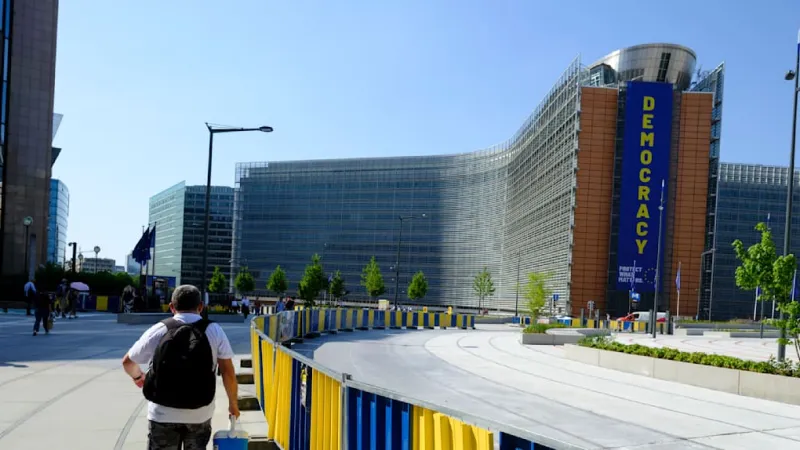
BRUSSELS – The European Commission has provoked a significant backlash from its staff following a policy decision to deactivate air conditioning units in the lower seven floors of the Berlaymont building, while maintaining full climate control in the executive offices, including that of Commission President Ursula von der Leyen and her fellow commissioners. This stark disparity has prompted immediate and vocal criticism from employees, who have publicly described the situation as akin to feudalism and a genuine disgrace.
The directive, implemented amidst a backdrop of escalating energy conservation efforts across Europe, specifically targets the majority of the working population within the EU's central administrative hub. Employees on these affected lower levels now face warmer working conditions, a sharp contrast to the consistently cooled environments enjoyed by the Commission's top brass residing on the upper echelons of the iconic building.
Reports from within the Berlaymont indicate a deep sense of injustice among the rank-and-file staff. Many have voiced their dismay, suggesting the policy creates a clear two-tiered system that undermines principles of fairness and equity within a leading international institution. The perceived disconnect between the leadership's comfort and the staff's discomfort fuels an already contentious debate about workplace conditions and executive privileges.
The timing of this policy shift is particularly poignant, coinciding with periods of heightened temperatures across the continent. Related news has highlighted the broader challenges posed by extreme weather, as seen in reports such as “Europe Braces for Peak Heatwave: Millions at Risk, Deaths Mount” and “Scorching Summer Requires Increased Workplace Hydration Amidst Quality Concerns.” The Commission’s decision, therefore, not only affects internal morale but also casts a shadow on its public image as a champion of employee welfare and sustainable practices.
The Berlaymont building, a prominent symbol of European integration, serves as the administrative headquarters for the European Commission. Its distinct architectural design and strategic location in Brussels make it a focal point for both policy-making and public scrutiny. This recent internal controversy risks tarnishing the institution's reputation, especially when viewed against its stated commitment to environmental responsibility and social justice.
Critics argue that the move sends a troubling message about leadership accountability and solidarity during challenging times. While energy conservation is a laudable goal, its application appears selectively enforced, leading to accusations of hypocrisy. Staff members question why the burden of these conservation efforts falls disproportionately on those with less hierarchical power, while the most senior officials remain insulated from any inconvenience.
The official rationale behind the selective shutdown has not been extensively detailed by the Commission, beyond general references to energy efficiency. This lack of transparent communication has further exacerbated tensions, leaving many employees feeling undervalued and unheard. The absence of a robust defense for the policy has allowed narratives of elitism to proliferate within the institution's corridors.
Observers familiar with European Union internal politics suggest this incident could have wider implications for staff relations and future policy implementations. Trust between leadership and staff is foundational for the effective functioning of any organization, and such perceived inequities can erode that trust, potentially impacting productivity and long-term organizational cohesion.
This incident also resonates with broader public discussions about the privileges of political elites versus the everyday struggles of citizens. In an era when calls for greater transparency and accountability from governing bodies are louder than ever, the optics of such a workplace policy within the EU Commission are particularly damaging. It invites comparisons to outdated social structures, prompting the charged label of “feudalism.”
The ongoing debate serves as a critical test for the Commission's leadership to address internal discontent and reaffirm its commitment to equitable practices. A genuine resolution will likely require more than just an explanation; it may necessitate a reevaluation of the policy itself, or at least a clear demonstration of how leaders are also sharing in the collective effort to conserve resources.