 Stefani Rindus
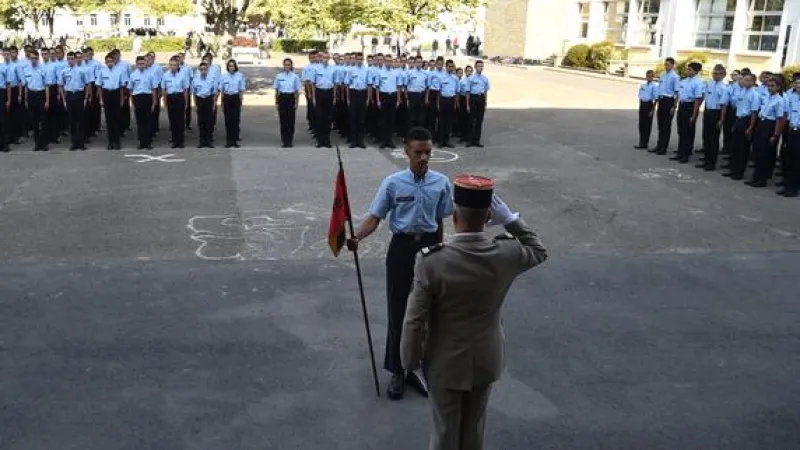
PARIS - French Minister of Armed Forces Catherine Vautrin initiated an administrative inquiry on July 3 into the prestigious Prytanée military high school after revelations surfaced that it allegedly applied an illegal eliminatory criterion against applicants from private schools not under state contract during the Parcoursup admissions process.
The swift action by Minister Vautrin underscores the government's commitment to upholding the principles of equity and access within the nation's elite educational institutions. The alleged directive, which reportedly barred students from certain private establishments, directly contravenes the ethos of equal opportunity for all French citizens.
According to reports, the criterion stipulated that applicants originating from *enseignement privé hors contrat*, or private schools operating without state agreements, would be automatically disqualified. This policy was reportedly displayed on Parcoursup, the centralized national platform crucial for university and higher education admissions in France.
Such a stipulation is fundamentally illegal under French law, which mandates that admissions processes must be based on merit and not on the type of school an applicant previously attended, provided the institution meets basic educational standards. The state aims to ensure that all students have a fair chance at competitive programs, irrespective of their socio-economic background or prior schooling structure.
The administrative probe aims to thoroughly investigate how this illicit policy came to be implemented at the Prytanée. Investigators will seek to identify the responsible parties and determine the extent of its application, including how many prospective students may have been unfairly disadvantaged.
One potential motivation behind the controversial criterion, as suggested by the initial reports, might be a governmental desire to modify the reputation of military education. This could imply an effort to broaden the social base of recruits or to project an image of greater inclusivity within a traditionally selective system.
The Prytanée National Military School, located in La Flèche, holds an esteemed place in French military education, boasting a rich history dating back to Napoleon Bonaparte. It functions as a preparatory school, grooming students for entrance into France's top military academies, such as Saint-Cyr.
The revelation of potential irregularities in *Prytanée admissions* has sparked considerable debate across the country. Educational experts and civil liberties advocates are questioning the transparency and fairness of admissions processes in other highly selective state-funded institutions.
Minister Vautrin's decisive intervention reflects the administration's resolve to rectify any breaches of law and to reinforce public trust in the integrity of state-run educational pathways. The outcome of this inquiry will be closely watched, as it could set precedents for future oversight of admissions policies nationwide.
For many aspiring military officers, access to preparatory schools like the Prytanée is a critical stepping stone toward a career in the armed forces. An arbitrary exclusionary rule undermines the very foundation of meritocracy that these institutions are meant to embody.
The government's expressed intention to reshape the perception of military education must align with legal and ethical standards, ensuring that any reforms promote genuine access and not inadvertent discrimination. The inquiry will therefore also consider the broader policy context within which this criterion emerged.
Ultimately, the administrative inquiry into *Prytanée admissions* serves as a critical reminder of the perpetual need for vigilance in upholding foundational principles of equality and fairness within France's educational system, especially for those pathways leading to public service.