 Angela Stefani
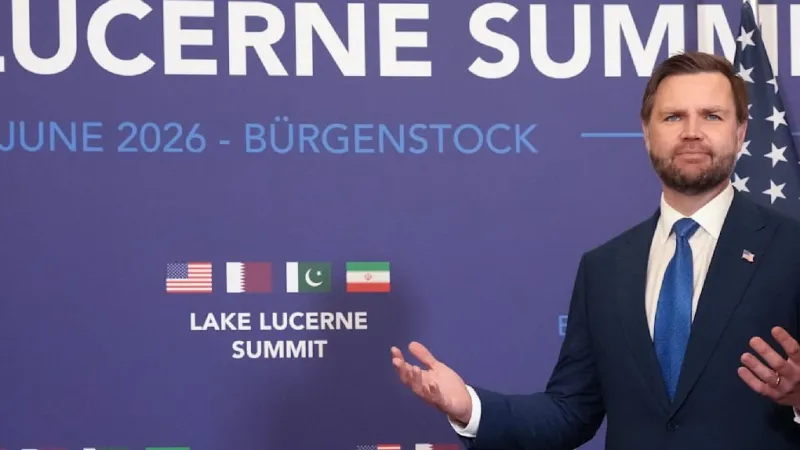
Switzerland – High-stakes negotiations between the United States and Iran recommenced this Sunday in Switzerland, with US Vice President J.D. Vance personally leading the American delegation. The pivotal discussions aim to address a potential resolution to ongoing conflicts, the unfreezing of Iranian assets, and the establishment of secure trade routes, even as Tehran continues to assert its right to uranium enrichment.
The renewed dialogue comes at a critical juncture for international diplomacy, marking a direct engagement between two nations whose relationship has been fraught with tension for decades. Vice President Vance's presence underscores the strategic importance Washington places on these deliberations, which are closely watched by global powers concerned about Middle East stability.
Key on the agenda are pathways to de-escalation of regional conflicts that have seen both direct and proxy confrontations. Resolving these protracted disputes is seen as essential for fostering a more secure geopolitical environment.
Another significant point of contention involves the substantial Iranian assets frozen under various international sanctions. Tehran views the release of these funds as crucial for its economic stability and has consistently pressed for their unencumbering as a prerequisite for broader agreements.
Furthermore, negotiators are delving into discussions surrounding safe and unimpeded trade routes, particularly those vital for global energy supply. Ensuring maritime security, especially in strategic choke points like the Strait of Hormuz, remains a paramount concern for international commerce.
Iran, for its part, has clearly signaled its willingness to engage on these complex issues while firmly reiterating its stance on uranium enrichment. Iranian officials maintain that their nuclear program is for peaceful purposes, primarily energy generation, and insist on their sovereign right to pursue this technology.
The country's demand for continued uranium enrichment presents a significant hurdle, as it lies at the heart of international proliferation concerns. Past diplomatic efforts, including previous nuclear accords, have sought to constrain Iran's enrichment capabilities to prevent any potential misuse for weapons development.
The current round of discussions follows a period of escalating rhetoric and regional incidents, making a diplomatic breakthrough all the more urgent. The international community is keen for a resolution that can bring predictability and stability to a volatile region.
President Donald Trump's administration has consistently pursued a firm but open-door policy towards dialogue with Iran, aiming to secure concessions on nuclear activity and regional influence. Vice President Vance's presence exemplifies this direct engagement strategy.
Observers note the intricate balance negotiators must strike. While the US seeks to curb Iran's nuclear ambitions and destabilizing activities, Iran endeavors to alleviate economic pressures and secure its perceived national interests.
Previous attempts at comprehensive agreements have met with varying degrees of success and subsequent challenges. These new talks represent a fresh opportunity to forge a durable understanding between Washington and Tehran. For more context on the historical backdrop of these delicate negotiations, see our earlier report: Iran Nuclear Talks Begin Amid Hormuz Closure, Uranium Enrichment Standoff.
Discussions also touch upon the humanitarian implications of prolonged sanctions and conflict, underscoring the broader impact on the civilian populations of the region. Any agreement would ideally include provisions for humanitarian aid and improved living conditions.
The presence of US Vice President J.D. Vance in Geneva was anticipated and widely reported, following earlier reports of his journey to Switzerland specifically for these high-level engagements. Read more about his arrival: US Envoy Vance Arrives in Switzerland for Crucial Iran Talks.
Securing international trade routes, particularly through critical maritime passages, is an economic imperative that affects global supply chains and energy markets. Tensions in the Strait of Hormuz have previously underscored this vulnerability. Further details on this issue can be found here: US and Iran Begin Crucial Talks Amid Hormuz Strait Standoff.
The outcome of these negotiations holds significant implications for the future trajectory of US-Iran relations and the broader geopolitics of the Middle East. Whether a lasting agreement can be forged amidst such deep-seated differences remains to be seen, but the resumption of direct talks offers a glimmer of hope for diplomatic progress.