 Edward DP Situmorang

Mecklenburg-Western Pomerania – Christian Democratic Union (CDU) top candidate Daniel Peters recently attributed his party's disappointing performance in the state election to a "polarized mood" and a critical absence of political support from Berlin. His pointed remarks, made following the ballot, underscore a growing undercurrent of frustration within Germany's conservative landscape as parties grapple with shifting voter allegiances.
Peters did not mince words regarding the federal government's perceived detachment. "It is correct that we received no tailwind from Berlin," he stated, articulating a sentiment increasingly common among regional politicians who feel overlooked by national party strategies. This lack of robust endorsement from the capital city, he suggested, directly impacted the CDU's outreach and campaign efficacy in the northeastern state.
The "polarized mood" Peters cited refers to a broader fragmentation within the German electorate, a trend evident across various federal and state contests in recent years. This environment makes it challenging for established parties to secure broad majorities, often forcing them into complex coalition negotiations or pushing voters towards more extreme political factions. The phenomenon of political disruption, as observed globally, finds its echo in these regional outcomes, as reflected in headlines such as Citizens Demand Political Disruption As Centrist Parties Warn Against It.
While specific election results for Mecklenburg-Western Pomerania were not detailed in his initial statement, Peters' assessment implies a significant setback for the CDU. Such outcomes in state elections are often seen as barometers for national political sentiment, potentially influencing the federal government's agenda and internal party dynamics ahead of upcoming federal elections.
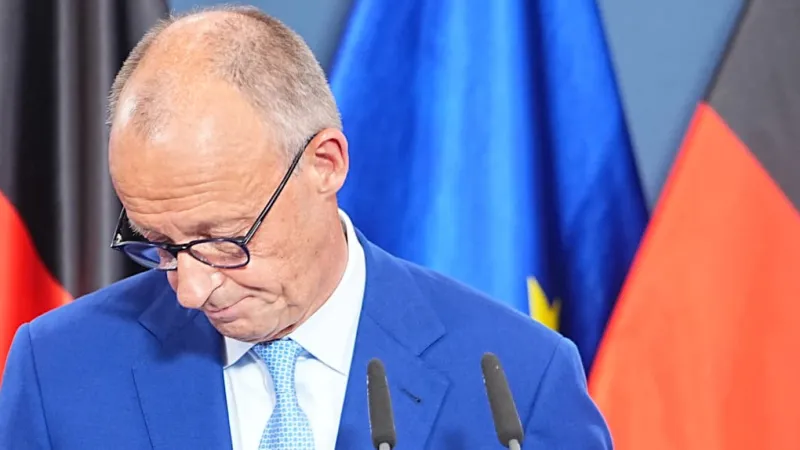
The criticism of "no tailwind from Berlin" carries weight, particularly for a party like the CDU, which has historically prided itself on strong internal cohesion between its federal and state branches. Such public acknowledgements of internal disquiet can signal deeper rifts or a perceived failure of national leadership to adequately support regional campaigns. For instance, discussions surrounding post-election analyses often involve figures like Chancellor Merz, who is expected to deliver post-election statements addressing national implications.
The notion of federal influence, or the lack thereof, on regional campaigns is a long-standing point of contention in German politics. State-level candidates frequently depend on positive national narratives and cohesive party messaging from Berlin to energize their local bases and attract swing voters. When this support falters, as Peters suggests, the local campaign shoulders an even heavier burden.
Political analysts suggest that Peters' candid remarks might prompt internal discussions within the CDU about its communication strategies and its approach to regional autonomy. Ensuring stronger alignment and mutual support between federal and state party structures could become a key area of focus for the conservative party moving forward.
The overall performance of the CDU in various state elections continues to be a crucial indicator for the party's trajectory. These regional battles test the party's resilience, its appeal to diverse electorates, and its ability to adapt to an evolving political landscape where traditional allegiances are increasingly fluid.
For the CDU in Mecklenburg-Western Pomerania, Peters' analysis will likely inform future campaign strategies, emphasizing greater local focus and potentially a more distinct regional identity in lieu of strong federal backing. The challenge lies in balancing local needs with national party principles.
Ultimately, Peters' comments highlight a predicament many established parties face across Germany: how to navigate an increasingly fragmented and emotionally charged political environment. His direct attribution of blame to both a national mood and federal disengagement offers a stark, unvarnished look at the difficulties confronting Germany's political establishment. The need for robust electoral strategies, particularly for crucial CDU state election contests, has never been more apparent.