 Chris Robert
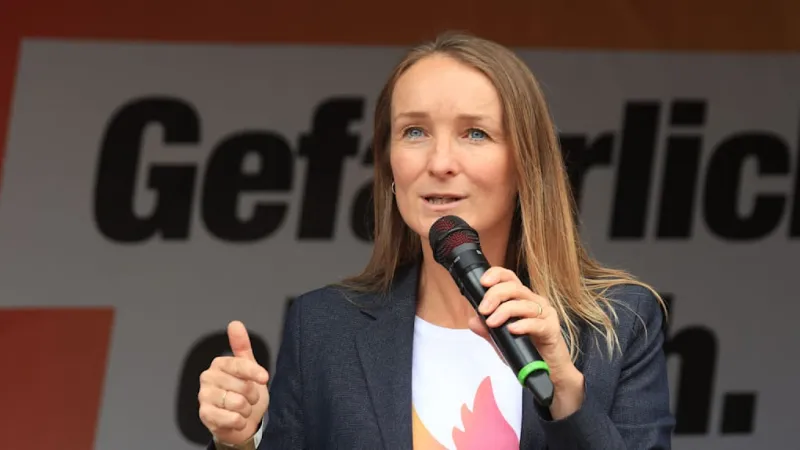
BERLIN – The newly formed Bündnis Sahra Wagenknecht (BSW) party has signaled its intent to forge a parliamentary alliance with the far-right Alternative for Germany (AfD) in the state parliament of Saxony-Anhalt, aiming to jointly block military aid for Ukraine. This potential cooperation reflects a BSW priority for domestic issues, a sentiment often articulated as more Köthen than Kyiv, marking a significant development in the German political landscape regarding foreign policy priorities and domestic alliances.
The BSW, founded by prominent politician Sahra Wagenknecht, champions a platform often critical of current German foreign policy, particularly concerning the conflict in Ukraine. Their opposition to further military assistance aligns closely with positions frequently articulated by the AfD, creating a common ground for potential legislative action.
This prospective collaboration is contingent upon the BSW securing seats in the Saxony-Anhalt state parliament, an electoral outcome they anticipate. Should both parties gain sufficient representation, their combined strength could exert considerable influence on state-level resolutions pertaining to federal policy, specifically regarding the allocation of resources towards international military support.
Germany has been a substantial provider of financial and military assistance to Ukraine since the full-scale invasion by Russia began in early 2022. The ongoing debate about the extent and nature of this support frequently dominates national political discourse, reflecting differing views on Germany's role in European security and international conflicts.
The BSW's public declaration, emphasizing a focus on German domestic issues over extensive foreign engagements, encapsulates its core ideology. This prioritization is powerfully conveyed by the phrase more Köthen than Kyiv, which reflects a desire to focus on local concerns and welfare, such as those in the town of Köthen, Saxony-Anhalt, rather than the distant conflict in Kyiv.
The AfD has consistently expressed skepticism and opposition to Germany's military contributions to Ukraine, advocating for a more restrained foreign policy and improved relations with Russia. This long-standing position creates a natural convergence point for legislative efforts with the BSW.
Such an alliance, even at the state level, could have broader implications for German politics, potentially normalizing cooperation between established parties and the AfD in specific policy areas. Critics warn that this could lend legitimacy to the AfD's agenda and shift the political center. This development resonates with ongoing discussions about the shifting political landscape in Germany, including criticisms from the SPD Youth regarding a potential rightward drift and public disillusionment within the broader political spectrum.
Traditionally, mainstream German parties have maintained a cordon sanitaire around the AfD, refusing direct cooperation due to its extremist elements and controversial rhetoric. Any formal or informal alliance, particularly one impacting foreign policy, would represent a significant departure from this established political norm.
Public opinion in Germany remains divided on the issue of Ukraine aid, with varying levels of support for continued military assistance versus a greater focus on diplomatic solutions or domestic challenges. Upcoming state elections in Saxony-Anhalt, where this proposed alliance could materialize, will be closely watched as a barometer of voter sentiment on these critical issues.
Internationally, Germany's commitment to Ukraine is a cornerstone of European unity against Russian aggression. A significant reduction or withdrawal of support, even signaled at a regional level, could send ripples across allied nations and potentially embolden Moscow. This comes at a time when global geopolitical tensions are high, further underscored by events such as the Leipzig drone incident which previously hardened Germany's stance on Russia.
Beyond military assistance, Germany provides substantial humanitarian and financial aid to Ukraine. The BSW and AfD's stance against military aid specifically opens questions about their positions on other forms of support, which could have wide-ranging economic consequences for both nations involved.
The declared intention by BSW to partner with the AfD on such a pivotal foreign policy matter signifies a notable shift in German political dynamics. Observers will monitor the forthcoming Saxony-Anhalt elections to assess the viability and long-term implications of this proposed political alignment for both domestic governance and Germany's international standing.